Geotextiles in Highway Construction: Functions and Applications
Geotextiles, as a critical geosynthetic material, are widely used in highway engineering due to their excellent filtration, separation, reinforcement, and drainage functions. They enhance road stability, extend service life, and reduce maintenance costs. This article introduces the key roles and construction techniques of geotextiles in highway projects.
1. Primary Functions of Geotextiles in Highways
Separation: Prevents mixing between subgrade soil and aggregate layers, maintaining structural integrity.
Filtration: Allows water to pass while retaining soil particles, preventing erosion.
Reinforcement: Improves load-bearing capacity by distributing stresses.
Drainage: Facilitates lateral water flow, reducing waterlogging risks.
2. Construction Process
(1) Subgrade Preparation
Level and compact the subgrade, removing sharp debris.
Ensure proper slope for drainage.
(2) Geotextile Installation
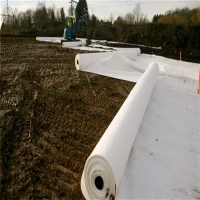
Roll out geotextiles smoothly with overlaps (typically 30–50 cm).
Secure edges with staples or anchoring trenches.
Avoid wrinkles or damage during placement.
(3) Aggregate Placement
Spread and compact fill material (e.g., gravel) over the geotextile.
Prevent machinery from directly damaging the fabric.
(4) Pavement Construction
Proceed with asphalt/concrete paving once the reinforced base is stable.
3. Advantages of Geotextiles
Cost-Effective: Reduces material usage and long-term repair needs.
Durability: Resists chemical/biological degradation.
Eco-Friendly: Minimizes soil erosion and environmental impact.
4. Conclusion
Geotextiles play a vital role in modern highway engineering by enhancing performance and sustainability. Proper material selection and installation are essential for maximizing benefits.
Note: Geotextile specifications (e.g., tensile strength, permeability) should be chosen based on project requirements.
Would you like any modifications or additional technical details?