

Geotextile
With more than 18 years of industry experience, we take professionalism, innovation and excellent quality as our creed, and are committed to providing customers with excellent geomembranes, geotextiles and other geosynthetic materials products. Through advanced production technology, rich experience and unremitting innovation, we provide the best geotechnical material solutions for engineering and construction projects in various industries around the world.
Advanced Materials
We manufacture custom geomembrane liners made from reinforced polyethylene (RPE), reinforced polypropylene (RPP) and low density polyethylene (LDPE). Our RPE and RPP liners are stronger, provide better puncture and tear resistance, are lighter weight and have excellent UV resistance when exposed to sunlight.
Reliable Quality Control
The company has established a national-standard laboratory for in-house quality control. We built a strict quality control system in all aspects from raw materials testing,production processes to final product quality testing.
Professional Experience
We has more than 18 years experience of geotextiles production in geosynthetic products, including geomembrane, geotextile, HDPE geomembrane, geocell, 3D geomat and etc. We provide complete geosynthetic solutions for ground stabilization, reinforcement and drainage, erosion control, bank and slope protection.
Complete Qualifications
Our factory is certificated by ISO9001, ISO14001, and OHSAS18001. All geomembranes have passed the certificates of the TUV, Soncap, SASO, BV and the test of SGS and Intertek etc.
-
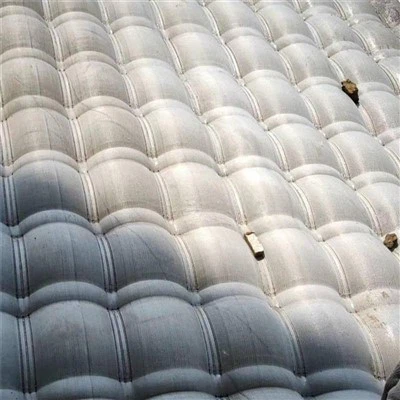
 Fabric Formed Concrete MattressThe Fabric Formed Concrete Mattress is an innovative and sustainable solution for erosion control, slope stabilization, and coastal protection. Unlike traditional rigid concrete structures, itAdd to Inquiry
 -
 Geotextile Geosynthetic ContainersEngineered from high-strength woven/nonwoven geotextiles, our geo containers provide superior sediment containment and erosion protection for coastal, marine and civil engineering projects. TheseAdd to Inquiry
 -
 PP Woven Geotextile BagGeotextile Bag is an innovative and eco-friendly solution designed for riverbank stabilization, slope protection, and embankment reinforcement. Made from high-quality woven geotextile material, theseAdd to Inquiry
 -
 PP Staple Fiber Nonwoven GeotextileOur pioneering PP staple fiber nonwoven geotextile represents a quantum leap in geotechnical engineering materials. Utilizing advanced polymer science and state-of-the-art manufacturing techniques,Add to Inquiry
 -
 PET Staple Fiber Nonwoven GeotextilePET Staple Fiber Nonwoven Geotextile is a versatile, high-strength engineered fabric designed for civil engineering, construction, and environmental applications. Combining the durability ofAdd to Inquiry
 -
 PP Filament Nonwoven GeotextilePP (Polypropylene) Filament Nonwoven Geotextile is a high-quality geosynthetic material engineered for superior filtration, separation, reinforcement, and protection in civil engineering andAdd to Inquiry
 -
 300gsm Nonwoven GeotextileOur PP Fiber Fabric Polypropylene Needle Punched Spunbond Nonwoven Geotextile is a high-performance engineered material designed for civil engineering, environmental protection, and constructionAdd to Inquiry
 -
 PP Nonwoven GeotextileThese Nonwoven Polypropylene (PP) Geotextiles are nonwoven needle-punched geotextiles made of 100% polypropylene staple fabrics. The nonwoven PP geotextiles are used in a wide variety of applicationsAdd to Inquiry
 -
 Polypropylene Woven GeotextileGeotextile nonwovens are produced by needle punching staple fibers in random patterns to form high strength and dimensionally stable fabrics. Polypropylene fibers are resistant to UV degradation andAdd to Inquiry
 -
 Needle Punched Geotextile FabricWoven geotextiles have extremely high water permeability, filterability, durability, deformation adaptability, and good plane drainage capabilities.Add to Inquiry
 -
PP Woven GeotextileWoven geotextiles are manufactured according to ASTM international product standards to provide high tensile strength and low elongation.Add to Inquiry
-
 Woven Polypropylene GeotextileWoven geotextile is a type of geosynthetic material that is made by weaving synthetic fibers together. It is commonly used in civil engineering and construction projects for various applications suchAdd to Inquiry


Brief Introduction to Geotextile
Geotextiles are permeable fabrics which, when used in association with soil, have the ability to separate, filter, reinforce, protect, or drain. Typically made from polypropylene or polyester, geotextile fabrics come in two basic forms: woven (resembling mail bag sacking) and nonwoven (resembling felt). Geotextile composites have been introduced and products such as geogrids and meshes have been developed. Geotextiles are durable and are able to soften a fall. Overall, these materials are referred to as geosynthetics and each configuration-geonets, geosynthetic clay liners, geogrids, geotextile tubes, and others-can yield benefits in geotechnical and environmental engineering design.

Types of Geotextile
Geotextiles are made up of polymers such as polyester or polypropylene. They are divided into 3 categories on the basis of the way they are prepared:
Woven Fabric Geotextile
Commonly found geotextiles are of the woven type and are manufactured by adopting the techniques which are similar to weaving usual clothing textiles. This type has the characteristic appearance of two sets of parallel threads or yarns. The yarn running along the length is called warp and the one perpendicular is called weft.
Non-Woven Geotextile
Non-woven geotextiles are manufactured from either continuous filament yarn or short staple fiber. The bonding of fibers is done using thermal, chemical or mechanical techniques or a combination of techniques. Geo-fibers obtained from mechanical interlocking or chemical or thermal bonding have a thickness of 0.5-1 mm while chemically bonded non-wovens are comparatively thick usually in the order of 3 mm.
Knitted Geotextile
Knitted geotextiles are manufactured by the process of interlocking a series of loops of yarn together. All of the knitted geosynthetics are formed by using the knitting technique in conjunction with some other method of geosynthetics manufacture, such as weaving. Apart from these three geotextiles, other geosynthetics used are geonets, geogrids, geo-cells, geomembranes, geocomposites, etc. each having their own distinct features and uses for special applications.
What are the 5 Main Functions of Geotextiles?
Separation
Geotextiles will prevent two soil layers of different particle sizes from mixing with each other.
01
Drainage
Geotextiles will efficiently collect superfluous water from structures, such as rainwater or surplus water, from the soil and discharge it.
02
Filtration
Geotextiles are an ideal interface for reverse filtration in the soil adjacent to the geotextile. In all soils water allows fine particles to be moved. Part of these particles will be halted at the filter interface; some will be halted within the filter itself while the rest will pass into the drain. The complex needle-punched structure of the geotextile enables the retention of fine particles without reducing the permeability of the drain.
03
Reinforcement
Heavy geotextiles can be used to reinforce earth structures by means of fill materials. Thanks to their high soil fabric friction coefficient and high tensile strength, they are an ideal reinforcement solution.
04
Protection
Geotextiles are an ideal protection from erosion of earth embankments by wave action, currents or repeated drawdown. A layer of geotextiles can be placed so as to prevent leaching of fine material. They can be used for rock beaching or as mattress structures. They can even easily be placed under water.
05
Benefits of Geotextile
Geotextile products have been improving geotechnical designs for years, providing numerous advantages in comparison to traditional techniques:
A Reduced Environmental Impact When Using Geotextiles
In use as a filter layer instead of traditional materials, greenhouse gas emissions are reduced by 90% and energy demand drops by > 80%. See Health, Safety & Environment for more information.
A Reduced Thickness of the Design
A geotextile fabric can act as a high performing filter layer, replacing up to 1m of filter material in e.g. erosion control systems.


A Higher Durability of the Construction
When properly using geotextiles, the need for interventions and/or maintenance is reduced, thus significantly lowering the overall cost of the project.
A Consistent Performance
Geotextiles are generally more stable throughout the material compared to natural building materials, which are more susceptible to variations.This leads to a performance that is consistent in the entire project.
How Do Geotextiles Work
There is a lot of science and engineering behind the development and implementation of geotextiles, and it all revolves around the term soil mechanics. Geotextiles are designed to help control and improve key soil mechanics, specifically soil compression, tension, and shear strength.
Soil Compression
A layer of geotextile help optimizes the compression of the top layer of soil while reducing unnecessary soil compaction underneath. On certain projects, a flat layer of compressed soil is needed and can be difficult to achieve without geotextiles. Think of laying the foundation of a building or a roadway. Trying to compress topsoil would just continually push downwards. A Geotextile layer helps prevent that.
Soil Tension
Soil tension is the measurement of how well it retains water. On any project, you don't want the soil to be too wet, and you don't want it to be too dry. Dry soil is highly susceptible to being eroded, and overly wet soil is mud. The woven geotextiles being less permeable than non-woven ones. Soil tension control is where that permeability comes into play. Depending on your project needs, you will pick a geotextile that can provide the required permeability level.
Soil Shear Strength
This is the measurement of the friction resistance of soil particles sliding over each other. It sounds like an odd thing to measure, but in instances where you really don't want that soil to move, it's very important. Correctly implementing geotextiles can drastically increase the soil shear strength. Think of how much stronger cement is when you add rebar, that is essentially what you are doing with geotextiles and soil.
Uses of Geotextile in Construction
Road Work
Geotextiles are widely used in the construction of the road. It reinforces the soil by adding tensile strength to it. It is used as a rapid de-watering layer in the roadbed, the geotextiles need to preserve its permeability without losing its separating functions.
Railway Works
The woven fabrics or the non-woven ones are used to separate the soil from the sub-soil without impeding the groundwater circulation where the ground is unstable. Enveloping individual layers with fabric prevents the material from wandering off sideways due to shocks and vibrations from running trains.
Agriculture
It is used for mud control. For the improvement of muddy paths and trails those used by cattle or light traffic, nonwoven fabrics are used and are folded by overlapping to include the pipe or a mass of grit.
Drainage
The use of geotextiles to filter the soil and a more or less single size granular material to transport water is increasingly seen as a technically and commercially viable alternative to the conventional systems. Geotextiles perform the filtering mechanism for drainages in earth dams, in roads and highways, in reservoirs, behind retaining walls, deep drainage trenches, and agriculture.
River, Canals and Coastal Works
Geotextiles protect river banks from erosion due to currents or lapping. When used in conjunction with natural or artificial enrockments, they act as a filter.
What are Geotextile Fabrics Made of?
Geotextiles are usually made from polyester or polypropylene. The fibers used in manufacturing geotextile are constructed of natural or synthetic fibers depending on the desired application. Natural fibers are usually in the form of paper strips, wood shavings, jute nets, or wool mulch. In some soil reinforcement projects geotextiles must last for more than a hundred years. However, bio-degradable natural fabrics are intentionally made to have a short lifespan. They are usually used in inhibition of soil erosion until vegetation grows in the area.
Jute: This is a versatile vegetable fiber that is highly biodegradable and can perfectly mix with the soil and provide nutrients for the vegetation. However, quick biodegradation is also a weakness when used as a geotextile. Nevertheless, their lifespan can be stretched up to 20 years through various treatments and blending. Therefore, it is possible to manufacture customized biodegradable jute geotextile with specific tenacity, porosity, permeability, as well as transmissibility as per the need and location. Factors such as the amount of water available, soil composition, water flow, water quality, and landscape among others will determine the application and the choice of jute geotextile to use, including.
Coir: Also known as a Coir mat is a type of natural fiber made from the natural fiber that taken from the exterior husk of coconuts. Often this materials is made into Turf Reinforcement Mats (TRM), doormats, mattresses, or even into brushes. Many enjoy the natural aspect of using coconut fiber instead of synthetics and its naturally durable properties along with its resistance to salt water damage also being desirable.


Polyamide (PA): Polyamide is further categorized into two-Nylon 6 and Nylon 6.6 however, they are rarely used in geotextiles. The first polyamide (Nylon 6) is an aliphatic polyamide made from the polymerization of petroleum derivative known as caprolactam. The second type of polyamide is made from the polymerization of the salt of adipic acid as well as hexamethylene diamine. They are produced in the thread-like forms which are then cut into small granules. The resulting products usually have much more strength but with fewer moduli compared to polyester and polypropylene. They are also susceptible to hydrolysis.
Polyesters (PSF): Are synthesized by polymerization of ethylene glycol with either terephthalic acid or dimethyl terephthalate acid. The resulting product has much more strength modulus, skulk resistance as well as general chemical inertness, thus making it a perfect fit for geotextiles. However, it is affected by a polar solvent such as phenol, benzyl alcohol, and meta-cresol, and at the pH range of between 7 and 10, it can last up to 50 years. This geotextile material possesses very high resistance to UV radiation. However, its installation should be done with care to prevent unnecessary exposure to ultraviolet radiation.
Polyethylene (PE): Can be manufactured in a crystalline form, which is an essential trait in any fiber-forming polymer. The three main types of polyethylene are low density (LDPE), linear low density (LLDPE), and a the very common high density (HDPE). HDPE can also be found in a number of Root Barriers or Bamboo Barriers.
Polypropylene (PP): A crystalline thermoplastic made by polymerization of propylene monomers with catalyst Zeigler-Natta.
Ultimate FAQ Guide to Geotextile
Q: What Does Geotextile Mean?
Q: What is the purpose of Geotextiles?
Q: What are geotextiles used for?
Q: Is geotextile the same as landscape fabric?
Q: What does a geotextile layer do?
Q: Is geotextile fabric or not?
Q: Does water go through geotextile?
Q: What are the disadvantages of geotextile fabric?
Q: Do I need geotextile under gravel?
Q: Can roots penetrate geotextile fabric?
Q: Where do you put geotextile fabric?
Q: How long will geotextile fabric last?
Q: What is the best landscape fabric that lets water through?
Q: How long does geotextile membrane last?
Q: What is another name for geotextile?
Q: Which is better woven or nonwoven geotextile?
Q: Why use geotextile?
Stabilization: Geotextiles can be used to stabilize soil in roadways, embankments, and other construction projects. By placing a layer of geotextile between the soil and the construction material, geotextiles help to prevent soil erosion and provide added stability to the construction site.
Drainage: Geotextiles can be used as a filter layer to allow water to pass through while preventing the passage of soil particles. This is particularly useful in drainage systems where water needs to be channeled away from a construction site.
Separation: Geotextiles can be used to separate different layers of soil or other materials. This is particularly useful in road construction where a geotextile layer can prevent the mixing of materials and maintain the integrity of the road structure.
Protection: Geotextile fabric can be used to protect vulnerable surfaces such as geomembranes or other liners from damage. This is particularly useful in environmental applications such as landfill liners, where geotextiles can protect the liner from sharp objects and other potential sources of damage.
Overall, geotextiles are a versatile and effective solution for a wide range of engineering and environmental applications as long as you find the best nonwoven geotextile fabric.
Q: What is woven geotextile fabric?
Q: What is nonwoven geotextile fabric?
Q: What's the difference between landscape fabric and geotextile fabric?
We're professional geotextile manufacturers and suppliers in China, specialized in providing high quality products with low price. We warmly welcome you to buy geotextile for sale here from our factory.
HDPE Geomembrane Pond Liner, Woven Polypropylene Geotextile, Smooth Geocell