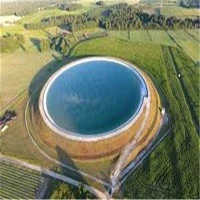
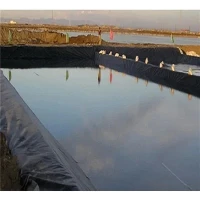
Geotextiles are widely used in football field construction for their excellent anti-seepage, drainage, and reinforcement properties. Below is a detailed explanation of their application in anti-seepage construction:
1. Material Selection
Non-woven Geotextile: Typically made of polyester or polypropylene, it provides good filtration and drainage while preventing soil erosion.
Composite Geotextile (Geomembrane Composite): Combines a non-woven fabric with an HDPE (High-Density Polyethylene) membrane for enhanced waterproofing.
2. Construction Process
(1) Site Preparation
Level the subgrade and remove sharp objects to prevent damage to the geotextile.
Compact the soil to ensure stability.
(2) Geotextile Installation
Laying the Geotextile: Roll out the geotextile smoothly over the prepared subgrade, ensuring overlaps of at least 30 cm.
Seaming: Use thermal welding or adhesive tape to seal overlaps for a continuous waterproof layer.
Anchoring: Secure the edges with sandbags or anchor trenches to prevent displacement.
(3) Protective Layer Installation
Cover the geotextile with a layer of sand (5–10 cm) or fine gravel to protect it from punctures.
Lay the turf or topsoil layer for the football field surface.
3. Key Advantages
Prevents Water Accumulation: Reduces waterlogging, ensuring a stable playing surface.
Enhances Durability: Protects the foundation from erosion and deformation.
Improves Drainage: Allows water to pass through while blocking fine soil particles.
4. Quality Control
Inspect for tears or weak seams before covering.
Ensure proper overlap and welding strength.
Conduct post-installation water leakage tests if necessary.
By using geotextiles in football field construction, the pitch maintains optimal moisture levels, prolonging field usability and reducing maintenance costs.
Would you like additional details on specific geotextile specifications or construction standards?