Products Description
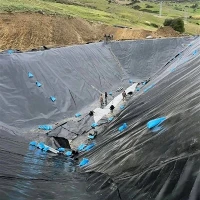
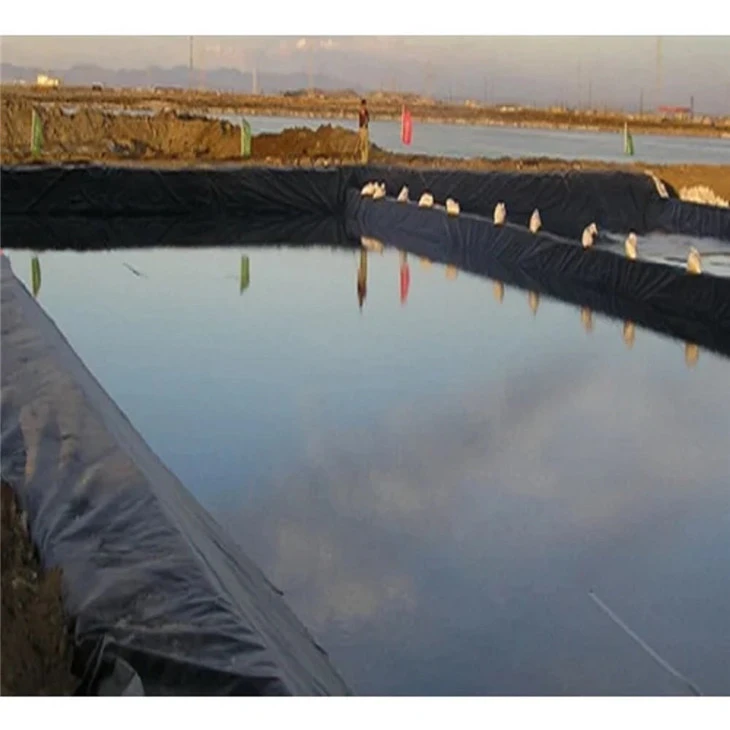
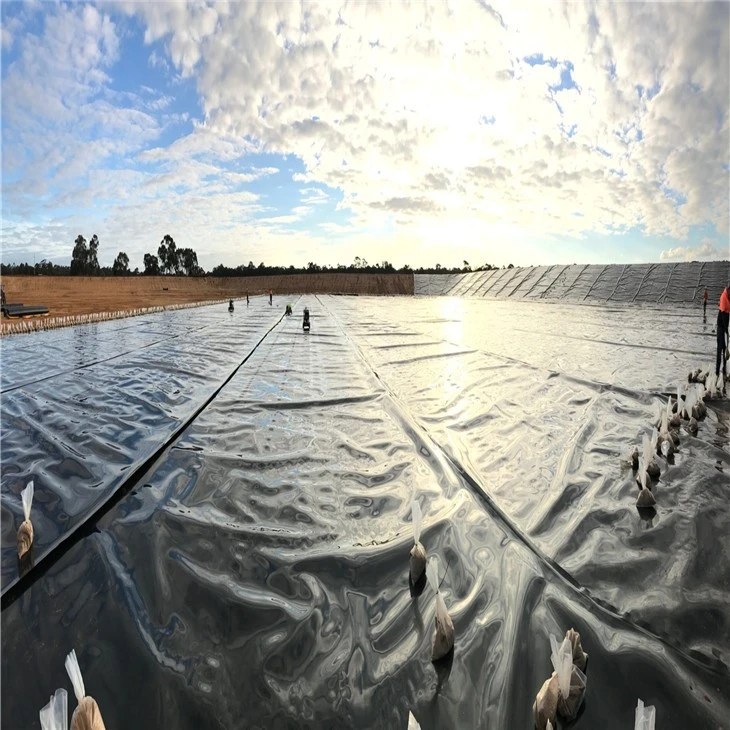
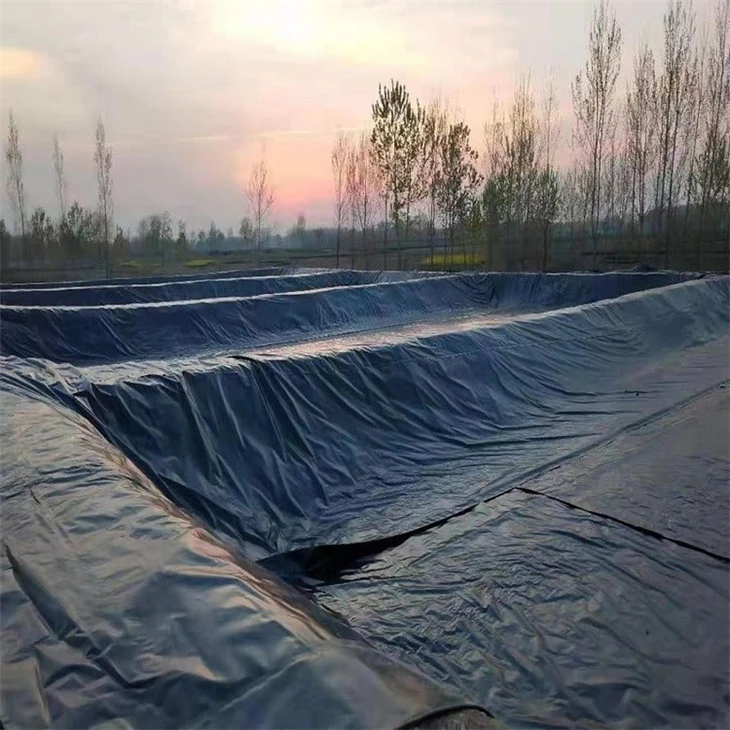
UV radiation is the primary aging threat to HDPE geomembranes in open-air projects (such as landfill caps and exposed reservoirs). Its essence is a light-induced oxidation chain reaction that causes polymer chain scission and embrittlement. The service life of unmodified pure HDPE under unshielded UV exposure is less than 3 years, manifested as surface powdering, tensile strength loss of more than 30% and uncontrolled permeability. Photo-oxidation of HDPE geomembrane.Engineering practice extends the service life to more than 50 years by uniformly doping carbon black to construct a UV shielding layer - carbon black not only absorbs 99% of UV radiation, but also inhibits the spread of oxidation by quenching free radicals.
|
different thicknesses of Geomembranes Test |
Unit |
Standard |
Test |
RH75 |
RH10 |
RH15 |
RH20 |
RH30 |
|
|
Mechanical Properties
|
Thickness |
mm |
D5199 |
per roll |
0.75 |
1.00 |
1.50 |
2.00 |
3.00 |
|
Density |
g/cc |
D1505/D792 |
90,000 kg |
0.94 |
|||||
|
Tensile Properties |
D 6693 |
||||||||
|
· yield strength |
kN/m |
Type IV |
9,000 kg |
11 |
15 |
22 |
29 |
44 |
|
|
· break strength |
kN/m |
20 |
27 |
40 |
53 |
80 |
|||
|
· yield elongation |
% |
12 |
12 |
12 |
12 |
12 |
|||
|
· break elongation |
% |
700 |
700 |
700 |
700 |
700 |
|||
|
Tear Resistance |
N |
D 1004 |
20,000 kg |
93 |
125 |
187 |
249 |
374 |
|
|
Puncture Resistance |
N |
D 4833 |
20,000 kg |
240 |
320 |
480 |
640 |
96 |
|
How does UV light "burn" geomembranes?
Imagine the plastic film is like a strong rope, and ultraviolet rays (UV) are scissors:
Step 1: Cut the crack
The UV-B rays in sunlight (similar to strong ultraviolet rays) cut the HDPE molecular chain, producing "free radical fragments".
Step 2: Fragments oxidize and rust
When the fragments meet the air, they are like iron sheets meeting water, and they "rust" (oxidation reaction) like crazy, turning into more fragile "peroxides".
Step 3: The rope breaks completely
These "rusty" fragments further decompose, eventually causing the plastic surface to powder and crack (just like the brittle cracking of an aged plastic raincoat).
Photo-oxidation of HDPE geomembrane
What happens to a "sunburned" geomembrane?
Become fragile: tensile strength decreases by 20-40% (like an aging rubber band that breaks when pulled)
Loss of elasticity: ductility decreases by more than 50% (similar to hardened rubber that cannot be stretched)
Surface cracking: hair-like cracks (0.1-0.5mm deep, such as cracks in dry land)
Risk of water leakage: cracks cause the anti-seepage performance to plummet by 10,000 times (like a bucket with a hole)
[ Unprotected HDPE membrane will fail within 3 years under the scorching sun!]
How to "sunscreen" geomembranes?
Core weapon: Carbon black (plastic "sunscreen")
Photo-oxidation of HDPE geomembrane
| Protection points | Working principle | Compliance requirements |
| Additional amount | Absorbs 99% of ultraviolet rays | ≥2.0% |
| Particle fineness | The finer the more uniform | Particle size 20-25 nanometers |
| Dispersion | Prevents agglomeration | No agglomeration under a microscope |
Contact
Tai'an City Ruiheng Building Materials Co., Ltd
● Address: NO.3566 Longquan Road, Tai'an Hi-tech Zone, Shandong Province, China
● Website: www.rhgeomembrane.com
● Email: bonnie@rhgeos.com
● Phone / Whatsapp / Wechat: 0086 188 5482 2179
Hot Tags: photo-oxidation of hdpe geomembrane, China photo-oxidation of hdpe geomembrane manufacturers, suppliers, factory