1. Material Preparation
Select PET (polyethylene terephthalate) geotextile with appropriate specifications (thickness, permeability, and tensile strength) based on engineering requirements.
Ensure the material has qualified anti-seepage, filtration, and drainage performance.
2. Subgrade Preparation
Level and compact the subgrade to remove sharp protrusions, stones, and debris that may damage the geotextile.
For filtration applications, ensure proper gradation of adjacent soil layers to prevent clogging.
3. Geotextile Installation
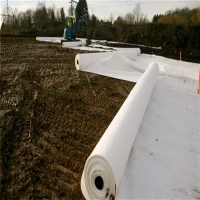
Unrolling & Placement: Lay the PET geotextile smoothly without wrinkles, ensuring overlaps (typically 50–100 cm).
Seaming: Use hot-welding, sewing, or adhesive bonding for seams to ensure continuity and anti-seepage performance.
Anchoring: Secure edges with sandbags, trench backfilling, or mechanical fasteners to prevent displacement.
4. Protection Layer
Cover the geotextile with a protective layer (e.g., soil, gravel, or geomembrane) to prevent UV degradation and mechanical damage.
5. Quality Control
Inspect seams and overlaps for leakage or weak points.
Conduct on-site permeability and strength tests if required.
6. Applications
Anti-seepage: Used in reservoirs, landfills, and ponds to prevent fluid leakage.
Filtration: Applied in drainage systems, retaining walls, and erosion control to allow water passage while retaining soil.
This method ensures proper PET geotextile performance in seepage control and filtration projects. Let me know if you need further details!