


HDPE geocell is available in different sizes, shapes, and colors, depending on the requirements of the particular project. Standard sizes range from 50 mm to 300mm in height, and from 330mm to 1000mm in welding distance.
What is a Geocell?

Geocells are three-dimensional cellular structures that can be filled with soil, gravel, or other materials to stabilize steep slopes and prevent erosion. They are made from high-density polyethylene (HDPE) and have an open cell structure that allows them to conform to the terrain.
Geocells are an innovative way to wall and confine soil, aggregate, and other fill materials. These three-dimensional cellular structures can expand during installation, forming flexible walls with interconnected strips to increase tensile strength, all while increasing compression due to environmental factors such as weathering. Prevents movement by holding it in place.
When the soil enclosed within a geocell is stressed, such as in load-bearing applications, lateral strains occur in the surrounding cell walls. Although the 3D zone of confinement reduces the lateral mobility of soil particles, the vertical loading on the confined infill creates significant lateral stress and resistance at the cell-soil interface.
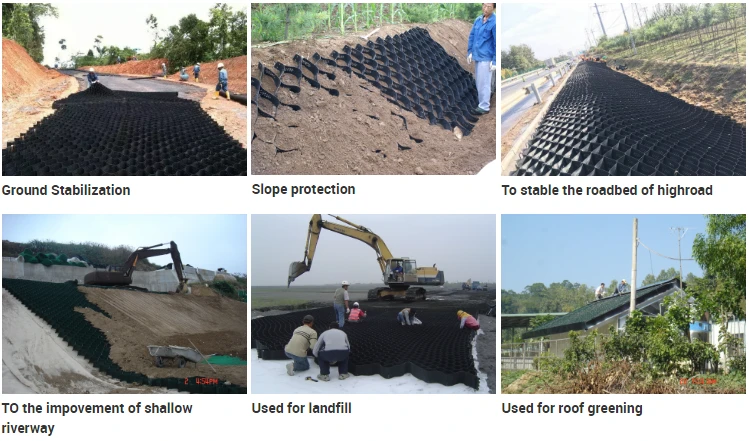
Geocells are used in construction to reduce erosion, stabilize soils, protect waterways, and provide structural reinforcement for load bearing and earth retention.
Geocells were first developed in the early 1990s by he as a way to improve the stability of roads and bridges. They quickly became popular for their ability to stabilize soil and control erosion in steep ground. Geocells are currently used in a variety of applications, including road construction, landfills, mining operations, and green infrastructure projects.
|
Material Properties |
unit |
|
|
|
|
Tested Method |
|
Cell Depth |
mm |
75 |
100 |
150 |
200 |
|
|
Polymer Density |
g/cm3 |
0.935-0.965 |
ASTM D 1505 |
|||
|
Enviroment Stress Crack Resistance |
Hours |
>400 |
ASTM D 5397 |
|||
|
Enviroment Stress Crack Resistance |
Hours |
6000 |
ASTM D 1693 |
|||
|
Carbon Black Content |
% |
1.5%-2.0% |
ASTM D 1603 |
|||
|
Nominal Sheet Thickness Before Texturing |
mm |
1.27-5%,+10% |
ASTM D 5199 |
|||
|
Nominal Sheet Thickness After Texturing |
mm |
1.27-5%,+10% |
ASTM D 5199 |
|||
|
Strip Puncture Resistance |
N |
450 |
ASTM D 4833 |
|||
|
Seam Peel Strength |
N |
1065 |
1420 |
2130 |
2840 |
EN ISO 13426-1B |
|
Seam Efficiency |
% |
GRI100 |
GRI-GS13 |
|||
|
Norminal Expanded Cell Size(width x length) |
mm |
320x287,475x508 etc |
|
|||
|
Norminal Expanded Panel Size(width x length) |
m |
2.56x8.35,4.5x5.0,6.5x4.5,6.1x2.44 |
|
|||
How To Install Geocells
Now that you know what geocells are and how they work, you need to know how to install them. This section explains how to install geocells for soil stabilization. Slope stabilization requires a different process not detailed in the following.
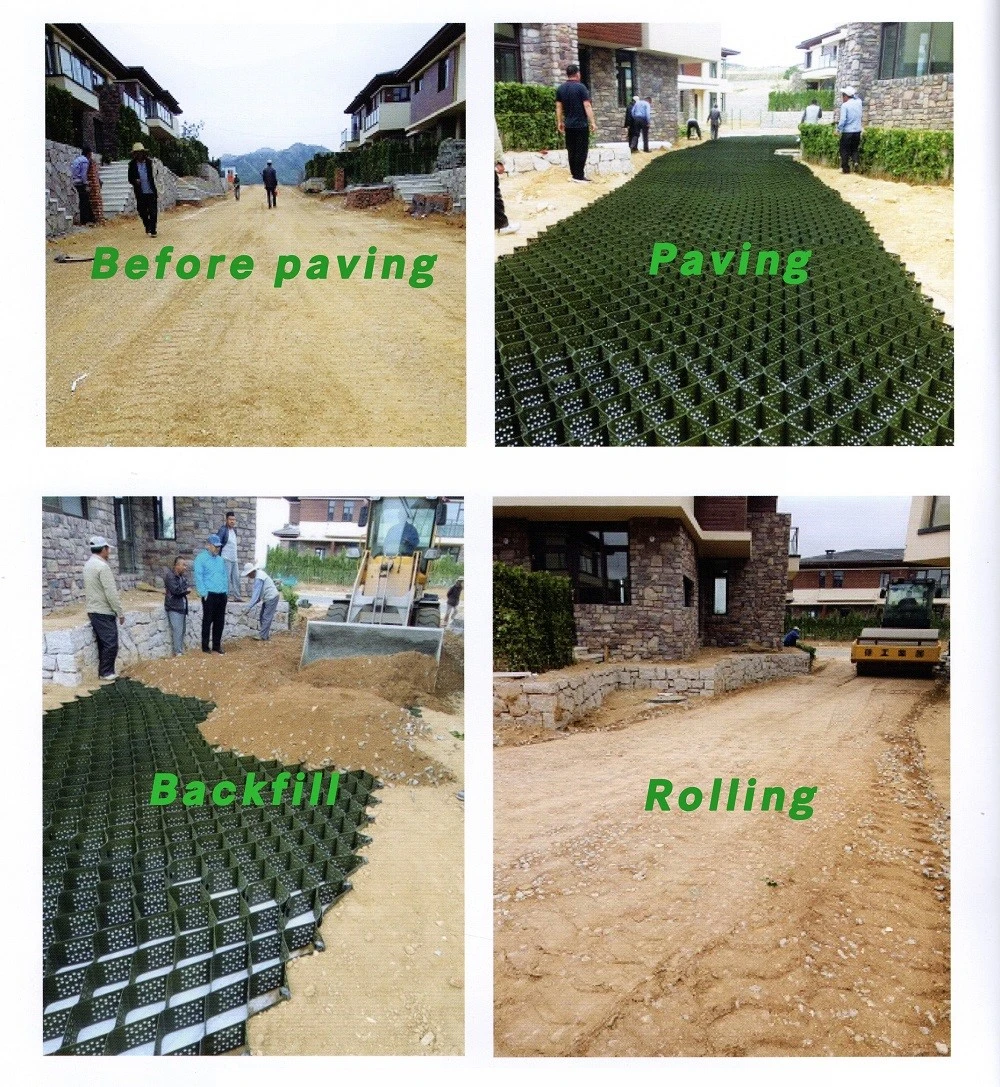
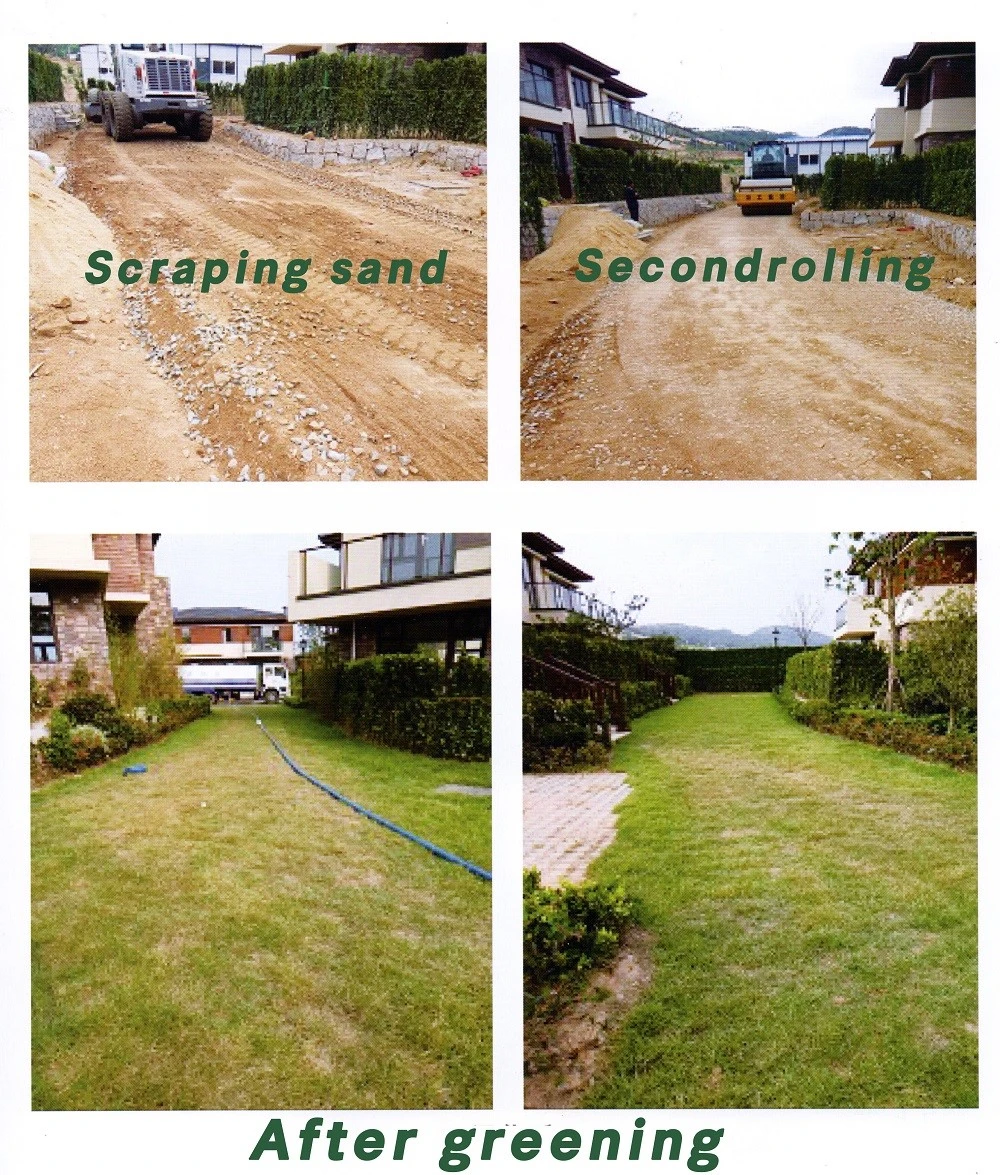
Here are the steps you need to take to install geocells for soil stabilization.
1. Prepare the soil
2. Expand the geocells
3. Lay and fill the geocells
The more geocells you have to install, the more people you will need to help you install them. Not only will this make the installation process go faster, but you will also be able to make sure the geocells expand and are laid properly.
1. Prepare the Soil
First, you need to prepare the ground for the geocells. The ground needs to be flattened, and the depth of the hole you dig to install the geocells and the compactness of the ground will depend on the size and width of the geocells you are installing. The greater the depth of the geocells, the deeper your hole needs to be.
Next, once the ground is ready, you need to cover it with a geotextile. The geotextile is a barrier between geocells and the ground. It will help keep the soil and the geocells in place. This way, the geocells are protected if anything happens to the ground. The geotextile needs to cover all the ground on which the geocells are being installed.
Then, you need to place a biaxial grid on top of the geotextile. The biaxial grid you install depends on the geocells you install.
2. Expand the Geocells
The next step is to be able to install the geocell. Due to its large size, it will not arrive fully unfolded. Once you're ready to install, you'll need to expand it.
Depending on the area you want to cover and the number of sheets of geocell you want to install, you will need help expanding your geocell. The larger the sheet of geocell that needs to be installed, the more personnel will be needed to assist with the installation.
To keep the geocell expanded, you will need to staple or compress the geocell to ensure it stays in place. The more cells you need to install and the deeper the geocell you install, the more staples you will need to hold the geocell in place.
When unfolding a geocell, you must ensure that the geocell is fully unfolded before stapling. If you don't fully expand, your measurements will drift and you won't have enough geocells to cover the entire area.
Extending these requires multiple people to work on the installation. Pull it all the way to the edges until it's fully unfolded, then have one or more people staple it in the center while it's unfolded.
3. Lay and Fill the Geocells
Now that the geocell is expanded and the ground is ready, it's time to place the geocell on the ground. Just place them on top of the prepared ground. If you have measured the area correctly and obtained the correct amount of geocells, the geocells should completely cover the ground.
Make sure all geocells are placed on top of the geotextile. If for some reason there are not enough geocells to cover the area, you will need to add more geocells to cover the entire area before proceeding to the final step of filling the geocells.
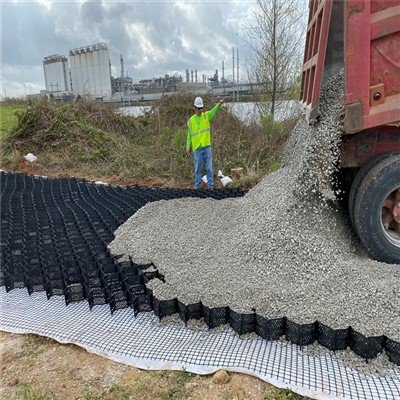
Finally, you need to fill the geocell. The geocell must be filled and the filler should cover the geocell by 2 to 3 inches. The filler should be compacted so that it stays in place and the top is completely flat.
Is geocell suitable for use in earthquake zones?
Geocell is a lightweight and flexible cellular confinement system that has been widely used in many applications such as soil stabilization, erosion control, and pavement reinforcement. However, some people may question whether geocell is suitable for use in earthquake zones due to the potential risks of the earthquakes. In this article, we will discuss the potential benefits of using geocell in earthquake zones and its suitability for such environments.
1. Firstly, geocell can improve the stability of the soil and prevent soil liquefaction during earthquakes. Liquefaction is a phenomenon that occurs when loose or poorly compacted soil loses its strength and stiffness due to the shaking caused by an earthquake. The process of liquefaction can lead to severe damages to the infrastructure, including buildings, bridges, and roads. Geocell can help to prevent soil liquefaction by providing lateral confinement to the soil particles and increasing its shear strength. The confining effect of the geocell walls can reduce the movement of soil particles during earthquakes and thus enhance the stability of the soil.
2. Secondly, geocell can act as a shock absorber during earthquakes and reduce the peak ground acceleration. The peak ground acceleration is a measure of the maximum horizontal acceleration that occurs at the ground surface during an earthquake. It is one of the critical factors that influence the seismic performance of the buildings and infrastructure. Geocell can reduce the peak ground acceleration by dissipating the energy of the earthquake through the deformation of the geocell walls. The flexible nature of the geocell allows it to absorb the seismic energy and reduce the shock waves transmitted to the ground surface.
3. Thirdly, geocell can improve the seismic performance of the pavement and reduce the damage caused by earthquakes. Pavement is one of the critical components of the infrastructure that is vulnerable to the effects of earthquakes. The seismic performance of the pavement can be improved by incorporating geocell into the pavement structure. Geocell can enhance the bearing capacity of the pavement and distribute the load more evenly across the subgrade. The improved load distribution can reduce the stresses and strains in the pavement layers and thereby reduce the risk of pavement failure during earthquakes.
4. Fourthly, geocell can stabilize the slopes and prevent landslides during earthquakes. Slopes are prone to failure during earthquakes due to the increase in the shear forces and the reduction in the effective stress. Geocell can stabilize the slopes by reinforcing the soil and providing a more stable interface between the soil and the geocell. The confining effect of the geocell walls can increase the shear strength of the soil and prevent the movement of the soil particles. The reinforcement provided by the geocell can also increase the stability of the slope and reduce the risk of landslides during earthquakes.
5. Finally, geocell is a cost-effective solution for earthquake-resistant infrastructure. The cost of building earthquake-resistant infrastructure can be high, and it may not be affordable for many countries and regions. Geocell can provide a cost-effective solution for earthquake-resistant infrastructure by improving the performance of the existing infrastructure. The use of geocell can reduce the vulnerability of the infrastructure to earthquakes and increase its resilience to seismic events.
How does geocell improve soil stabilization and erosion control?
The use of geocell has many benefits that make it an effective solution for soil stabilization and erosion control. This article will highlight some of the key advantages of using geocell.
1. Improved soil stability
The main purpose of geocell is to add stability to soil, especially on slopes. When installed on a slope, the geocell confines the topsoil, preventing it from sliding down the slope. Moreover, the geocell honeycomb structure acts as a reinforcement system that distributes the load evenly throughout the soil. This reduces soil deformation and improves the strength and stability of soils. The result is a sturdy and long-lasting slope.
2. Cost-effective
Geocell is a cost-effective way to stabilize soil and control erosion. It is much cheaper compared to other methods such as concrete retaining walls or riprap. The installation process is also straightforward and requires minimal labor, reducing the overall project cost. With geocell, you get a good return on investment while enjoying top-notch soil stabilization and erosion control.
3. Versatile
Geocell is a versatile solution that can be used in various soil stabilization and erosion control applications. It can be installed on slopes, road shoulders, embankments, and other areas that require soil stabilization. Geocell can be filled with different types of materials, including gravel, sand, and soil, depending on the project's requirements. This versatility makes geocell an effective solution for a wide range of applications.
4. Faster installation
Geocell is lightweight and easy to handle, making it faster to install compared to other soil stabilization methods. The installation process is not labor-intensive, and it can be completed in a shorter time, reducing disruption to your project schedule. Moreover, geocell can be installed in adverse weather conditions, making it an all-season solution.
5. Environmentally friendly
Geocell is an environmentally friendly solution to soil stabilization and erosion control. It is made from HDPE, a recyclable material that has a long lifespan. Unlike other soil stabilization methods that use chemicals or other harmful materials that destroy the environment, geocell does not have any negative environmental impact. Additionally, geocell helps to prevent soil erosion, which, in turn, protects the environment by preventing the loss of fertile topsoil.
6. Aesthetically pleasing
Geocell is an aesthetically pleasing solution to soil stabilization and erosion control. It can be covered with vegetation to improve visual appeal while enhancing the performance of the geocell. Vegetation helps to bind the soil and improves drainage while promoting the growth of natural vegetation, which improves the ecosystem.
7. Low maintenance
Geocell requires minimal maintenance compared to other soil stabilization methods. Once installed, the geocell requires no maintenance other than routine inspections to check for any damage, which is rare. The geocell does not break down or decay over time, meaning that it lasts longer than other traditional soil stabilization solutions.

Contact Information
Taian City Ruiheng Building Materials Co., Ltd
Address: NO.3566 Longquan Road, Tai'an Hi-tech Zone, Shandong Province, China
Website: www.rhgeos.com
Email: lorna@rhgeomembrane.com
Phone / Whatsapp / Wechat: 0086 187 6669 7769
Hot Tags: geocell slope protection, China geocell slope protection manufacturers, suppliers, factory


