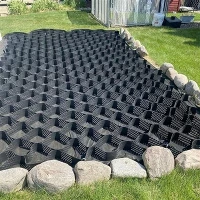
High-Density Polyethylene (HDPE) geomembrane is widely used in large hydropower projects due to its excellent impermeability, chemical resistance, UV stability, and mechanical strength. Below are its key applications and technical considerations in hydropower waterproofing:
1. Key Applications
Reservoir/Lining Systems
Used as a primary or secondary liner for water storage basins, regulating ponds, and tailing ponds to prevent seepage.
Dam & Embankment Protection
Installed on upstream faces of dams or within core walls to enhance water retention and reduce internal erosion.
Canal & Tunnel Waterproofing
Lines irrigation channels, diversion tunnels, and penstocks to minimize water loss.
Landfill & Waste Containment
Prevents leachate contamination in auxiliary facilities (e.g., construction waste zones).
2. Advantages for Hydropower Projects
✔ High Impermeability (Permeability coefficient: <10⁻¹³ m/s)
✔ Durability (50+ years lifespan under proper installation)
✔ Chemical Resistance (Resists acids, alkalis, and salts in water/soil)
✔ Puncture Resistance (Withstands heavy loads and rock backfill)
✔ Seam Welding Reliability (Hot wedge welding ensures continuous barriers)
3. Technical Considerations
Thickness Selection: Typically 1.5–3.0 mm for high-stress areas (e.g., dam foundations).
Material Standards: Complies with ASTM GM13, GRI-GM17, or ISO 9084.
Slope Stability: Requires textured geomembranes (e.g., rough surfaces) for steep slopes to prevent slippage.
Subgrade Preparation: Must remove sharp rocks and compact soil to avoid punctures.
Quality Control: Destructive/non-destructive testing (e.g., spark testing, air pressure tests) for seams.
4. Case Examples
Three Gorges Dam (China): HDPE liners in auxiliary containment structures.
Itaipu Dam (Brazil/Paraguay): Used in spillway channels.
Pumped Storage Plants: Lining upper/lower reservoirs to prevent leakage.
5. Challenges & Solutions
UV Degradation: Add carbon black (2–3%) or use UV-stabilized HDPE.
Thermal Expansion: Design expansion joints in high-temperature regions.
Installation Damage: Deploy protective geotextiles or sand layers.
Conclusion
HDPE geomembrane is a cost-effective, long-lasting solution for hydropower waterproofing, balancing performance and durability. Proper design, material selection, and installation are critical to ensure its effectiveness in large-scale projects.
Would you like details on specific standards or installation methods?