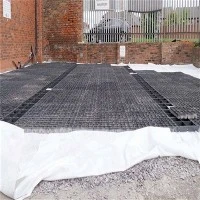
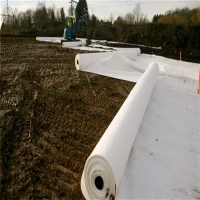
With more than 18 years of industry experience, we take professionalism, innovation and excellent quality as our creed, and are committed to providing customers with excellent geomembranes, geotextiles and other geosynthetic materials products. Through advanced production technology, rich experience and unremitting innovation, we provide the best geotechnical material solutions for engineering and construction projects in various industries around the world.
Advanced Materials
We manufacture custom geomembrane liners made from reinforced polyethylene (RPE), reinforced polypropylene (RPP) and low density polyethylene (LDPE). Our RPE and RPP liners are stronger, provide better puncture and tear resistance, are lighter weight and have excellent UV resistance when exposed to sunlight.
Reliable Quality Control
The company has established a national-standard laboratory for in-house quality control. We built a strict quality control system in all aspects from raw materials testing,production processes to final product quality testing.
Professional Experience
We has more than 18 years experience of geotextiles production in geosynthetic products, including geomembrane, geotextile, HDPE geomembrane, geocell, 3D geomat and etc. We provide complete geosynthetic solutions for ground stabilization, reinforcement and drainage, erosion control, bank and slope protection.
Complete Qualifications
Our factory is certificated by ISO9001, ISO14001, and OHSAS18001. All geomembranes have passed the certificates of the TUV, Soncap, SASO, BV and the test of SGS and Intertek etc.


PP Nonwoven Geotextile is a specially designed fabric that is used as a separator and stabilizer in a variety of construction and engineering projects. This type of geotextile is made from 100% pure polypropylene, making it durable and resistant to degradation caused by exposure to harsh weather conditions, UV radiation and chemicals.
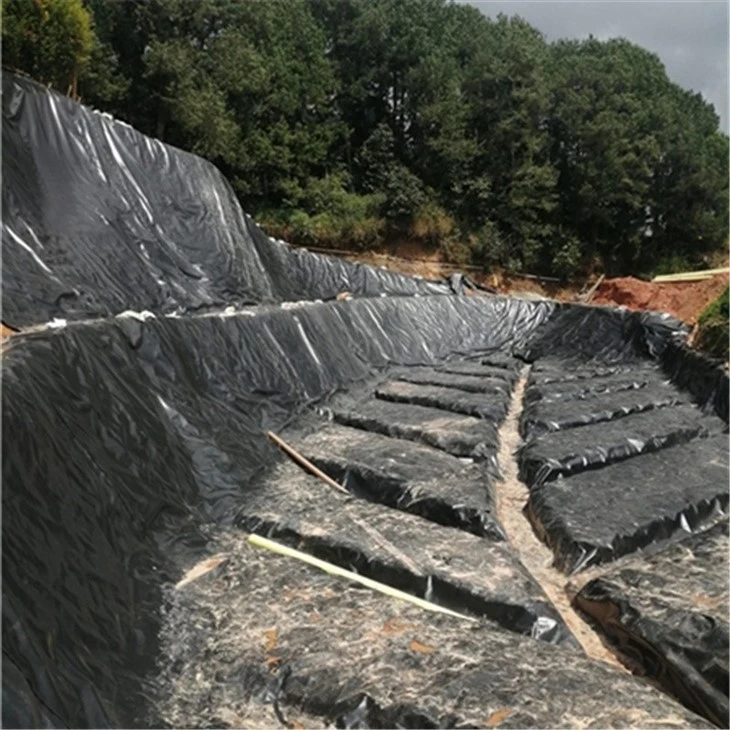
These Nonwoven Polypropylene (PP) Geotextiles are nonwoven needle-punched geotextiles made of 100% polypropylene staple fabrics. The nonwoven PP geotextiles are used in a wide variety of applications in the environmental and general civil markets, such as roadway construction, sports construction project, landfill separation and drainage and coast protection.
- Can self-seal small cracks while forming watertight laps at the seams.
- Provides a strong mechanical bond to poured concrete.
- Proven effective in structures under continuous or intermittent hydrostatic pressure-up to 70m (231 ft).
- Can be installed in virtually any weather condition, including freezing temperatures and damp conditions. Can be installed on green concrete without primers or adhesives.
- Proven effective in both vertical and horizontal applications-i.e., backfilled and property-line walls.

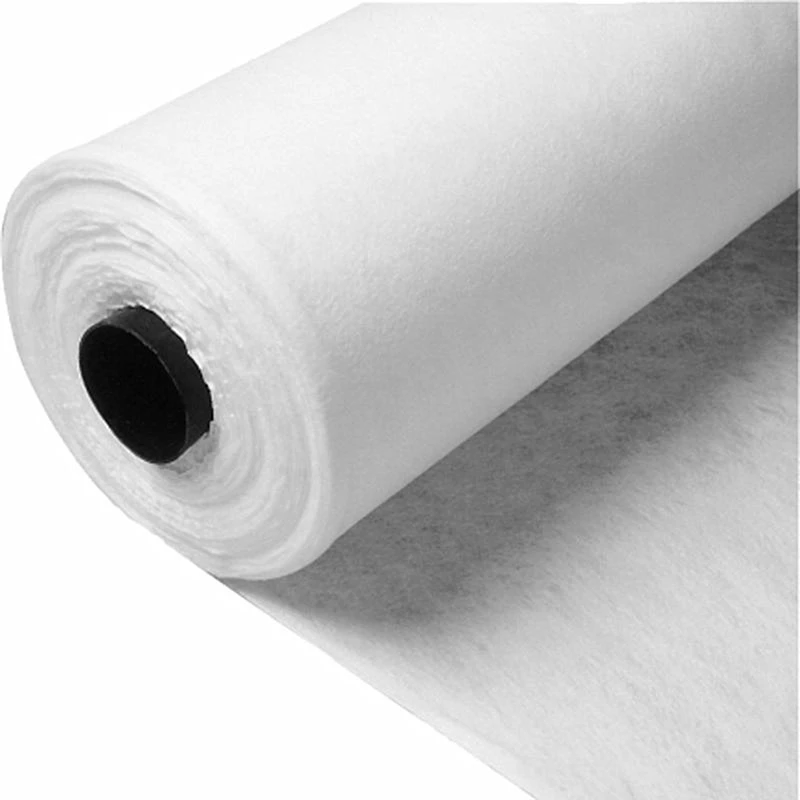
Production Process of PP Nonwoven Geotextile
According to different raw materials, non-woven geotextiles are divided into two types: staple fiber needle-punched non-woven geotextile and filament spunbond needle-punched non-woven geotextile.
The staple fiber needle-punched non-woven geotextile is made of staple fiber polyester or polypropylene. First, the fabric bag is opened, then it is sucked into the material box, and then squeezed to compact to calender. Roller stretch out the net, and then spread the fabric. Generally, 4 to 5 layers of fabric are laid, and then stretched through pre-needling, barbed, and main-needling processes, and trimmed to form the geotextile.
Filament spunbonded needle-punched non-woven geotextile is made of polyester chips, which are melted and plasticized at high temperature, punched into a fabric, and formed by needle punching and consolidation.
Advantages of PP Nonwoven Geotextile
- It is produced using pure polypropylene fiber.
- It has a structure in which a homogeneous distribution of filbers is ensured with its frequent needling and superior production technology.
- With the possibility of production up to 6 m wide, it provides the advantage of fast application with minimum material and labor savings in large areas.
- It is more durable than standard geotextiles due to the heat treatment applied during production.
- It is used between coarse and fine fling materials in engineering applications, preventing the movement of fine particles between coarse particles with water.
- It prevents the burying of coarse-grained fllings over time by laying the fine particles on the ground under the foundation, and prevents the coarse-grained material from losing its engineering feature by getting dirty with fine particles.
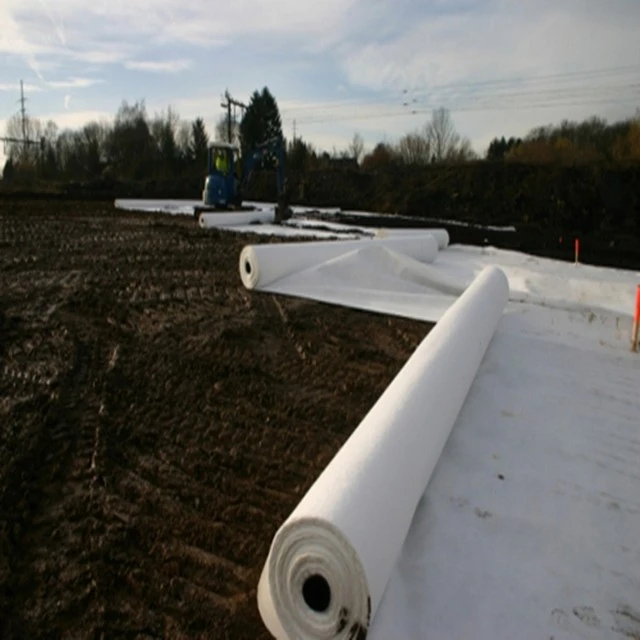
Application of PP Nonwoven Geotextile
Nonwoven geotextiles have a wide range of applications in civil environmental engineering and construction projects.
Filtration
When water passes from a fine-grained to a coarse grained layer, Non-woven Geotextiles can retain fine particles well. Such as when water flows from a sandy soil into a Geotextile wrapped gravel drain.
Separation
To separate two layers of soil with different physical properties, such as the separation of road gravel from soft sub-base materials.
Drainage
To drain liquid or gas from the plane of the fabric, which leads to draining or venting of the soil, such as the gas vent layer in a landfill cap.
Reinforcement
To improve the load bearing capacity of a specific soil structure, such as the reinforcement of a retaining wall.
Soil Stabilization
Adds strength and support to locations with poor soil quality or sloping gradients.
Erosion and Sediment Control
Provides results in protecting slopes, banks and hillsides from the effects of erosion, and has strong soil retention properties.
Underlayment
Reinforces jobsites while providing a uniform and tear resistant underlayment layer for road and driveway construction projects. Using non woven polypropylene fabric as an underlayment will prolong the life of your driveway or road.
Drainage and Filtration
Filters sediment while letting stormwater pass through.
Gasoline Filtration
Filters gasoline effectively with its 50 sieve rating.
Non woven needle punched polypropylene geotextile fabric installation instructions are listed below. Please use these only as a general guide. It is best to use specific instructions designed for your project's unique conditions and environment, when available.
● Prepare the project area by removing stumps, rocks, and other objects that could puncture the fabric or keep it from filtering properly.
● Smooth and level the installment area.
● Place the non woven polypropylene fabric on the ground, overlapping at 12-18".
● Secure the fabric using staples or similar, especially around edges and overlaps.
● Backfill over the fabric to at least 6" depth. Poor ground soils may require a deeper backfill.
What is the Differrence of PP and PET Non Woven Geotextile Fabric?
The density of PP Non Woven Geotextile is small, only 66% of polyester fiber. After multiple drafts, fine denier fibers with tight structure and superior performance can be obtained. Coupled with the reinforcement process, the strength can be even more superior.
PET Non Woven Geotextile has good physical and mechanical properties, high modulus and excellent creep properties; Mature production technology and high market share; Fibers will melt and self-extinguish when burned.
But It has poor hydrophobicity and tends to accumulate condensation water when used as insulation material.
Polypropylene fiber has good monofilament strength and good hot-melt adhesion, and because of its low specific gravity, polypropylene has 45% more fibers than polyester with the same weight, so the strength advantage of polypropylene geotextiles is very obvious.
When the weight is the same, the mechanical properties of PP geotextile are better than those of PET geotextile, especially the elongation rate is much better than that of PET geotextile.
PP non woven geotextile fabric has poor light resistance and is prone to aging and decomposition in sunlight, but it can be solved by adding antioxidants, light stabilizers, copolymerization, cross-linking and other methods. The wear resistance is second only to polyamide fiber.
PET Non Woven Geotextile fabric has high melting point, high temperature resistance, and heat aging resistance.
There is basically no change in the tensile properties of PET geotextile after 15 days; the retention rate of PP geotextile with anti-aging agent is usually around 50%~60%.
PP filament geotextile with low weight and no anti-aging agent will even pulverize.
Ultimate FAQ Guide to PP Nonwoven Geotextile
Q: What Does Geotextile Mean?
Q: What is the purpose of Geotextiles?
Q: What are geotextiles used for?
Q: How to use landscape fabric?
Q: What is geotextile fabric?
Q: Geotextiles come in woven and nonwoven, how are they different?
Q: What is lightweight nonwoven fabric and how are they used?
Q: Why use geotextile?
Stabilization: Geotextiles can be used to stabilize soil in roadways, embankments, and other construction projects. By placing a layer of geotextile between the soil and the construction material, geotextiles help to prevent soil erosion and provide added stability to the construction site.
Drainage: Geotextiles can be used as a filter layer to allow water to pass through while preventing the passage of soil particles. This is particularly useful in drainage systems where water needs to be channeled away from a construction site.
Separation: Geotextiles can be used to separate different layers of soil or other materials. This is particularly useful in road construction where a geotextile layer can prevent the mixing of materials and maintain the integrity of the road structure.
Protection: Geotextile fabric can be used to protect vulnerable surfaces such as geomembranes or other liners from damage. This is particularly useful in environmental applications such as landfill liners, where geotextiles can protect the liner from sharp objects and other potential sources of damage.
Overall, geotextiles are a versatile and effective solution for a wide range of engineering and environmental applications as long as you find the best nonwoven geotextile fabric.
Q: What is woven geotextile fabric?
Q: What is PP nonwoven geotextile fabric?
Q: What are the properties of polypropylene geotextile?
Q: What are the differences between woven geotextiles and non-woven geotextiles?
Differences in the production process: Non-woven geotextiles, also known as non-woven geotextiles, are made by interweaving filaments and short fibers through acupuncture and other production processes with the help of mechanical equipment; It is produced by interweaving at least two sets of yarns.
Performance difference: Due to the difference in the production process, the impact on the product performance is not the same. Although the non-woven geotextile has a good deformation effect, its deformation effect is not as good as that of the woven geotextile. The woven geotextile has a considerable tensile strength effect in the horizontal direction and has more practical characteristics in the reinforcement effect.
Q: What are the benefits of woven geotextiles?
Most commonly used for soil separation and the reinforcement of aggregate layers, woven geotextiles provide important sub-structure support. They are a popular choice to use as a separating layer under roads, car parks, industrial areas and underneath stone foundations for new buildings, as well as access roads and hardstanding areas.
As a reinforcement, the fabric can resist stress, reduce deformations and is a highly effective method of separating and preventing the intermixing of soil and granular fill materials. It is ideal for soil slopes and can create a barrier that absorbs energy to reduce ground erosion.
Q: How do weave geotextiles compare to other types of geotextiles?
Q: What factors should be considered when selecting a woven geotextile for road construction?
Q: What is the difference between geotextile and landscape fabric?
Q: How do you anchor geotextile fabric?
Q: How do you hold down geotextile?
Q: How much do you overlap geotextile fabric?
Q: What are the main functions of woven geotextiles?
Geotextiles used as separators increase the speed of road building projects and other construction work. They separate the civil work material.
Geotextiles play the role of a cushion in preventing soil granules to be flushed by rainwater or in planting of turf.
Geotextiles act as mesh screener/ filter when placed over a channel of suspensed particles carrying fluid. It stops the fine soil granules from being carried away by the fluids.
The additional breadth and high strength woven geotextile is generally used in delicate foundation change, soil and gravel course separation, water discharge and drainage avoidance to successfully avoid surfacing of soil and sinking of bed course.
Hot Tags: pp nonwoven geotextile, China pp nonwoven geotextile manufacturers, suppliers, factory