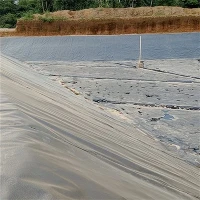
Geomembranes are impermeable membranes widely used in environmental, hydraulic, and civil engineering applications, such as landfill liners, mining operations, and water containment systems. Selecting a high-quality geomembrane is crucial to ensure long-term performance and prevent failures that could lead to environmental contamination or structural damage. Here are key factors to consider when evaluating the quality of a geomembrane.
1. Material Composition
The most common materials for geomembranes include:
High-Density Polyethylene (HDPE) – Known for its chemical resistance and durability.
Linear Low-Density Polyethylene (LLDPE) – More flexible than HDPE, suitable for uneven surfaces.
Polyvinyl Chloride (PVC) – Flexible and easy to install but less resistant to certain chemicals.
Ethylene Propylene Diene Monomer (EPDM) – Excellent UV and weather resistance, often used in exposed applications.
A high-quality geomembrane should be made from virgin resin rather than recycled materials to ensure consistent performance.
2. Thickness and Uniformity
The thickness of a geomembrane affects its puncture resistance and longevity.
A premium geomembrane should have consistent thickness throughout, with minimal variations (typically within ±10% of the specified thickness).
3. Tensile Strength and Elongation
ASTM and ISO standards (e.g., ASTM D6693, ISO 527) define the required tensile strength and elongation properties.
A high-quality geomembrane should exhibit high tensile strength (typically 20-40 MPa for HDPE) and good elongation (≥ 700% for LLDPE).
4. Puncture and Tear Resistance
Puncture resistance is critical in applications with sharp substrates (e.g., landfills with rocky subgrades).
Tests like ASTM D4833 (puncture resistance) and ASTM D1004 (tear resistance) help assess durability.
5. Chemical Resistance
A geomembrane must resist degradation from chemicals, acids, alkalis, and hydrocarbons.
Manufacturers should provide chemical compatibility charts based on ASTM or ISO immersion tests.
6. UV and Oxidation Resistance
For exposed applications, UV stabilizers (e.g., carbon black or specialized additives) are essential to prevent degradation.
ASTM D7238 and GRI-GM13 standards evaluate oxidative induction time (OIT) to predict long-term stability.
7. Seam Integrity
The weakest point in a geomembrane installation is often the seams.
High-quality geomembranes should allow strong welding (extrusion, hot wedge, or fusion methods) and pass seam peel and shear tests (ASTM D6392).
8. Certifications and Testing
Reputable manufacturers provide third-party certifications (e.g., GSI, NSF, or CE Mark).
Factory and field testing (e.g., spark testing, air lance testing) ensure defect-free installation.
Conclusion
Choosing a high-quality geomembrane requires careful evaluation of material properties, manufacturing standards, and performance testing. Engineers and project managers should verify compliance with international standards and conduct thorough quality control inspections before installation. Investing in a superior geomembrane reduces long-term risks and ensures environmental protection and structural integrity.
Would you like additional details on specific test methods or installation best practices?