

Woven Geotextile
With more than 18 years of industry experience, we take professionalism, innovation and excellent quality as our creed, and are committed to providing customers with excellent geomembranes, geotextiles and other geosynthetic materials products. Through advanced production technology, rich experience and unremitting innovation, we provide the best geotechnical material solutions for engineering and construction projects in various industries around the world.
Advanced Materials
We manufacture custom geomembrane liners made from reinforced polyethylene (RPE), reinforced polypropylene (RPP) and low density polyethylene (LDPE). Our RPE and RPP liners are stronger, provide better puncture and tear resistance, are lighter weight and have excellent UV resistance when exposed to sunlight.
Reliable Quality Control
The company has established a national-standard laboratory for in-house quality control. We built a strict quality control system in all aspects from raw materials testing,production processes to final product quality testing.
Professional Experience
We has more than 18 years experience of geotextiles production in geosynthetic products, including geomembrane, geotextile, HDPE geomembrane, geocell, 3D geomat and etc. We provide complete geosynthetic solutions for ground stabilization, reinforcement and drainage, erosion control, bank and slope protection.
Complete Qualifications
Our factory is certificated by ISO9001, ISO14001, and OHSAS18001. All geomembranes have passed the certificates of the TUV, Soncap, SASO, BV and the test of SGS and Intertek etc.
-
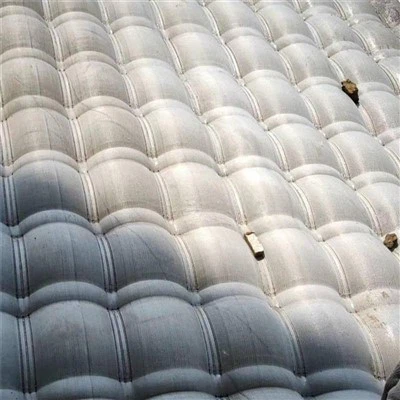
 Fabric Formed Concrete MattressThe Fabric Formed Concrete Mattress is an innovative and sustainable solution for erosion control, slope stabilization, and coastal protection. Unlike traditional rigid concrete structures, itAdd to Inquiry
 -
 Geotextile Geosynthetic ContainersEngineered from high-strength woven/nonwoven geotextiles, our geo containers provide superior sediment containment and erosion protection for coastal, marine and civil engineering projects. TheseAdd to Inquiry
 -
 PP Woven Geotextile BagGeotextile Bag is an innovative and eco-friendly solution designed for riverbank stabilization, slope protection, and embankment reinforcement. Made from high-quality woven geotextile material, theseAdd to Inquiry
 -
 Polypropylene Woven GeotextileGeotextile nonwovens are produced by needle punching staple fibers in random patterns to form high strength and dimensionally stable fabrics. Polypropylene fibers are resistant to UV degradation andAdd to Inquiry
 -
 Needle Punched Geotextile FabricWoven geotextiles have extremely high water permeability, filterability, durability, deformation adaptability, and good plane drainage capabilities.Add to Inquiry
 -
 PP Woven GeotextileWoven geotextiles are manufactured according to ASTM international product standards to provide high tensile strength and low elongation.Add to Inquiry
 -
 Woven Polypropylene GeotextileWoven geotextile is a type of geosynthetic material that is made by weaving synthetic fibers together. It is commonly used in civil engineering and construction projects for various applications suchAdd to Inquiry
 -
 Dewatering Woven Geotextile TubeWoven geotextiles are planar, permeable woven structures produced by interweaving two or more sets of yarns or fibers. Woven geotextiles are used with soil, rock, earth, or other geotechnicalAdd to Inquiry


Brief Introduction to Woven Geotextile
Woven geotextiles are manufactured using individual threads of fabric that have been tightly wound together, creating an ultra-durable finished project. This makes them a great choice for separation and reinforcement projects that require heavy-duty tensile strength. In most cases, woven geotextile fabric is made using either fibrillated yarn, slit films, or other construction-grade fibers. This extreme durability prevents erosion and punctures to the fabric surface but also limits filtration. That’s why woven geotextile is not recommended for projects that require permeability, such as drainage projects.

Different Structures of Woven Geotextiles
Slit Film Woven Geotextiles
These are manufactured by weaving flat strands of polypropylene that are created by slitting a plastic sheet. These geotextiles aid in construction over soft or weak soils by providing separation and stabilization and are excellent for park-on/drive-on applications. While they are permeable, slit-film geotextiles perform poorly when a gradient ratio test is performed. Therefore, they can clog. As such, they are not recommended for filtration applications such as bulkheads, erosion control or underdrains.
Monofilament Woven Geotextiles
These are manufactured by weaving extruded, round strands of polypropylene. Woven monofilament geotextiles have a unique property called percent open area and perform very well when a gradient ratio test is performed. Therefore, they are preferred for applications where both strength and filtration are a concern, such as shoreline rip rap and bulkhead applications.
Combination Woven Geotextiles
Woven combination geotextiles are manufactured by weaving round monofilament yarns in one direction and flat tape or fibrillated yarns in the other. They provide an excellent combination of strength and hydraulics.
Reinforcement
The synergistic improvement of a total system’s strength created by the introduction of a reinforcing geosynthetic (that is good in tension) into a soil and/or aggregate system (that is good in compression but poor in tension).
Filtration
The equilibrium soil-to-geotextile system that allows for adequate movement of a liquid across the plane of the geotextile with limited soil loss over the service lifetime of the application.
Separation
The placement of a flexible, porous geotextile between dissimilar materials so that the integrity and intended functions of both materials remain intact or are improved.
Confinement
The ability of a geosynthetic to restrain lateral movement from a soil or aggregate through friction or mechanical interlock.


Road Work
Geotextiles are used in the construction of the road. It reinforces the soil by adding tensile strength to it. It is used as a rapid de-watering layer in the roadbed, the geotextiles need to preserve their permeability without losing their separating functions.
Railway Works
The woven fabrics or the non-woven ones are used to separate the soil from the sub-soil without impeding the groundwater circulation where the ground is unstable. Enveloping individual layers with fabric prevents the material from wandering off sideways due to shocks and vibrations from running trains.
Agriculture
It is used for mud control. For the improvement of muddy paths and trails used by cattle or light traffic, nonwoven fabrics are used and are folded by overlapping to include the pipe or a mass of grit.
Drainage
The use of geotextiles to filter the soil and a more or less single-size granular material to transport water is seen as a viable alternative to conventional systems. Geotextiles perform the filtering mechanism for drainages in earth dams, on roads and highways, in reservoirs, behind retaining walls, in deep drainage trenches, and in agriculture.
River, Canals, and Coastal Works
Geotextiles protect river banks from erosion due to currents or lapping. When used in conjunction with natural or artificial enrockments, they act as a filter.
The Role of Woven Geotextiles
There are Textile Geotextile Function Reinforcement Roles
That can stabilize and limit the project's long time use to shift. And can make the local stress act on the soil transfer or distribution to a larger area.
01
Separation Role
Geotextile fabric is used to separate different geotechnical structure materials to form a stable sub-interface. And play their respective characteristics and overall role according to the requirements.
02
Can Combine the Role
Geotextile and geomembrane are used together in two different pressure materials. That can play the role of tension and diaphragm.
03
Barrier Function
The function of placing the geotextile across a flowing liquid channel with suspended particles to stop mud particles. And allow the liquid to pass through.
04
Function as a Cushioned Mat
Placing geotextiles on slopes can stop the loss of mud particles due to rainfall or planting turf.
05
Ensuring you make the right choice of geotextile fabric for your project means understanding the differences between them. Generally, woven geotextiles have higher strength values, while non-woven geotextiles have higher flow rates and permeability. Here’s a quick explanation of the differences.
Manufacturing Process
Woven geotextiles are weaved together on a film or loom while non-woven geotextiles are manufactured by bonding fibres together.
Physical Attributes
Woven geotextiles are plastic-like in feel and appearance, while non-woven geotextiles have a fuzzy-like feel and appearance.
Permeability
Woven geotextiles are impermeable whilst non-woven geotextiles are permeable.
Classification
Woven geotextiles are referred to by tensile stress while non-woven geotextiles are referred to by weight.
Strength
Woven geotextiles are weaved by thread crossing which creates a strong reinforcement, meaning they are stronger and more durable than non-woven geotextiles.
Cost
Non-woven geotextiles tend to be more affordable because they are quicker to produce, whilst woven fabrics are more expensive to produce and take more time to manufacture.
Precautions for Installation of Woven Geotextile Fabrics


The geotextile can only be cut with a geotextile knife (hook knife). If it is cut in the field, special protection measures must be taken for other materials to prevent unnecessary damage to the geotextile due to cutting.
When laying geotextiles, all necessary measures must be taken to prevent damage to the material below.
When laying geotextiles, care must be taken not to let stones, a large amount of dust or moisture, etc., that may damage the geotextiles, may block drains or filters, or may cause difficulties for next connections into the geotextiles. or under the geotextile.
After installation, conduct a visual inspection on all geotextile surfaces to determine all damaged landowners, mark and repair them, and make sure that there are no foreign substances that can cause damage on the paved surface, such as broken needles and other foreign objects.
The connection of geotextiles must follow the following regulations: under normal circumstances, there should be no horizontal connection on the slope (the connection must not intersect with the contour of the slope), except for the repaired place.
If a suture is used, the suture must be made of the same or more than the material of the geotextile, and the suture must be made of anti-ultraviolet material. There should be an obvious color difference between the suture and the geotextile for easy inspection.
Pay special attention to the stitching during installation to ensure that no dirt or gravel from the gravel cover enters the middle of the geotextile.
How to Choose Between Woven and Non-Woven Geotextile for You Specific Project
The choice to use woven geotextile or non woven geotextile should be based on specific project needs and environmental conditions. Here are some considerations for selecting the right geotextile types:
First determine the main functions required in the project, such as separation, filtering, enhancement or protection. Non woven geotextiles perform well in most functions, while woven geotextiles may be superior in terms of reinforcement and tensile strength.
If the project requires separation and isolation between different soil layers, both geotextile types can be used. non woven geotextiles can effectively prevent soil mixing and sediment migration.
If you need to filter particulate matter from water flow and keep moisture from passing through, non woven geotextiles are a good choice. It has good water permeability and filtration properties.
For projects requiring soil reinforcement, woven geotextiles are often more suitable. It has high tensile strength and stiffness and can withstand large mechanical stress.
Whether protecting earthwork structures, river banks, embankments or other earthworks, both woven and non woven geotextile types can be used. Choose the right geotextile types based on specific protection needs and environmental conditions.
Consider the environmental conditions and soil characteristics of the project. The following factors may influence geotextile selection:
● Soil Type: Understand the soil types in the project, including silt, clay, sand, rock, etc., and evaluate the adaptability of geotextiles in different soils.
● Temperature and Humidity: Consider the climatic conditions and ambient temperature of the project. In high temperature or humid environments, non woven geotextiles may be more suitable.
● Hydrological Conditions: Assess hydrological conditions, such as water flow velocity, water level changes, and water quality, to determine the water permeability and filtration performance requirements of the geotextile.
● Design requirements: Select the appropriate geotextile type and specification according to the design requirements and specifications of the project. Consult relevant engineering guidelines and specifications to ensure the geotextile selected meets requirements.
Consider the budget and economic benefits of the project. non woven geotextiles are generally more affordable than woven geotextiles, but in certain applications the high strength and durability of woven geotextiles may provide longer-term benefits.
Ultimate FAQ Guide to Woven Geotextile
Q: What are the differences between woven geotextiles and non-woven geotextiles?
Differences in the production process: Non-woven geotextiles, also known as non-woven geotextiles, are made by interweaving filaments and short fibers through acupuncture and other production processes with the help of mechanical equipment; It is produced by interweaving at least two sets of yarns.
Performance difference: Due to the difference in the production process, the impact on the product performance is not the same. Although the non-woven geotextile has a good deformation effect, its deformation effect is not as good as that of the woven geotextile. The woven geotextile has a considerable tensile strength effect in the horizontal direction and has more practical characteristics in the reinforcement effect.
Q: What are the benefits of woven geotextiles?
Most commonly used for soil separation and the reinforcement of aggregate layers, woven geotextiles provide important sub-structure support. They are a popular choice to use as a separating layer under roads, car parks, industrial areas and underneath stone foundations for new buildings, as well as access roads and hardstanding areas.
As a reinforcement, the fabric can resist stress, reduce deformations and is a highly effective method of separating and preventing the intermixing of soil and granular fill materials. It is ideal for soil slopes and can create a barrier that absorbs energy to reduce ground erosion.
Q: Why choose nonwoven geotextiles?
Q: How do woven geotextiles prevent soil erosion?
Q: What are the benefits of using woven geotextiles in road construction?
Q: How do weave geotextiles compare to other types of geotextiles?
Q: What factors should be considered when selecting a woven geotextile for road construction?
Q: Are geotextiles biodegradable?
Q: Can water go through geotextiles?
Q: What is the difference between geotextile and landscape fabric?
Q: What type of geotextile should I use?
Q: How do you anchor geotextile fabric?
Q: How do you hold down geotextile?
Q: How much do you overlap geotextile fabric?
Q: Does woven geotextile fabric let water through?
Q: How long does woven geotextile last?
Q: Where can nonwoven geotextile be directly placed?
Q: Can you overlap geotextile fabric?
Q: What is woven geotextile made of?
Q: What are the ingredients in geotextile fabric?
We're professional woven geotextile manufacturers and suppliers in China, specialized in providing high quality products with low price. We warmly welcome you to buy woven geotextile for sale here from our factory.
Woven Polypropylene Geotextile, Woven Geotextile, Geotextile