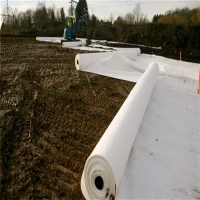
Geomembranes are manufactured by adding different substances to form a mixture and using processes such as extrusion or calendaring to create layers of varying widths and thicknesses. These substances can be listed as follows: Contains polymer resin, antioxidant, plasticizer, filler, carbon black, and lubricant as raw materials.
Products Description
Polyethylene plastic sheets are available in different densities and different flexibilities, including LLDPE, LDPE, MDPE, and HDPE. PE is an economical geomembrane suitable for large-scale projects, such as landfill linings and reservoir linings, where good overall chemical resistance is an advantage. Material thickness ranges from 0.50mm to 3.00mm.
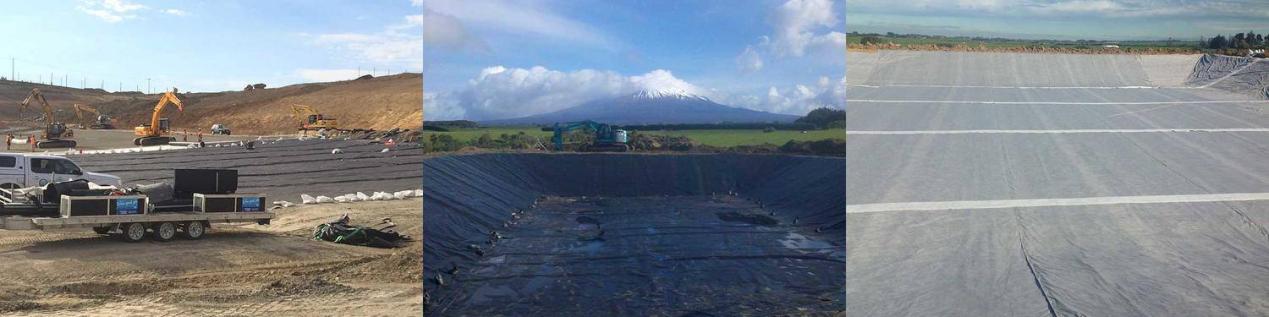
Uses of Geomembrane
Frozen, pooling, flowing, wastewater, and standing liquids can be hazardous if not properly managed. Hence, geomembranes are used to prevent the loss of material.
The following are uses of geomembranes:
As liners for various waste conveyance canals
As waterproofing liners within tunnels and pipelines
As liners for the agriculture industry
As liners for potable or reserve water (for example, safe shutdown of nuclear facilities)
To contain and transport potable water and other liquids in the ocean
As liners for the agriculture industry
As fish pond liners
Beneath highways to prevent pollution from deicing salts
As liners for primary, secondary, or/and tertiary waste piles and solid-waste landfills
Adjacent and beneath highways to capture hazardous liquid spills
As liners for sewage sludge, radioactive or hazardous waste liquid
As linings for emergency spillways
To contain and transport liquids in trucks
Application
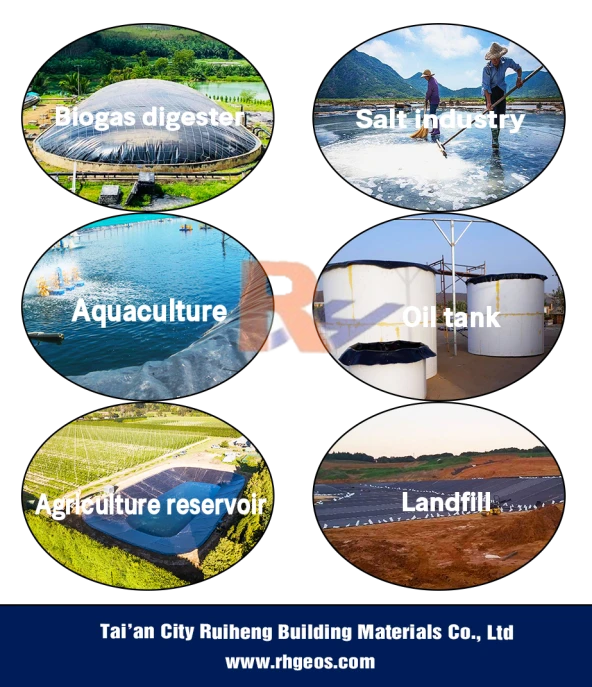
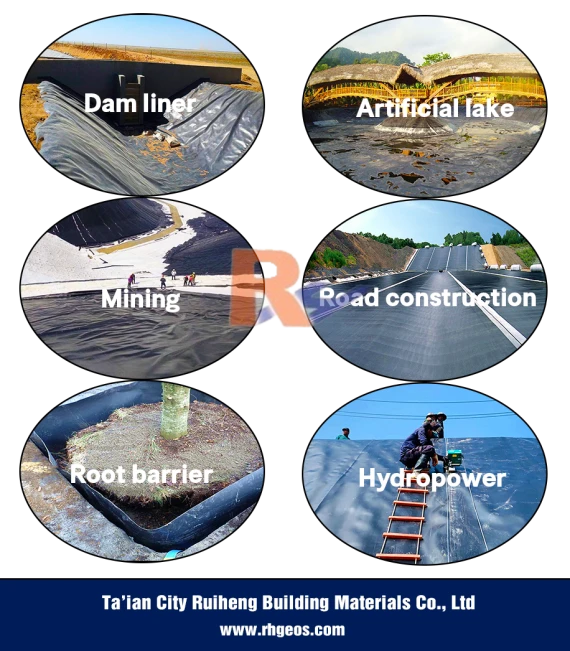
The rapid adoption of geotextile is evident in different industries due to the versatility of the product. Geomembranes have a wide range of applications, some of which are:
Agriculture and Nurseries
Water industry
Marine (Pontoon construction)
Manufacturing process
Mining industry
Application details
Land fill basal linings and cap closures
Geomembrane liners in foundation applications should be the most effective line of defense in protecting the environment and are generally the lowest cost element of the total project cost.
These linings form one of the essential components of lining systems, often natural bioreactors, to prevent potentially harmful leachates produced by the decomposition of organic compounds. Such a lining must be very durable for decades, even centuries, and must be resistant to the components of these organic liquids.
At the end of a landfill's life, the sites are covered with a suitable liner and used for closure and rehabilitation of these sites. A development that is gaining increasing use is the incorporation of gas collection and removal systems under and through the cap to draw gas into the turbine for power generation.
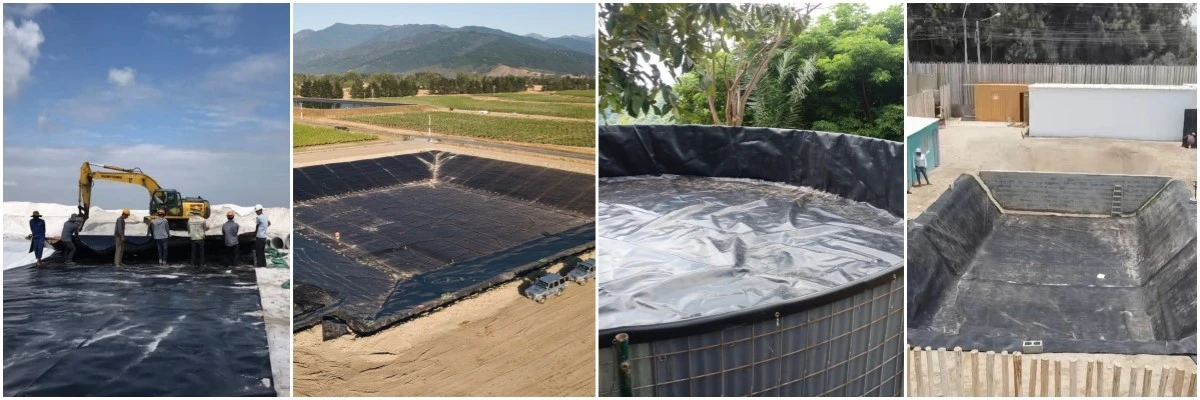
Oil and gas disposal pits
Exploration for oil and gas requires extensive drilling, which produces large amounts of slurry and waste that can be harmful to the environment. Storage pits are constructed and used during this process. Lined with HDPE lining to store slurry and protect local soil from contaminants. It is important that a strong and durable lining is used for this purpose, and Rowad lining plays an important role in this process.
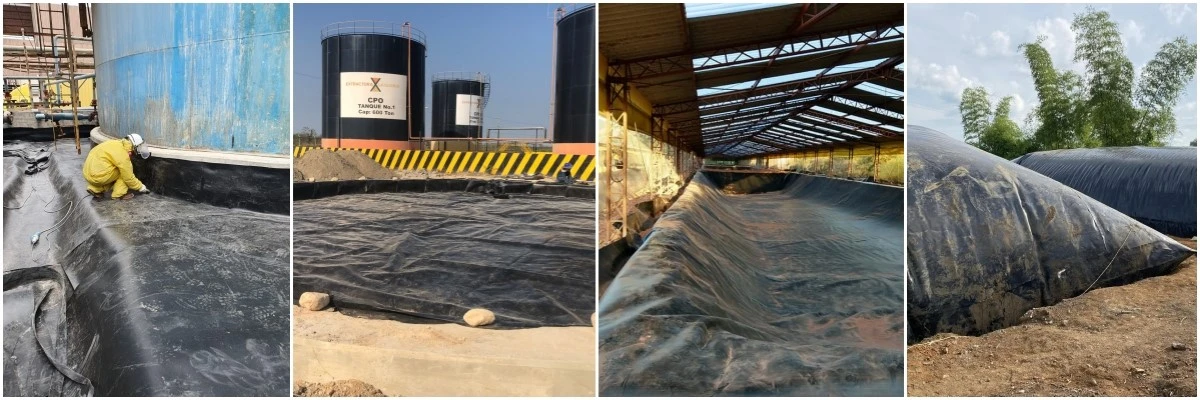
Surface reservoirs ponds and lagoons
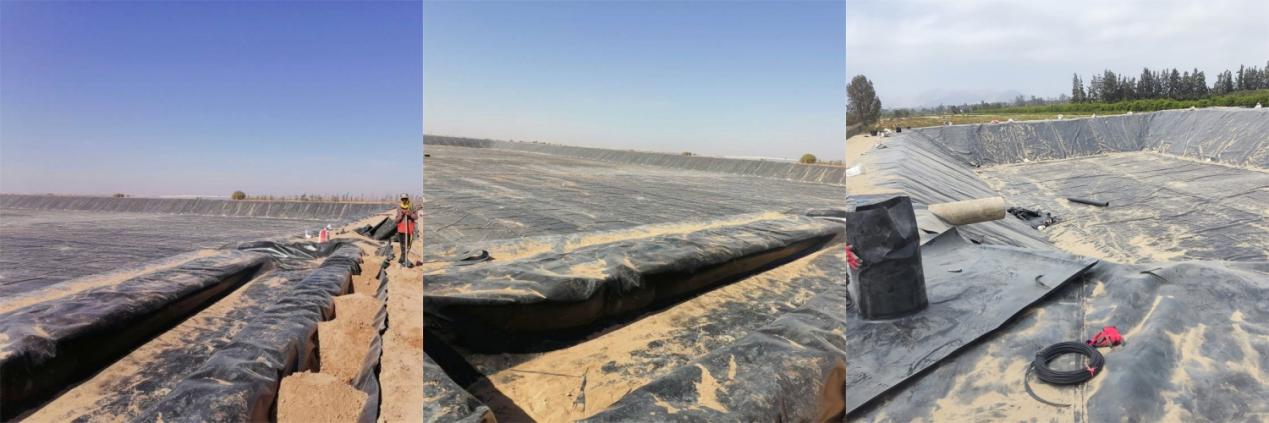
Flexible geomembrane lining systems are rapidly becoming the first choice for clients looking to provide a quick and cost-effective means of storing liquids in earth dams, lagoons and ponds.
Contact Information
Taian City Ruiheng Building Materials Co., Ltd
Address: NO.3566 Longquan Road, Tai'an Hi-tech Zone, Shandong Province, China
Website: www.rhgeos.com
Email: lorna@rhgeos.com
Phone / Whatsapp / Wechat: 0086 187 6669 7769
Hot Tags: geocomposite membrane, China geocomposite membrane manufacturers, suppliers, factory