

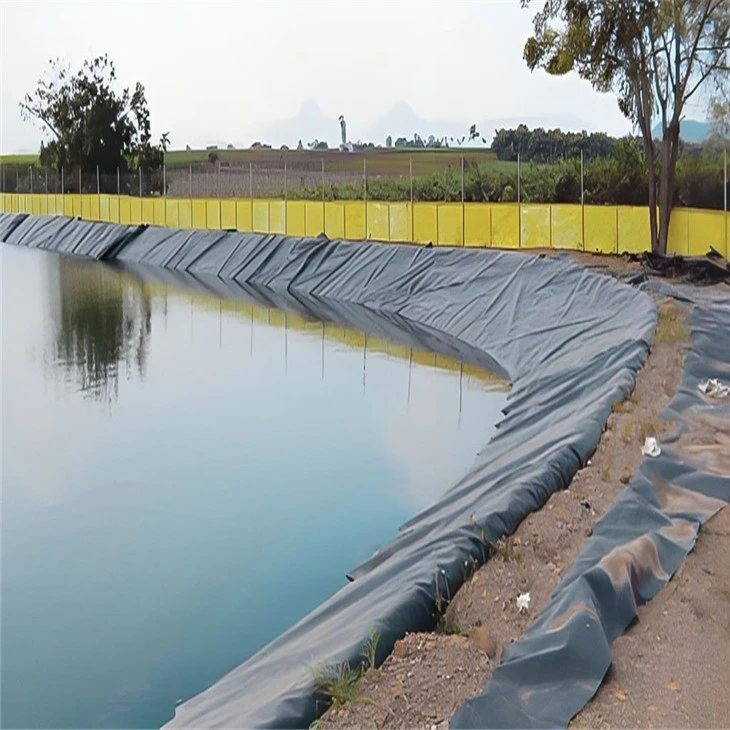
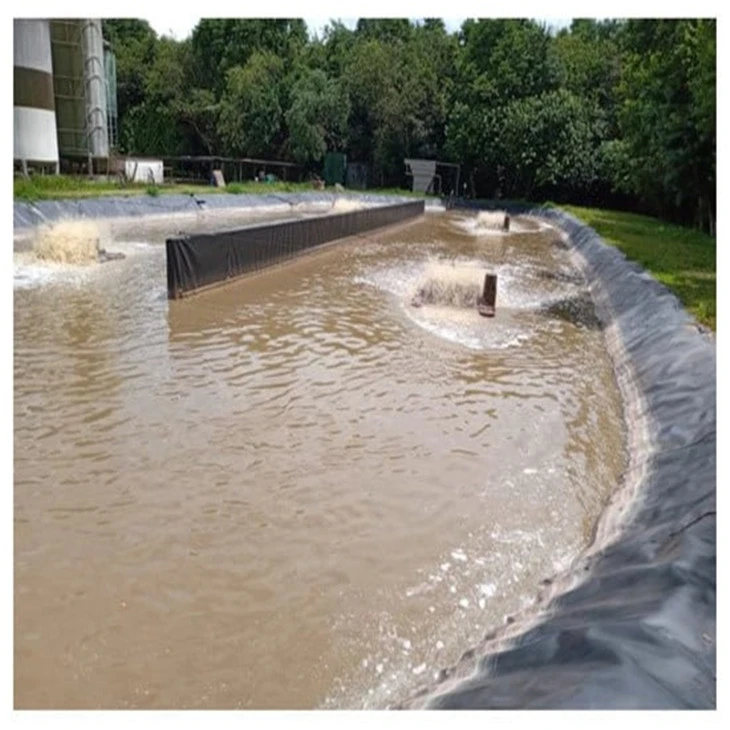
Products Description
| Test | Unit | Standard | Test Frequency |
RH75 | RH10 | RH15 | RH20 | RH30 | |
| Mechanical Properties | Thickness | mm | D5199 | per roll | 0.75 | 1.00 | 1.50 | 2.00 | 3.00 |
| Density | g/cc | D1505/D792 | 90,000 kg | 0.94 | |||||
| Tensile Properties | D 6693 | ||||||||
| · yield strength | kN/m | Type IV | 9,000 kg | 11 | 15 | 22 | 29 | 44 | |
| · break strength | kN/m | 20 | 27 | 40 | 53 | 80 | |||
| · yield elongation | % | 12 | 12 | 12 | 12 | 12 | |||
| · break elongation | % | 700 | 700 | 700 | 700 | 700 | |||
| Tear Resistance | N | D 1004 | 20,000 kg | 93 | 125 | 187 | 249 | 374 | |
| Puncture Resistance | N | D 4833 | 20,000 kg | 240 | 320 | 480 | 640 | 960 | |
| Stress Crack Resistance | hr. | D 5397 | per GRI GM-10 | 500 hr. | |||||
| Carbon Black Content | % | D 4218 | 9,000 kg | 2.0-3.0% | |||||
| Reference Propertied | Oxidative Induction Time | min | D 3895 | 90,000 kg | 100 min. | ||||
| (a) Standard OIT | D 5885 | ||||||||
| (b) High Pressure OIT | 400 min. | ||||||||
| Oven Aging at 85°C retained after 90 days |
% | D 5721 | per each | ||||||
| (a) Standard OIT - % | D 3895 | formulation | 55% | ||||||
| (b) High Pressure OIT - % | D 5885 | 80% | |||||||
| UV Resistance | % | per each | |||||||
| High Pressure OIT - % retained after 1600 hrs |
D 5885 | formulation | 50% | ||||||
| Roll Size | Roll Width | m | 7/8 | 7/8 | 7/8 | 7/8 | 7 | ||
| Roll Length | m | 280 | 210 | 140 | 105 | 70 | |||
Waterproofing advantages of geomembranes
1. High anti-seepage performance
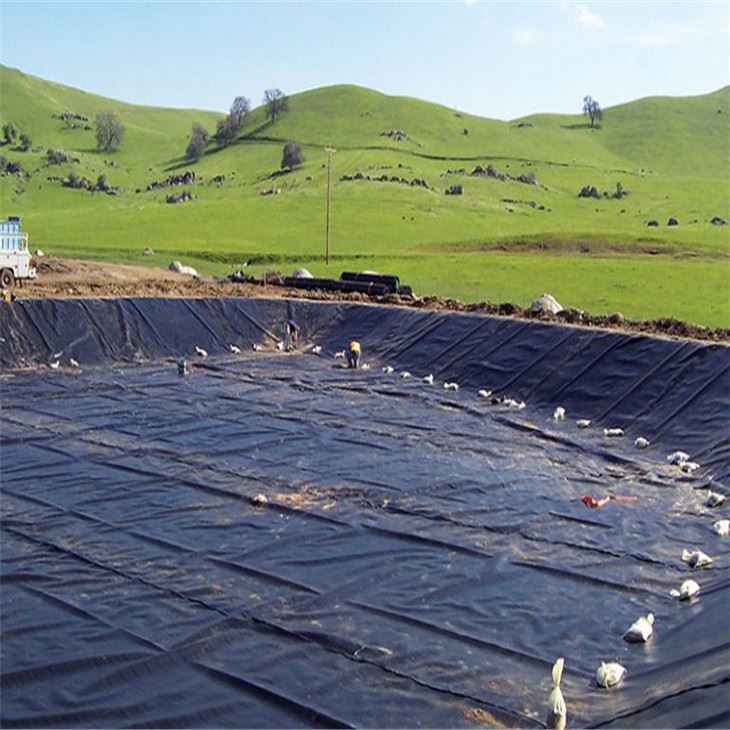
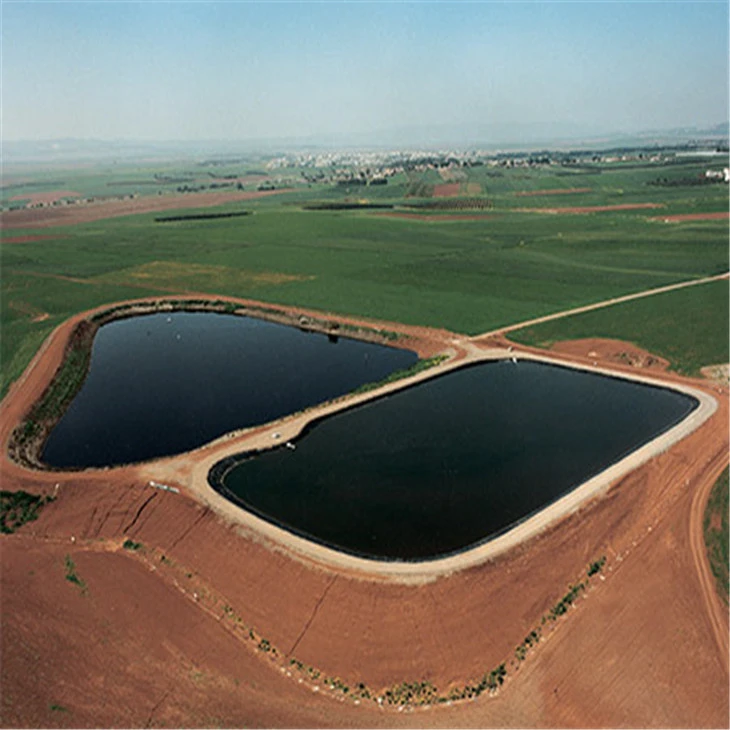
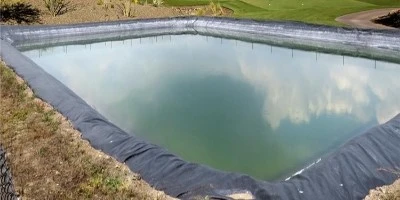
The core advantage of geomembranes lies in their extremely low permeability coefficient, which far exceeds traditional anti-seepage materials (such as clay or concrete). Its dense polymer structure can almost completely block the penetration of liquids (such as water, leachate, oil) and gases (such as methane and hydrogen sulfide). For example, in a landfill, a 1.5mm thick HDPE geomembrane can reduce the leakage of leachate to less than 1 liter per square meter per year, significantly reducing the risk of groundwater pollution. In addition, through double-track hot-melt welding technology, the permeability coefficient of the joint is consistent with that of the parent material, ensuring the integrity of the overall anti-seepage system.
2. Chemical corrosion resistance
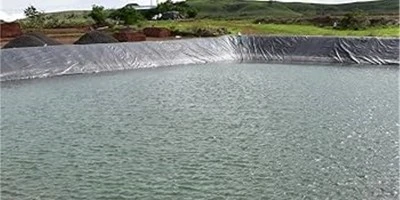
Geomembranes have excellent chemical stability to acids, alkalis, salts, oils and various organic solvents, especially in HDPE materials.
Acidic environment: It can withstand strong acid and alkali media with a pH value of 1 to 14. For example, in chemical wastewater pools, HDPE geomembranes can be in contact with 30% sulfuric acid or sodium hydroxide solutions for a long time without corrosion.
Oil media: It is resistant to dissolution of hydrocarbon substances such as diesel, gasoline, and mineral oil, and is suitable for anti-seepage of oil storage tanks.
Saline environment: In salt lake areas or seawater aquaculture ponds, it can resist chloride ion erosion and avoid the peeling problem of traditional concrete structures.
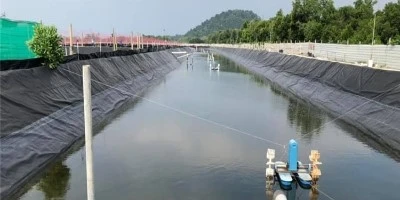
3. Adapt to complex terrain
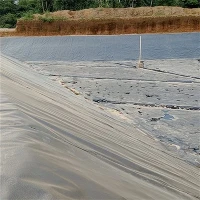
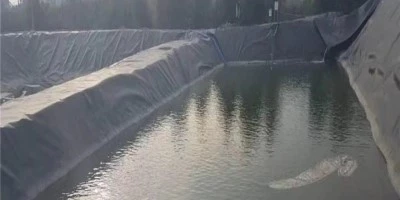
The flexible properties of geomembranes enable them to fit tightly to uneven base surfaces (such as rock slopes, karst terrain, or soft soil foundations), solving the pain point of rigid materials (such as concrete) that are prone to cracking.
Construction case: In mountain reservoir projects, LLDPE geomembranes can adapt to deformation caused by foundation settlement or earthquakes through their own ductility without the need for additional reinforcement.
Supporting measures: Combined with geotextiles, it can disperse local stress, prevent sharp objects from piercing, and enhance the overall structure's ability to resist deformation.
4. Convenient construction
The wide width design (commonly 6~8 meters) and lightweight characteristics of geomembrane (weight is only 1/20 of concrete) greatly improve construction efficiency:
Quick connection: Using a double-track hot melt welding machine (temperature control accuracy ±5°C) or an extrusion welding gun, thousands of square meters of welding can be completed in a single day, and the joint strength reaches more than 90% of the parent material.
Low-cost maintenance: local damage can be repaired by patch welding, without the need for overall replacement, reducing the cost of the entire life cycle.
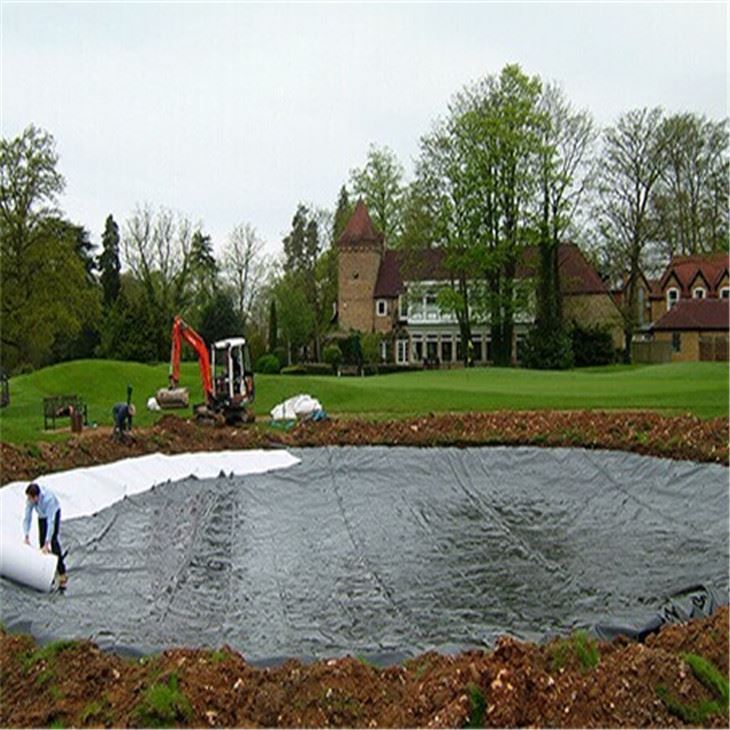
Flexible cutting: supports on-site on-demand cutting, suitable for special shapes such as circular pools and bends, reducing material waste.
5. Strong durability
The long-term stability of geomembranes makes it an ideal choice for "century-old projects":
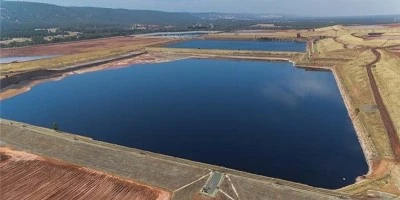
Anti-ultraviolet aging: HDPE geomembranes can withstand more than 10 years of ultraviolet radiation in open air environments by adding carbon black or anti-UV masterbatch, and the strength retention rate is >80%.
Temperature resistance: HDPE remains flexible in the range of -60°C~80°C, and LDPE/LLDPE can withstand low temperatures of -50°C, suitable for extremely cold or high temperature areas (such as desert oil depots).
Anti-biological erosion: Anti-mildew and anti-root thorns, can be used for a long time in wetlands or vegetation-covered areas (such as artificial lakes).
FAQ
Q: 1. What is HDPE sheet geomembrane made of?
Q: 2. What are the benefits of using HDPE sheet geomembrane?
Q: 3. What are the different types of HDPE sheet geomembrane available?
Q: 4. What are the typical applications of HDPE sheet geomembrane?
Q: 5. Is HDPE sheet geomembrane environmentally friendly?
Q: 6. What is the lifespan of HDPE sheet geomembrane?
Tai'an City Ruiheng Building Materials Co., Ltd
● Address: NO.3566 Longquan Road, Tai'an Hi-tech Zone, Shandong Province, China
● Website: www.rhgeomembrane.com
● Email: bonnie@rhgeos.com
● Phone / Whatsapp / Wechat: 0086 188 5482 2179
Hot Tags: waterproofing geomembrane liner, China waterproofing geomembrane liner manufacturers, suppliers, factory