



Products Description of cobalt ore Geomembrane

|
Tested Item |
Test Method |
Frequency |
Minimum Average Value |
||||
|
|
RH0.50 |
RH0.75 |
RH1.00 |
RH1.50 |
RH2.00 |
||
|
Thickness, (minimum average), mm Lowest individual reading |
ASTM D 5199 |
every roll |
0.50 0.425 |
0.750 0.675 |
1.00 0.90 |
1.50 1.35 |
2.00 1.80 |
|
Density, g/cm3 |
ASTM D 1505 |
90,000 kg |
0.940 |
0.940 |
0.940 |
0.940 |
0.940 |
|
Tensile Strength at Break, N/mm |
ASTM D 669 |
9,000 kg |
13 |
20 |
27 |
40 |
53 |
|
Tear Resistance, N |
ASTM D 1004 |
20,000 kg |
60 |
93 |
125 |
187 |
249 |
|
Puncture Resistance, N |
ASTM D 4833 |
20,000 kg |
160 |
240 |
320 |
480 |
640 |
|
Carbon Black Content, % (Range) |
ASTM D 603*/4218 |
9,000 kg |
2.0 - 3.0 |
||||
|
Carbon Black Dispersion |
ASTM D 5596 |
20,000 kg |
Note(1) |
Note(1) |
Note(1) |
Note(1) |
Note(1) |
|
Notch Constant Tensile Load, hr |
ASTM D 5397, |
90,000 kg |
300 |
300 |
300 |
300 |
300 |
|
Oxidative Induction Time, min |
ASTM D 3895, |
90,000 kg |
>100 |
>100 |
>100 |
>100 |
>100 |
Key Features & Benefit
cobalt ore High-Density Polyethylene Geomembrane
Antioxidants
hese ingredients protect the polymer chains from thermo-oxidative degradation during the manufacturing process (and installation in hot, sunny climates) and throughout the membrane's service life. They scavenge free radicals, preventing embrittlement and loss of mechanical properties caused by prolonged exposure to heat and oxygen.
Carbon Black
he geomembrane is uniformly filled with a high percentage of high-quality, finely dispersed carbon black. This serves a two-fold critical purpose. First, it provides excellent resistance to ultraviolet (UV) radiation, effectively protecting the high-density polyethylene (HDPE) from sunlight damage that can cause surface cracking and shorten its service life. Second, carbon black enhances the material's thermal stability and overall tensile strength.
Superior Chemical Resistance: A Solid Fortress Against Corrosion
Heavy Metal Salts
he geomembrane is impervious to heavy metal salts, such as cobalt, copper, zinc, and arsenic, commonly found in leachate. When immersed in these highly concentrated ionic solutions, the geomembrane does not swell, soften, or experience loss of physical properties.
Wide PH Range
This HDPE geomembrane is suitable for continuous use across the entire pH range, from strong acids to strong bases, making it suitable for any phase of mining operations or for containing diverse waste streams.
Excellent physical and mechanical properties
High Tensile Strength and Elongation
he geomembrane has high tensile strength in both the longitudinal and transverse directions, making it resistant to puncture and tearing during installation and due to uneven roadbed surfaces. It also has a high yield elongation, meaning it can stretch significantly without breaking-critical for accommodating subsoil settlement and differential movement.
Puncture and Tear Resistance
The material's dense structure and high modulus provide excellent resistance to puncture from sharp rocks or debris in the roadbed, or from overlying drainage materials. Its tear resistance ensures that any localized damage does not spread over a large area.
Applications of cobalt ore Geomembrane
1. Heap leach pads
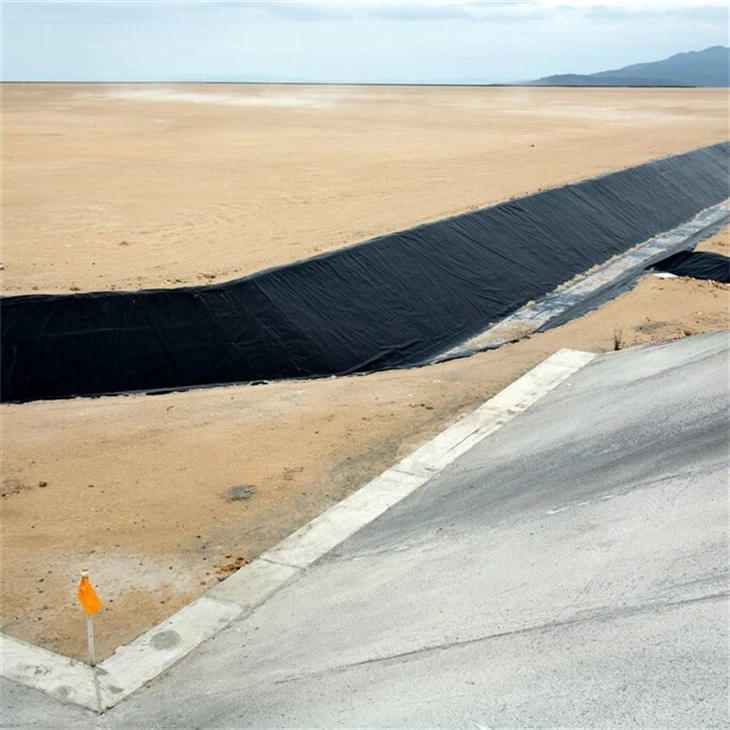
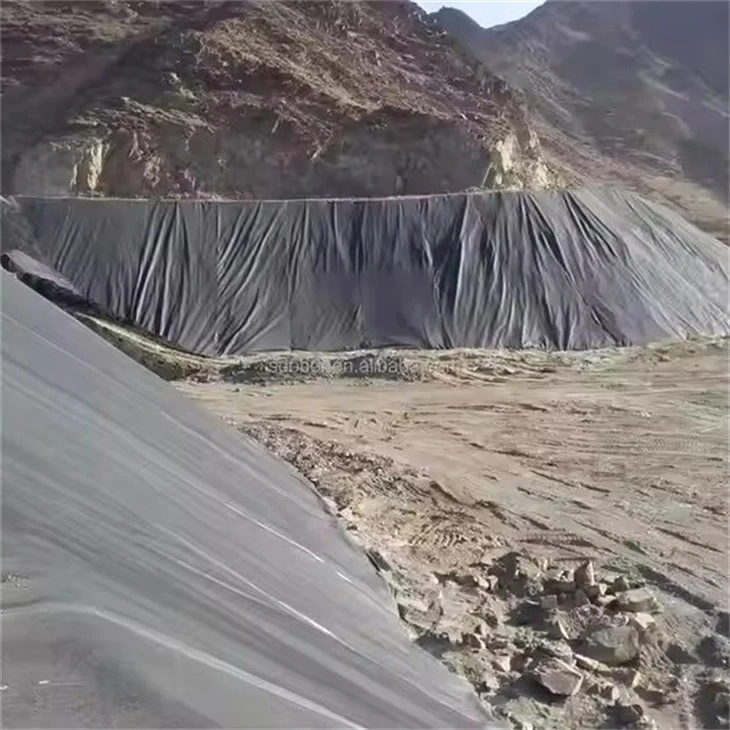
Serves as the primary lining of a leach pad, where ore is piled and irrigated with chemical solutions. They contain the concentrated leachate and direct it to a collection system for treatment without environmental loss.
2. Tailings slurry storage facility
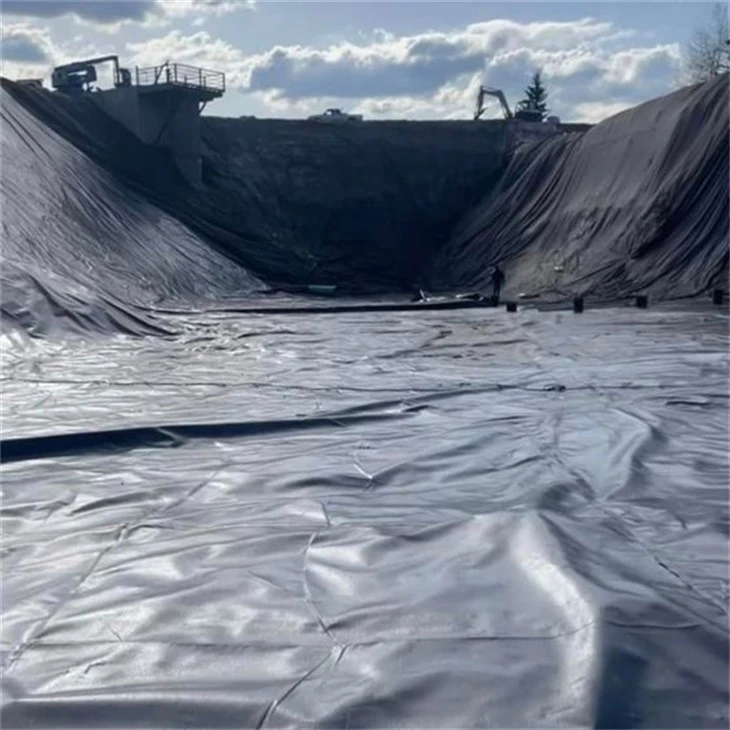
Serves as the base liner of a new tailings slurry storage facility or as the cap liner of a closed facility. They prevent contaminated pore water from the tailings from seeping into the ground.


3. Process solution ponds
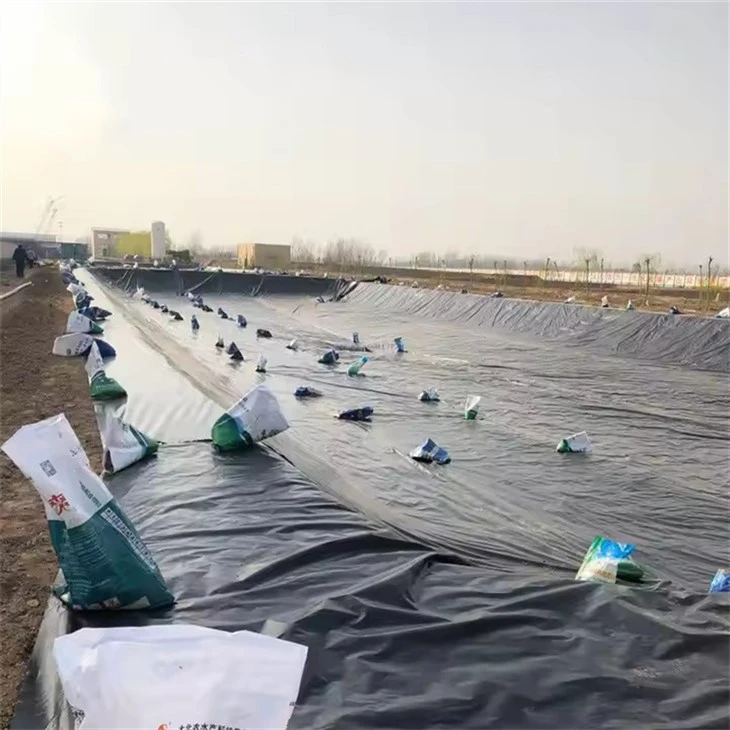
iners used to hold various process fluids, including rich and lean solution ponds, which contain high concentrations of precious metals and process chemicals.
4. Final cover and closure
fter mine closure, geomembranes are used as part of the final cover system to minimize the infiltration of sediment into the waste rock or tailings, thereby reducing the generation of acid rock drainage over the long term.
FAQ
Q1: How thick should a fly ash geomembrane be?
A: Typically 1.5-2.5 mm; thicker thickness is recommended for high-stress applications.
Q2: Why is HDPE the preferred material for fly ash storage?
A: HDPE offers excellent chemical resistance, high tensile strength, and long-term resistance to fly ash leachate (acids, alkalis, and heavy metals).
Q3: Can HDPE geomembranes withstand the high temperatures found in fly ash ponds?
A: Yes, HDPE can withstand temperatures up to 80°C (176°F) and remains stable under typical fly ash storage conditions.
Q4: Does an HDPE geomembrane require a protective layer?
A: Yes, a non-woven geotextile (300-500 g/m²) is recommended to prevent puncture from sharp fly ash fragments.
Q5: Can an HDPE liner be repaired if damaged?
A: Yes, patches can be permanently affixed by squeeze welding or hot wedge welding.
Contact Information
Taian City Ruiheng Building Materials Co., Ltd
Address: NO.3566 Longquan Road, Tai'an Hi-tech Zone, Shandong Province, China
Website: www.rhgeos.com
Email: lorna@rhgeos.com
Phone / Whatsapp / Wechat: 0086 187 6669 7769
Hot Tags: cobalt ore geomembrane, China cobalt ore geomembrane manufacturers, suppliers, factory


