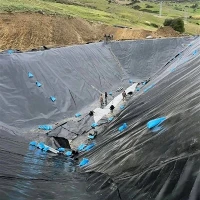
Material Selection
Choose UV-resistant, high-density polyethylene (HDPE) or linear low-density polyethylene (LLDPE) geomembranes for long-term durability.
Ensure the material is non-toxic and safe for aquatic life.
Installation Precautions
Avoid sharp objects – Remove rocks, roots, and debris from the base to prevent punctures.
Proper welding – Use thermal or chemical welding for seams, ensuring no gaps or weak joints.
Minimize wrinkles – Smooth out the geomembrane to prevent stress points and uneven wear.
Protection Measures
Use a protective layer (e.g., geotextile or sand) to shield the geomembrane from punctures and UV degradation.
Secure edges properly with anchor trenches or weighted strips to prevent shifting due to water pressure or wind.
Water Filling & Usage
Fill gradually to avoid sudden stress on the geomembrane.
Avoid overloading – Do not exceed recommended water depth limits.
Monitor for leaks, especially at seams and around inlets/outlets.
Maintenance & Inspection
Regularly check for damage (tears, punctures, or seam failures).
Repair immediately using compatible patching kits to prevent leaks.
Clean gently – Avoid abrasive tools that could scratch the membrane.
Environmental Considerations
Prevent chemical exposure – Avoid contact with oils, solvents, or acidic substances.
Control algae growth – Excessive biofilm can degrade the material over time.
By following these precautions, geomembranes in aquaculture can maintain longevity, leak resistance, and safety for fish and shrimp farming.