


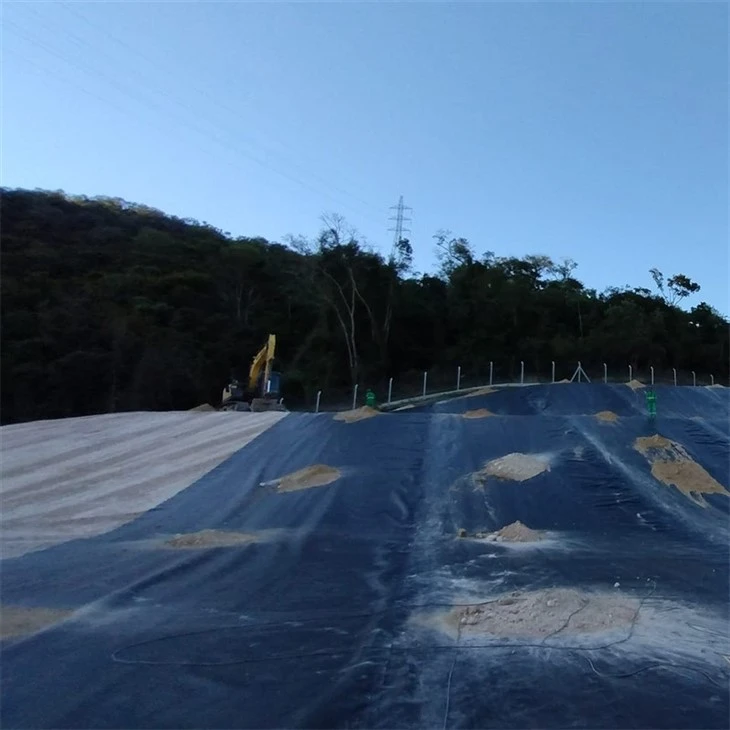
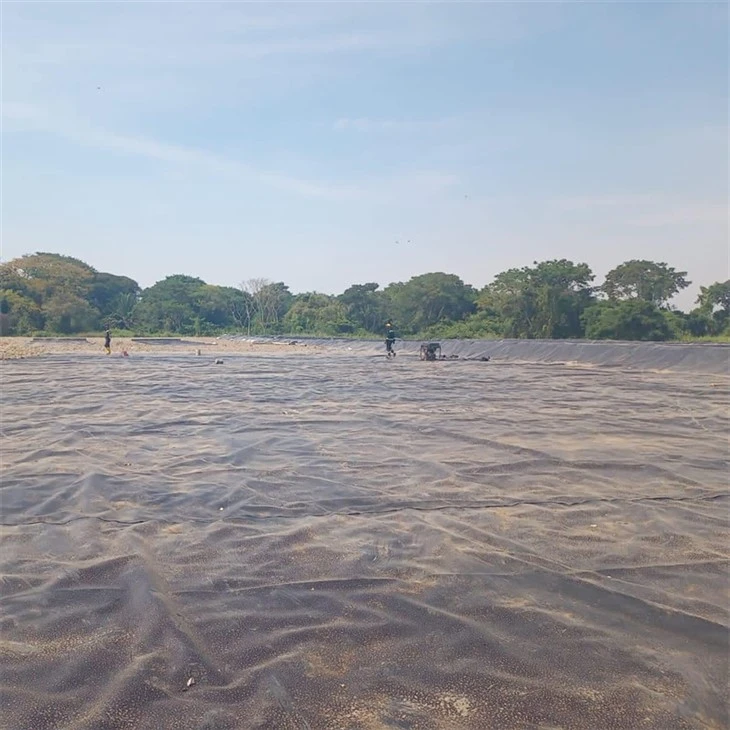
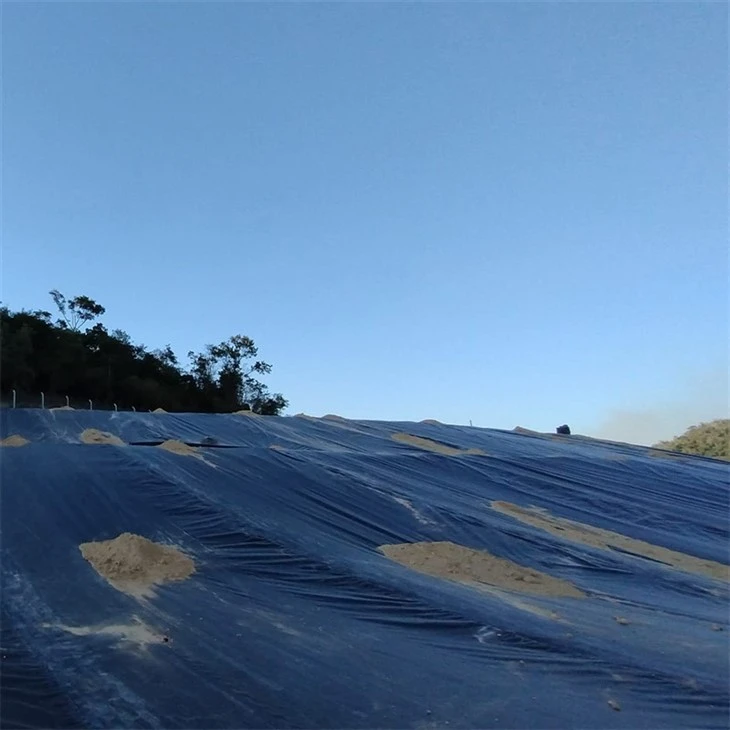

HDPE geomembranes are specially manufactured for solid waste storage areas, are UV resistant, can be combined with hot air welding, are resistant to plant roots and can also be used with laminated geotextile felts .
Products Description
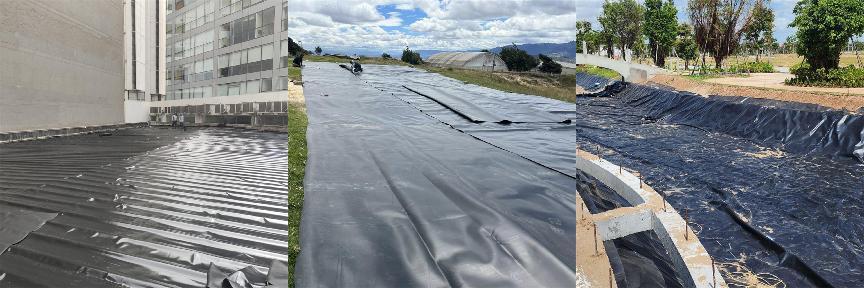
HDPE Geomembrane The word geomembrane is derived from the English words "geo" meaning earth and "membrane" meaning separation or selective membrane. As you can see, geomembranes are a general term for synthetic insulation blankets that provide isolation and impermeability to surfaces such as earth, concrete, rock, and soil, and are used for insulation purposes. Geomembranes can be used not only underground, but also as the final layer for applications such as roofs, ponds and swimming pools, depending on their properties.
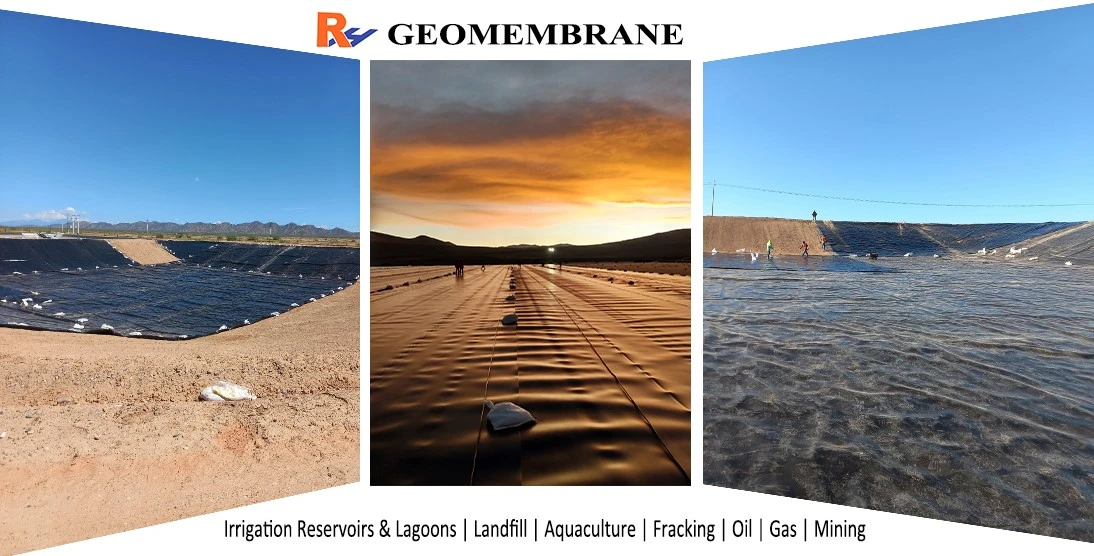
Typical Applications Include
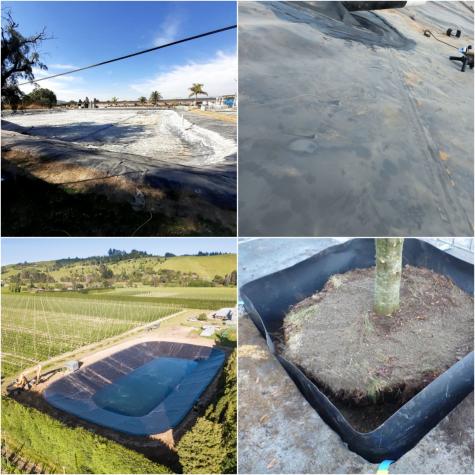 Landfill Cell Lining
Landfill Capping
Lake, Pond & Canal Lining
Stormwater Attenuation Tanks
Stormwater Attenuation Ponds & Lakes
Firewater Ponds
Leachate Lagoon Lining
Bund / Tank / Conc. Structure Lining
Curtain / Cut-Off wall Lining
Agricultural Waste Storage Lagoons
eomembrane lining installation
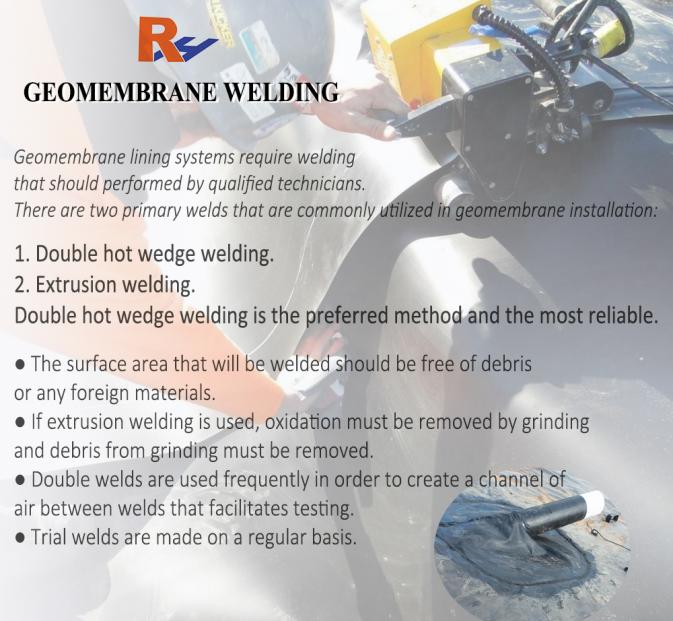
The majority of all geomembrane lining systems are fused together, panel by panel, by a method known as Hot Wedge Welding or Extrusion Welding techniques. All formed joints in the membrane can be both Destructively and Non-Destructively tested to ensure a 100% seam has been achieved.
Specifications of Geomembrane
It is resistant to chemicals
Its permeability is low.
It has high resistance to punctures and cracks.
It is a long lasting product.
It has high strength and elongation.
It provides ease of application and low cost.
It has UV resistance.
It is easy to repair.
It has resistance to thermal aging and oxidation and wear.
It is an ecological material that does not contain heavy metals and it can be recycled.
It provides waterproofing between -40°C and +85°C temperature range.
Type of geomembrane
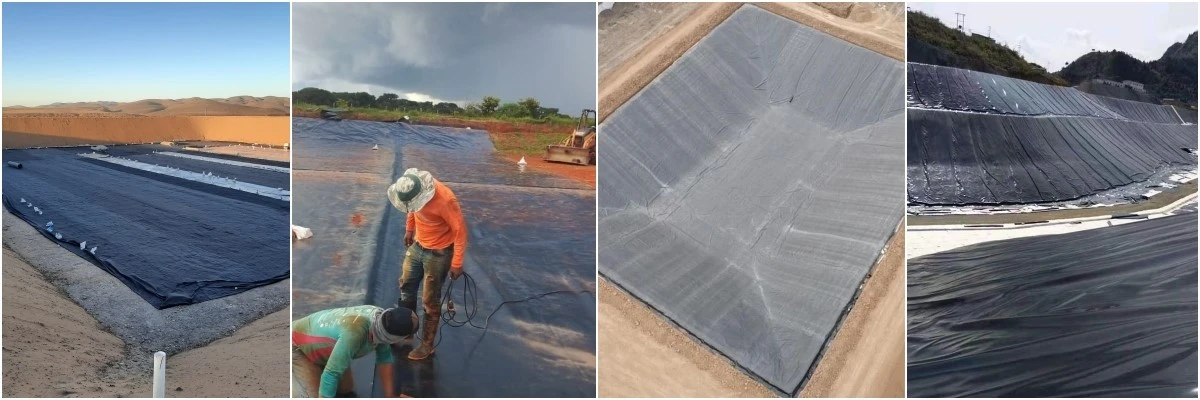
HDPE Geomembrane
• High-Density Polyethylene (HDPE) is characterized by strong UV/temperature resistance, inexpensive material cost, durability, and high resistance to chemicals.
• It is the most commonly used geomembrane because it offers higher thickness which other geomembranes don’t. HDPE is the preferred choice for pond and canal lining projects, landfill, and reservoir covers.
• Thanks to its chemical resistance, HDPE can be used in storing potable water.
LLDPE Geomembrane
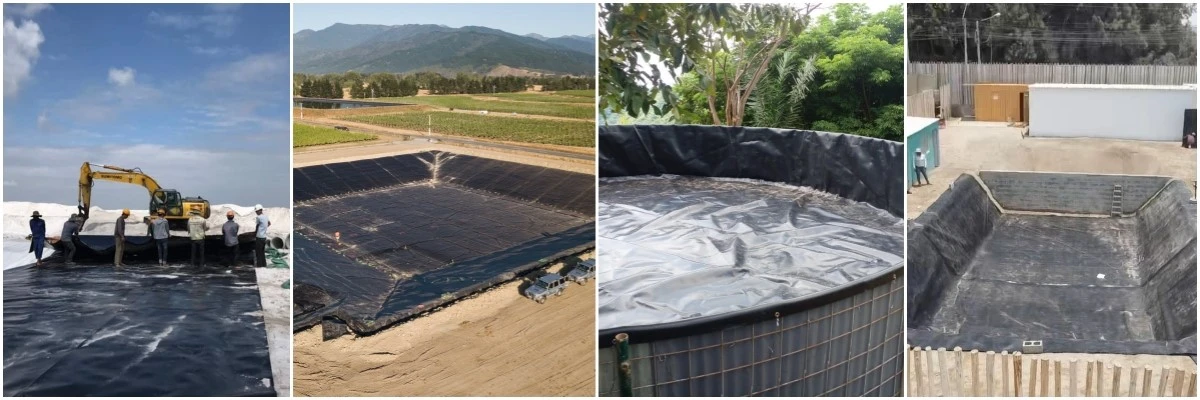
• LLDPE (Linear Low Density Polyethylene) geomembranes are made from virgin polyethylene resin, making them strong, durable, and resistant to UV light and low temperatures.
•Engineers and installers who require an impermeable geomembrane typically choose LLDPE due to its greater flexibility compared to HDPE.
• They are used in industrial applications such as animal and environmental waste containment, liquid storage tanks, etc.
Textured geomembrane
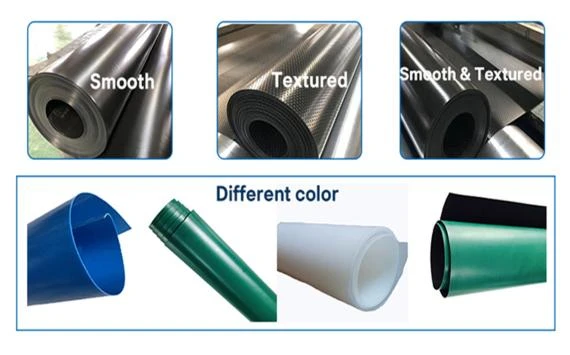
• Textured liners are produced by blown film and flat die manufacturing methods to provide increased friction angles for interface stability on steeper slope applications.
• Reduces the potential for slippage between adjacent layers.
• The basic product is black/black, but more specialized products such as white/black versions are available for better quality control control in the field and to reduce the heat generated on the surface of the product and reduce its tendency to generate heat. Other variations are also available for technically advantageous applications. It creates wrinkles and undulations that naturally occur due to expansion and contraction.
Contact Information
Taian City Ruiheng Building Materials Co., Ltd
Address: NO.3566 Longquan Road, Tai'an Hi-tech Zone, Shandong Province, China
Website: www.rhgeos.com
Email: lorna@rhgeos.com
Phone / Whatsapp / Wechat: 0086 187 6669 7769
Hot Tags: geomembrane composite, China geomembrane composite manufacturers, suppliers, factory


