


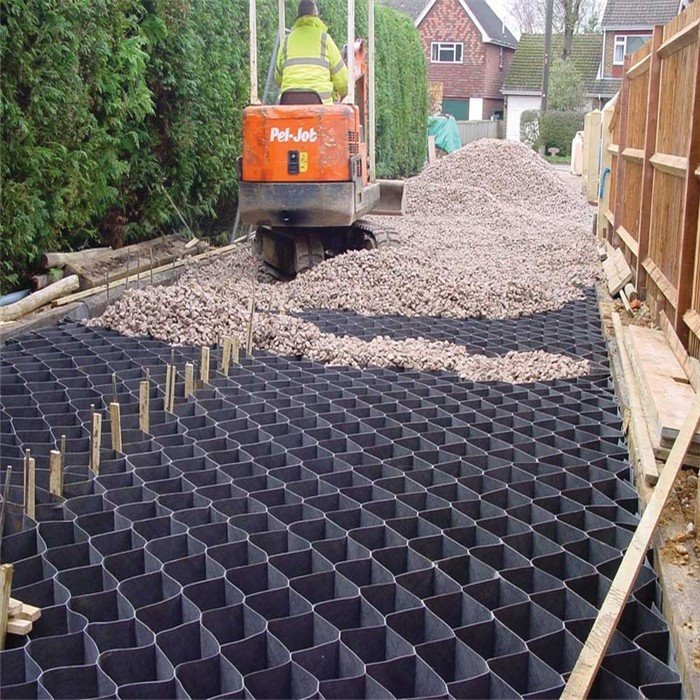
HDPE geocell is a three-dimensional cellular geosynthetic material made of high-density polyethylene (HDPE) that has been bonded into a unique pattern. This geomaterial is widely used in civil engineering, environmental protection and geotechnical projects, due to its exceptional strength, durability and flexibility.
Products Description
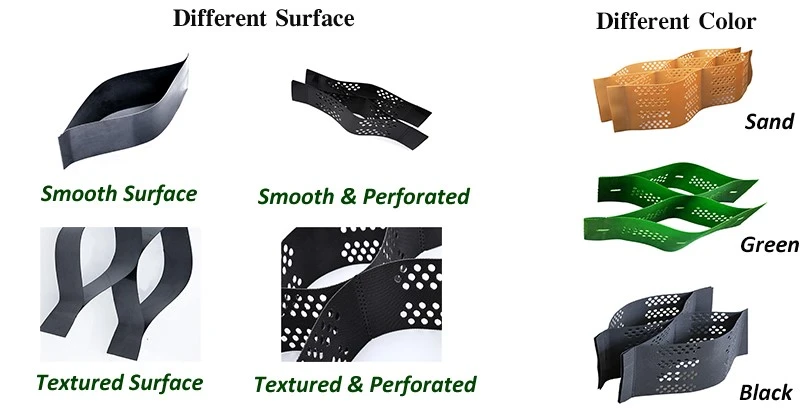
HDPE geocell is available in different sizes, shapes, and colors, depending on the requirements of the particular project. Standard size height from 50mm to 300mm, welding distance from 330mm to 1000mm.
|
ITEM |
RH-250 |
RH-200 |
RH-150 |
RH-100 |
RH-75 |
RH-50 |
|
Cell height (mm) |
250 |
200 |
150 |
100 |
75 |
50 |
|
Solder distance (mm) |
340 |
|||||
|
Sheet thickness (mm) |
1±0.05 |
|||||
|
Weight (g/m2) |
3310±200 |
2648±200 |
1986±200 |
1324±200 |
933±200 |
662±200 |
|
Welding place adhesion (N) |
2560 |
2050 |
1460 |
1023 |
864 |
560 |
|
PS: Special specification according to agreement or contract execution. |
||||||
Geocell Advantage
- Flexibility and adaptability: HDPE geocells are flexible and adaptable and can adapt to various terrains and engineering requirements. They can be cut, connected and reshaped as needed for specific projects to accommodate different geographical conditions and design requirements.
- High load-bearing capacity: HDPE geocells effectively increase the load-bearing capacity of the soil by forming a three-dimensional structure in the soil. The material that fills the cells, such as gravel or soil, creates a stable fill within the cells, providing a support layer that evenly distributes loads, thereby reducing settlement and deformation.
- Chemical Resistance and UV Resistance: HDPE geocells are made of high-density polyethylene material, which has good chemical resistance and UV resistance. This allows geocells to be used in harsh environmental conditions for extended periods of time without being damaged by chemicals or UV rays.
- Sustainability and Environmental Protection: HDPE geocells are sustainable and environmentally friendly. They can be filled with local soil or recycled materials, reducing the need for raw materials and causing less impact on the environment. In addition, the use of geocells contributes to soil conservation and water resources management, promoting environmental sustainability.
- Easy to install and maintain: HDPE geocells are easy to install, lightweight, and easy to handle and adjust. They are often assembled using a simple connection system, reducing construction time and costs. Once installed, geocells basically require no maintenance and can operate stably for a long time.
- Economic benefits: HDPE geocells have good economic benefits in engineering projects. They reduce earth excavation and material consumption, and reduce construction time and costs. Additionally, due to their long life and stability, geocells can reduce maintenance and repair costs.
- These features and advantages have made HDPE geocells a widely used tool in civil and geotechnical engineering to help solve problems such as soil stability, erosion control and load-bearing capacity.
Project Examples of HDPE Geocells
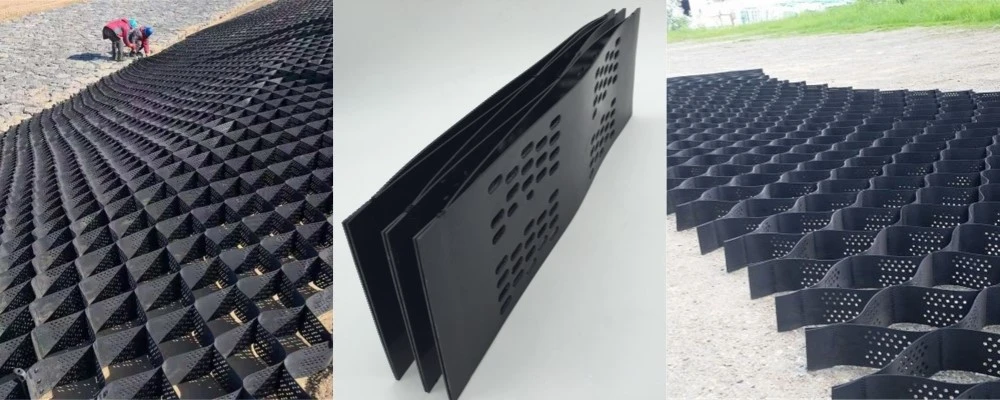
HDPE geocells have been successfully used in many projects around the world. Here are some examples:
Road Construction: HDPE geocells are often used in road construction projects to improve the stability and load-bearing capacity of roadbeds. They reduce settlement and improve the durability of roads by reinforcing and confining the soil. Geocells are particularly effective in areas with weak or expansive soils.
Ramps and Retaining Walls: Geocells are used to strengthen and stabilize ramps and retaining walls. By confining soil within the cells, geocells can prevent erosion and soil movement and enhance the stability of slopes or retaining walls. This application is useful in fill embankments for highways, cut railway cuts and coastal protection projects.
Anti-corrosion projects: HDPE geocells are widely used in anti-corrosion projects, such as river bank protection and shoreline stabilization. They prevent soil erosion by constraining the soil and providing a stable surface that resists the impact of currents or waves. Geocells can be filled with soil, vegetation or anti-erosion materials to enhance their effectiveness.
Load-bearing supports and distribution platforms: Geocells are used to create load-bearing support platforms for industrial areas that require the use of heavy equipment or machinery. They distribute loads more evenly, reducing settlement and preventing damage to the soil below. These platforms are suitable for construction sites, logistics sites and temporary access roads.
Green roofs and landscaping: Geocells are used in green roof systems and landscaping projects to provide a stable base for vegetation. Cells maintain the growing medium, prevent soil compaction, and promote better root development and overall plant health. They also improve stormwater management capabilities by promoting water infiltration and reducing runoff.
Mines and Landfills: HDPE geocells are used in mines and landfills to provide stability and prevent soil erosion. They are used in areas such as haul roads, work platforms and landfill cover systems. Geocells help mitigate environmental impacts by stabilizing soil and preventing the release of contaminants.
These are just a few examples of the successful use of HDPE geocells in a variety of different civil engineering projects. The versatility, durability and effectiveness of geochambers make them a popular choice for a variety of geotechnical and civil engineering applications.
How to use it?
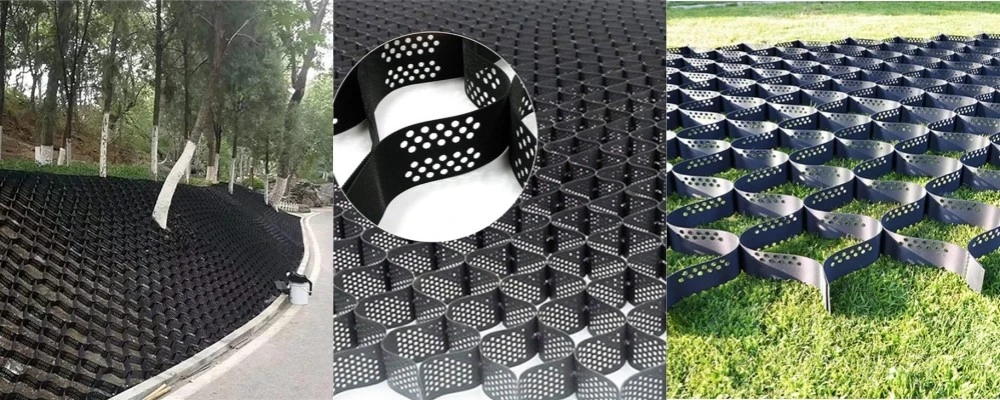
1. Soil erosion control: HDPE geocell is installed in vulnerable areas to prevent soil erosion. This includes areas where heavy rain or flooding is common.
2. Slope stabilization: HDPE geocell is used to stabilize slopes, reducing the risk of landslides and other related problems.
3. Retaining wall: HDPE geocell is used to reinforce retaining walls, increasing their stability and useful life.
4. Road construction: HDPE geocell is used in road construction to increase the bearing capacity of the underlying soil, thereby reducing the risk of road failure.
5. Foundation reinforcement: HDPE geocell is used to reinforce the foundations of buildings and other structures, increasing their stability and service life.
FAQ
Q1:Are you trading company or manufacturer?
A1:We are manufacturer.So wo have a lower price than trading company.and guaranteed quality.
Q2:Where is your company?
A2:Taian shandong province, China. Welcome to our company.
Q3:What is your delivery time?
A3:Generally in stock, the delivery period is within 1-3 days. If customized, the delivery period is 3-10 days according to the
order quantity.
Q4:What is your payment method?
A4:T/T, Western Union, L/C,...
Contact Information
Taian City Ruiheng Building Materials Co., Ltd
Address: NO.3566 Longquan Road, Tai'an Hi-tech Zone, Shandong Province, China
Website: www.rhgeos.com
Email: bonnie@rhgeomembrane.com
Phone / Whatsapp / Wechat: 0086 188 5482 2179
Hot Tags: textured perforated geocell, China textured perforated geocell manufacturers, suppliers, factory


