


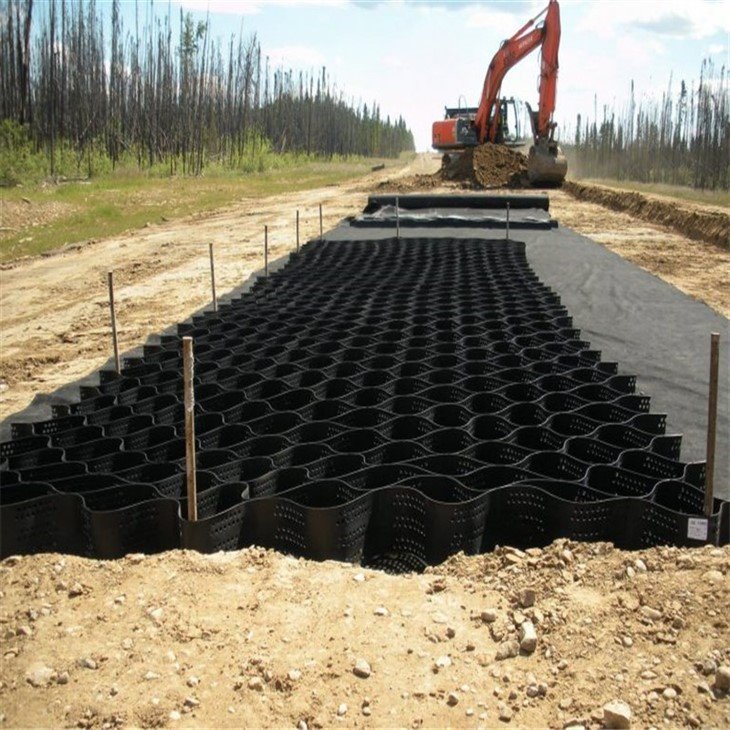


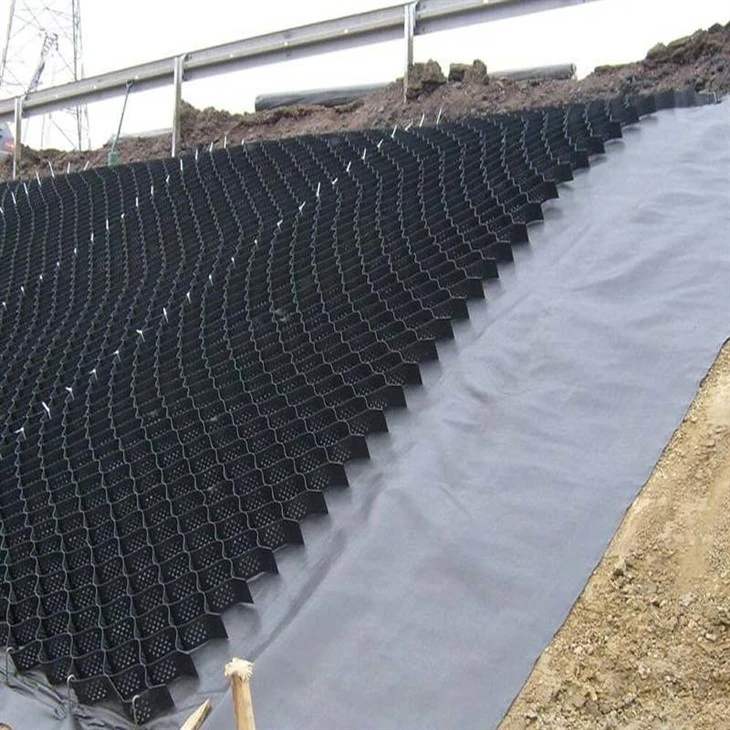
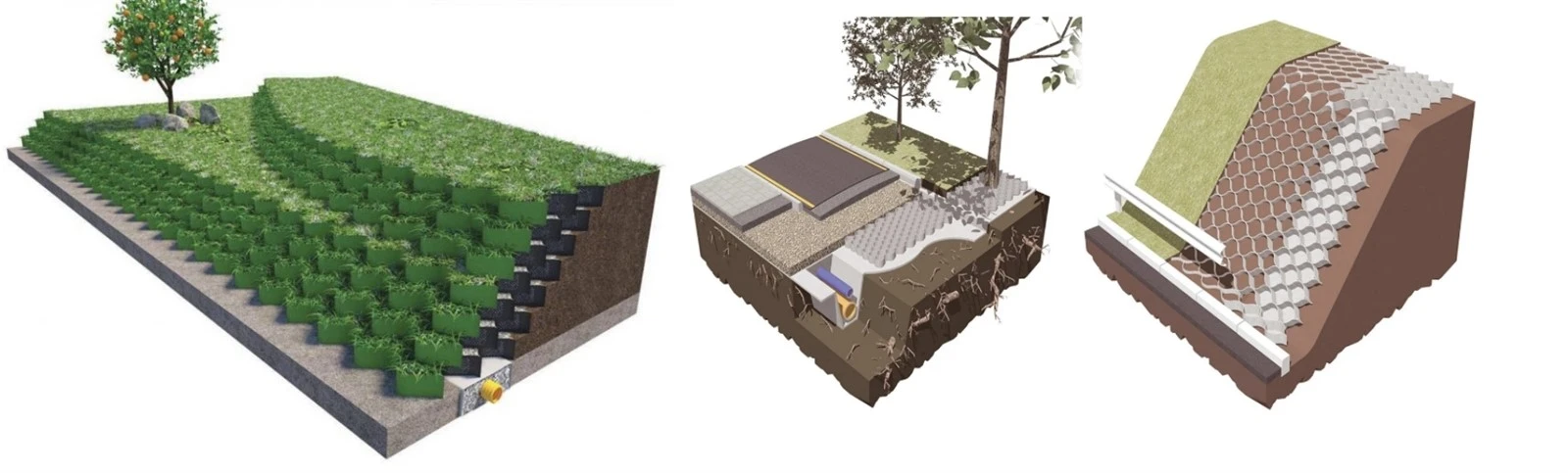
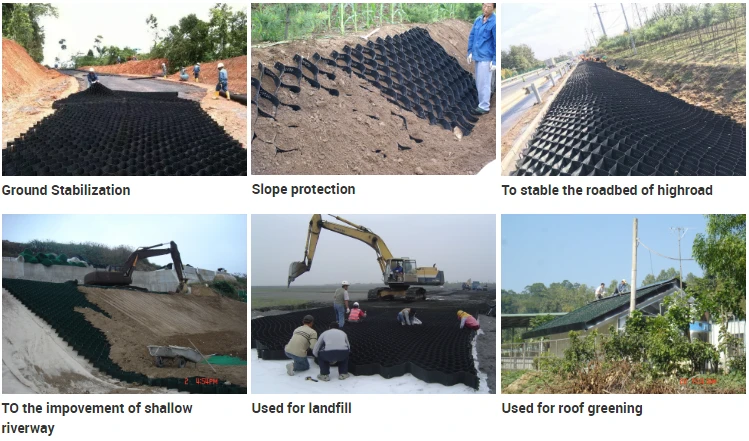
HDPE geocell is widely used in various applications including soil erosion control, slope stabilization, retaining walls, road construction and foundation reinforcement. It can also be used to improve the bearing capacity of weak soils and reinforce the soil, especially in soft soils.
What is Geocell?
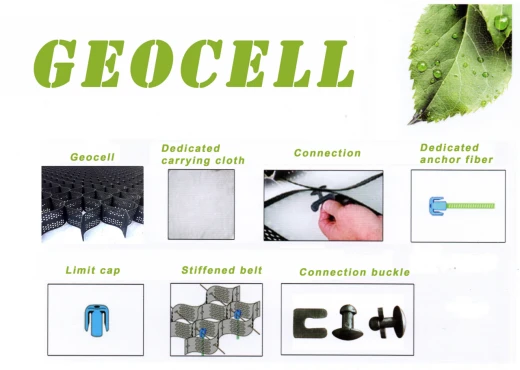
Geocells reinforce roads with heavy traffic volumes or roads that require increased structural strength. Geocells go into the ground below the earth's surface, which is usually concrete, pavement, or gravel. When a geocell is underground, the surface of the earth will not sink much even if people walk or drive over it.
A geocell, also known as a cellular confinement system, is a ground support system typically performed by civil engineers. Geocells exist because sometimes the ground isn't stable enough to be used for roads or other uses, so the ground needs some help.
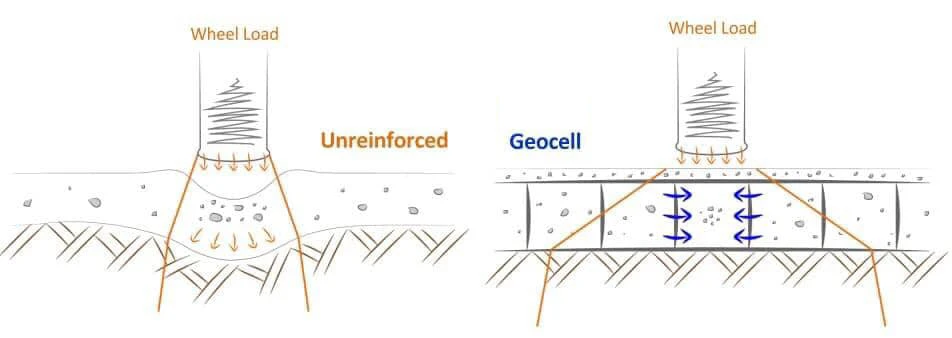
Geocells also make roads and other surfaces last longer. This is because roads and other surfaces have additional support and do not sink as much as they would without the geocell.
Without geocells, soils, rocks, and other things underground can change significantly and weaken over time. Weakness is accelerated if there is heavy traffic on the road or if there is a lot of traffic. However, with reinforcement by geocells, the weakening process is much slower. Geocells are often used in situations where the road base geogrid material cannot provide the appropriate level of support required for overall roadway or parking lot stability.
The next section explains how geocells work to strengthen the ground.
How geocell be used for landfill construction?
Firstly, geocell can be used to create a stable foundation for landfill sites. A stable foundation is required in order to prevent subsidence and to support the weight of the waste material. Geocell can be used to create a stable foundation by confining and stabilizing the soil. The geocell is placed on the soil and then filled with soil or aggregate to create a honeycomb-like structure. The geocell structure not only increases the strength of the soil but also provides additional load-bearing capacity, which helps to distribute the weight of the landfill material evenly across the foundation.
Secondly, geocell can be used to slope stabilization in landfill construction. Slope stabilization is necessary to ensure that the landfill material does not slide down the slope and cause damage to the surrounding environment. Geocell can be used to stabilize slopes by providing additional support and increasing the friction between the soil and the landfill material. This helps to prevent sliding and erosion, and also prevents water from penetrating the soil and causing instability.
Thirdly, geocell can be used as an alternative to traditional landfill liners. A landfill liner is an impermeable layer that is used to prevent the leaching of pollutants into the surrounding environment. Traditional landfill liners are made of materials such as clay or geomembranes, which can be expensive and difficult to install. Geocell, on the other hand, can be used as an alternative to traditional landfill liners by providing a stable and impermeable layer. The honeycomb-like structure of geocell helps to create a barrier that prevents leaching and protects the surrounding environment from pollution.
Fourthly, geocell can be used to create landfill caps. Landfill caps are required to prevent rainfall from seeping into the landfill material and causing contamination. Geocell can be used to create landfill caps by creating a stable base layer of geocell and then topping it with a layer of geotextile fabric. The geotextile fabric helps to prevent water from penetrating the landfill material and causing environmental damage.
Finally, geocell can be used to strengthen landfill slopes and embankments. Landfill slopes and embankments are often unstable and prone to collapse, which can cause damage to the surrounding environment and pose a risk to public safety. Geocell can be used to strengthen landfill slopes and embankments by providing additional support and stabilizing the soil. The honeycomb-like structure of geocell helps to distribute the weight of the landfill material evenly across the slope or embankment, which helps to prevent sliding and erosion.
In conclusion, geocell is a versatile and effective material that can be used in a variety of ways for landfill construction. Whether it is used to create a stable foundation, stabilize slopes, serve as an alternative to traditional landfill liners, create landfill caps, or strengthen landfill slopes and embankments, geocell has proven to be a reliable and cost-effective solution for landfill construction. With its many benefits, it is clear that geocell has a bright future in the field of landfill construction.
What maintenance is required for geocell?
The following are some of the maintenance requirements for geocell:
1. Inspection: Regular inspection of geocell is essential. It helps to identify any damage or signs of wear and tear. The inspection should be done after any significant event, such as heavy rainfall or seismic activity, that could potentially cause damage. The inspection should also check for any clogging of the cells with debris or vegetation growth.
2. Cleaning: One of the primary reasons for clogging of the cells is the accumulation of soil, debris, or other materials. Regular cleaning of the geocell can help prevent clogging and maintain its drainage capacity. High-pressure water jets or manual cleaning with a brush can be used for cleaning geocell.
3. Repair: Any damage to geocell should be repaired as soon as possible to prevent further damage. The repair procedure depends on the type and extent of damage. In case of minor damage, sagging or pulling of cells, a heat treatment can be used to reshape the cells. However, for significant damage, replacement of the damaged section may be necessary.
4. Vegetation Control: When vegetation grows within geocell, it can cause clogging and weaken the structure. Regular vegetation control is therefore important to prevent this from happening. This can be done by using herbicides or manual removal of vegetation.
5. Surface Protection: Ensuring that the surface of geocell is protected is crucial to ensure its longevity. Covering the geocell with materials such as sand, gravel, or other suitable materials, helps to protect it from damage by environmental factors such as UV rays, heavy rainfall, and erosion.
6. Record Keeping: Keeping a record of inspections, repairs, and other maintenance activities is essential. It helps to monitor the effectiveness of the maintenance program and can provide valuable information for future maintenance activities.
How cost-effective is geocell compared to traditional construction methods
One of the biggest advantages of geocell technology is its cost-effectiveness. Let's take a look at how it compares to traditional construction methods:
1. Reduced need for excavation and material transportation
Traditional construction methods often involve extensive excavation, transportation of materials, and use of heavy equipment. This can be expensive, time-consuming, and can also have significant environmental impacts. With geocell technology, the amount of excavation required is reduced as they can be installed directly on the existing ground. Additionally, the volume of materials needed can be significantly reduced, as the cells themselves contribute to the overall stability of the structure.
2. Greater structural integrity and durability
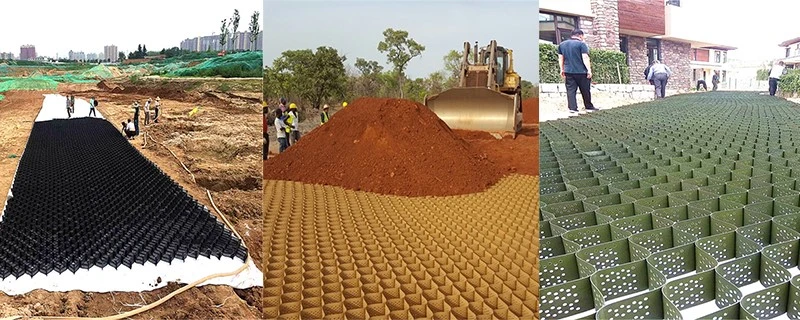
Geocell technology is able to enhance the strength and durability of the soil beneath roads, railways, and other structures. When compared to traditional construction methods, geocells can provide a higher bearing capacity, which can significantly increase the lifespan of the structure. Additionally, the cells themselves are resistant to corrosion, which can be a significant advantage in harsh environments.
3. Improved environmental sustainability
Geocell technology is significantly more environmentally sustainable than traditional construction methods. The cells themselves can be made from recycled materials and are completely recyclable, which means that they can be reused on other projects. Additionally, since geocells can reduce the amount of excavation and material transportation required, they have a smaller carbon footprint than traditional construction methods.
4. Lower maintenance costs
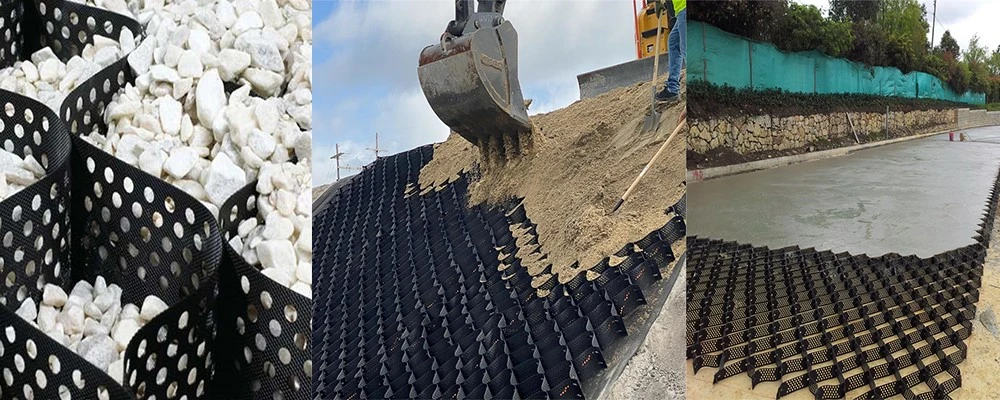
Since geocell technology provides a stronger and more durable foundation for structures, it can significantly reduce the need for maintenance over the lifespan of the project. This can lead to significant savings in maintenance costs. Additionally, since the cells themselves are resistant to corrosion and wear, they require little to no maintenance themselves.
5. Increased project efficiency
Geocells are lightweight and easy to install, which can significantly reduce the time required to complete a project. Additionally, since less excavation and material transportation is required, projects can be completed more quickly and with less disruption to surrounding areas. This can also lead to significant cost savings, as project timelines are reduced.
Overall, the cost-effectiveness of geocell technology is clear. It offers significant advantages over traditional construction methods, including reduced excavation and material transportation requirements, increased structural integrity and durability, improved environmental sustainability, lower maintenance costs, and increased project efficiency. As a result, geocell technology is becoming increasingly popular in the construction industry and is quickly becoming the preferred choice for many projects, from roadways to erosion control and more.
|
Properties |
Test method |
Units |
GC0735 |
GC0744 |
GC0771 |
GC1035 |
GC1044 |
GC1071 |
|
Polymer |
- |
- |
HDPE |
|||||
|
Carbon Black content |
ASTM D1603 |
% |
≥1.5 |
≥1.5 |
≥1.5 |
≥1.5 |
≥1.5 |
≥1.5 |
|
Density |
ASTM D1505 |
g/cm3 |
≥0.94 |
≥0.94 |
≥0.94 |
≥0.94 |
≥0.94 |
≥0.94 |
|
Sheet Thickness before texturing |
ASTM D5199 |
mm |
1.1 |
1.1 |
1.1 |
1.1 |
1.1 |
1.1 |
|
Sheet Thickness after texturing |
ASTM D5199 |
mm |
1.5 |
1.5 |
1.5 |
1.5 |
1.5 |
1.5 |
|
Seam Peel Strength |
- |
N |
1060 |
1060 |
1060 |
1420 |
1420 |
1420 |
|
Weld Spacing |
- |
mm |
356 |
445 |
711 |
356 |
445 |
711 |
|
Cell Depth |
- |
mm |
75 |
75 |
75 |
100 |
100 |
100 |
|
DIMENSIONS |
- |
|
|
|
|
|
|
|
|
Expanded Cell Size(Width×Length) |
- |
mm |
259×224 |
320×287 |
508×475 |
259×224 |
320×287 |
508×475 |
|
Expanded Panel Size(Width×Length) |
- |
m |
2.56×6.52 |
2.56×8.35 |
2.56×13.72 |
2.56×6.52 |
2.56×8.35 |
2.56×13.72 |
|
Expanded Panel Area |
- |
m2 |
16.7±1% |
21.4±1% |
35.12±1% |
16.7±1% |
21.4±1% |
35.12±1% |
Contact Information
Taian City Ruiheng Building Materials Co., Ltd
Address: NO.3566 Longquan Road, Tai'an Hi-tech Zone, Shandong Province, China
Website: www.rhgeomembrane.com
Email: lorna@rhgeos.com
Phone / Whatsapp / Wechat: 0086 187 6669 7769
Hot Tags: gravel stabilizer geocell, China gravel stabilizer geocell manufacturers, suppliers, factory


