




1.5MM PE GEOMEMBRANE LINING
Products Description
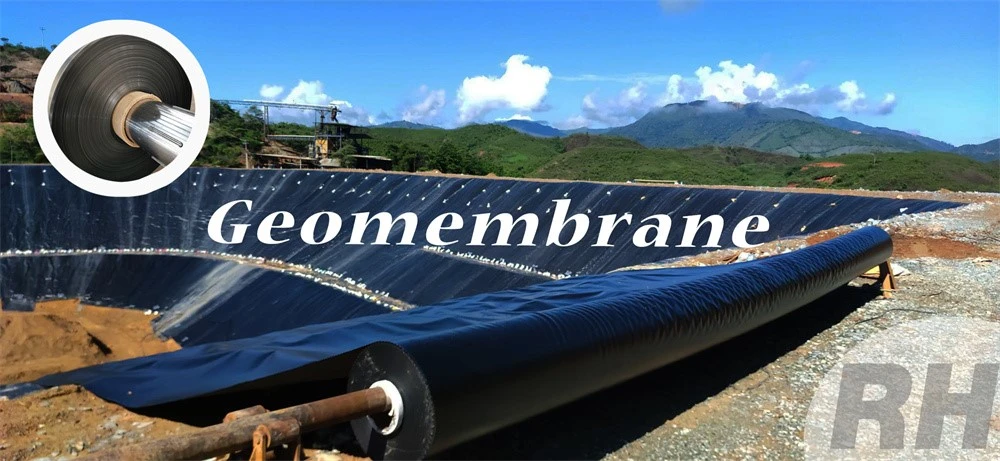
HDPE Geomembrane (HDPE) emerged as a response to the growing needs for waterproofing and containment in civil and environmental engineering projects. Its original purpose is to establish an effective barrier against liquid percolation in a variety of applications, from landfill waterproofing to waste containment.
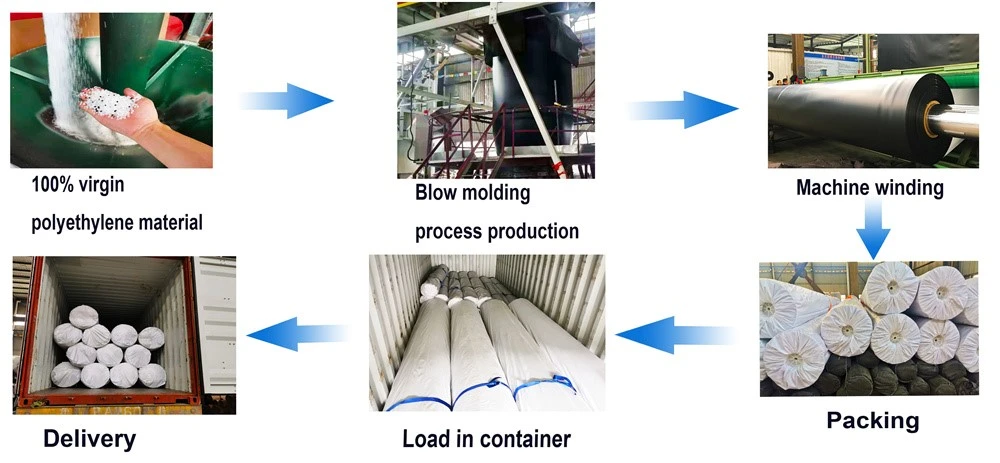
Production Process: Manufactured using advanced extrusion, HDPE Geomembrane (HDPE) go through two main methods: balloon die extrusion and flat die extrusion.
Blow Extrusion:
Phase 1 - Material Preparation: The high-density polyethylene is melted and prepared for the process.
Phase 2 - Initial Extrusion: The molten material is passed through a balloon die, molding a tubular shape.
Phase 3 - Expansion and Cooling: The extruded tube is expanded to the desired thickness and cooled to solidify the geomembrane.
Flat Extrusion:
Phase 1 - Material Feeding: The polyethylene is fed into an extruder, where it is melted.
Phase 2 - Geomembrane Formation: The melted material is extruded through a flat die, shaping the geomembrane into a flat sheet.
Phase 3 - Cooling and Calendering: The geomembrane is quickly cooled and passes through calendering rolls to reach the final thickness.
Both methods guarantee efficient and uniform production, providing specific resistance and durability characteristics to HDPE Geomembranes (HDPE). The choice between methods may vary depending on project specifications and the desired properties of the geomembrane.
Item |
Test Value | ||||||
| RH0.30 mm |
RH0.5 mm |
RH0.75 mm |
RH1.0 mm |
RH1.5 mm |
RH2.0 mm |
RH3.0 mm |
|
| Minimum Density(g/cm³) | 0.94 | ||||||
| Strength at yield,N/mm | 5 | 8 | 11 | 15 | 22 | 29 | 44 |
| Strength at break ,N/mm | 8 | 14 | 20 | 28 | 40 | 53 | 80 |
| Elongation at yield,% | 13 | ||||||
| Elongation at break,% | 720min | ||||||
| Tear Resistance N | 40 | 65 | 93 | 125 | 190 | 250 | 375 |
| Puncture Resistance N | 105 | 176 | 240 | 320 | 480 | 640 | 960 |
| Stress Crack Resistance, hrs | 300 | ||||||
| Carbon Black Content, % | 2.0-3.0 | ||||||
| Carbon Black Dispersion | 1 or 2 | ||||||
| Standard OIT Min | 100 | ||||||
| High Pressure OIT Min | 400 | ||||||
| 85ºC Heat aging(OIT Retention rate at Normal pressure after 90d ) % | 85 |
||||||
| UV resistance (OIT retention rate after 1600 hours of UV radiation) | 65 |
||||||
| Impact Cold Crack at -70°C | Pass | ||||||
| Water vapor permeability (g.cm/cm2 .s.Pa) |
≤1.0×10⁻¹³ | ||||||
| Dimensional Stability (%) | ±2 | ||||||

Materials and Technical Characteristics:
High Density Polyethylene (HDPE): Robust material with high chemical, thermal and mechanical resistance.
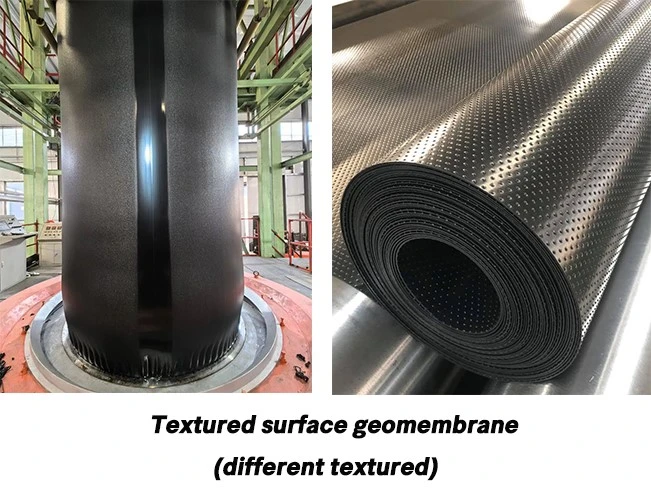
Textured Surface (Optional): The textured geomembrane offers greater grip and stability in specific applications.
Controlled Thickness: Varies according to project needs, providing the necessary resistance.
Application
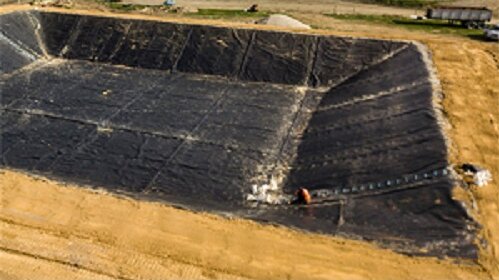
Landfill Waterproofing: Guarantees watertightness in sanitary and industrial landfills.
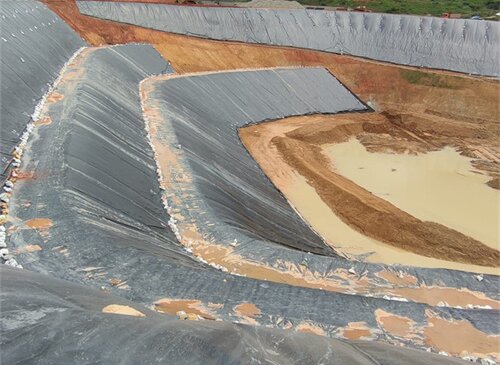
Containment of Liquid Waste: Essential in projects that involve the containment of liquids that are harmful to the environment.
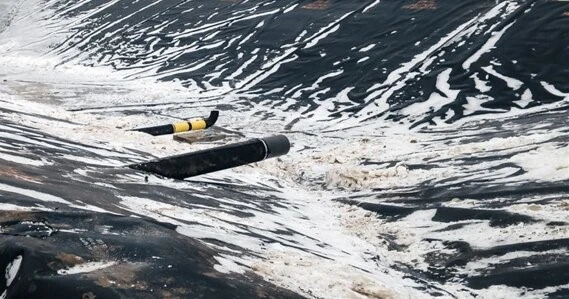
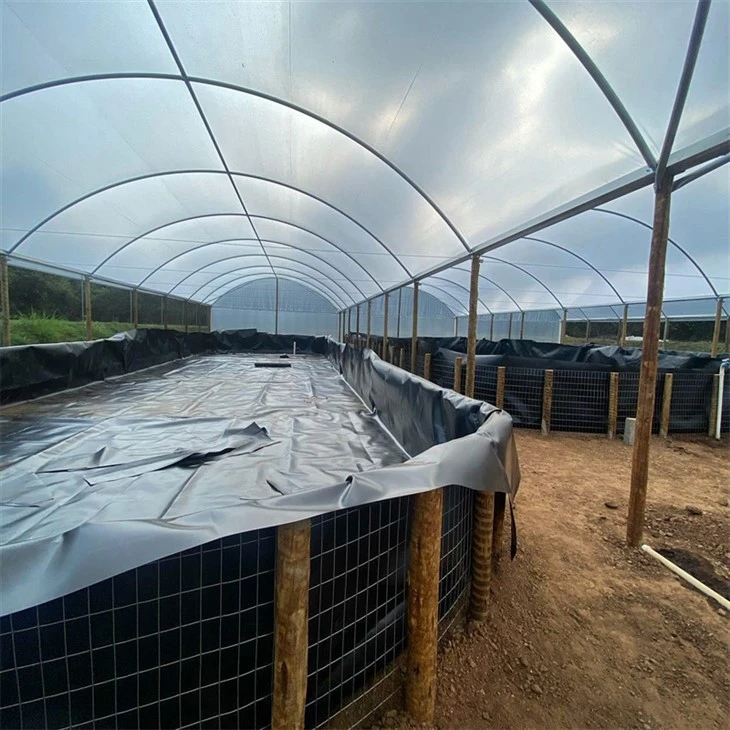
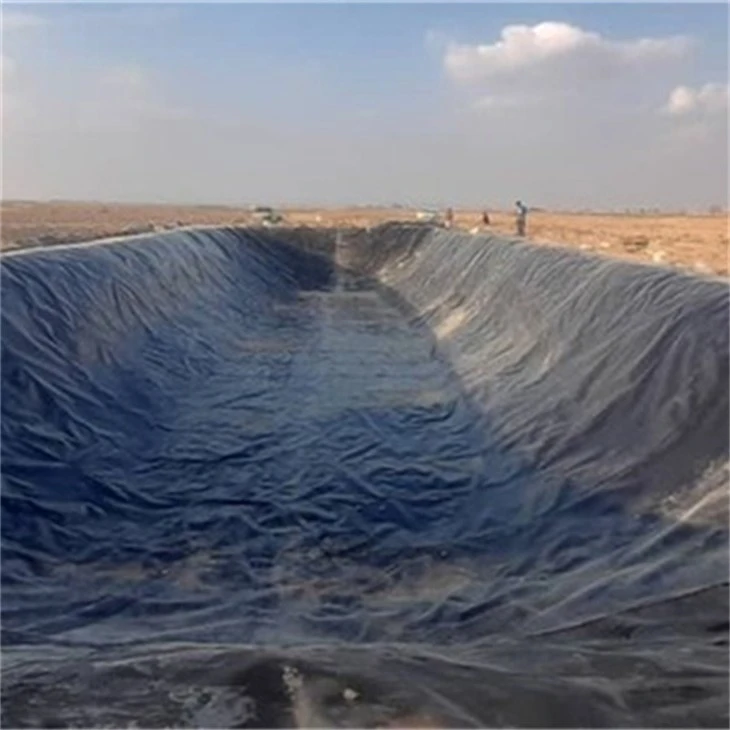
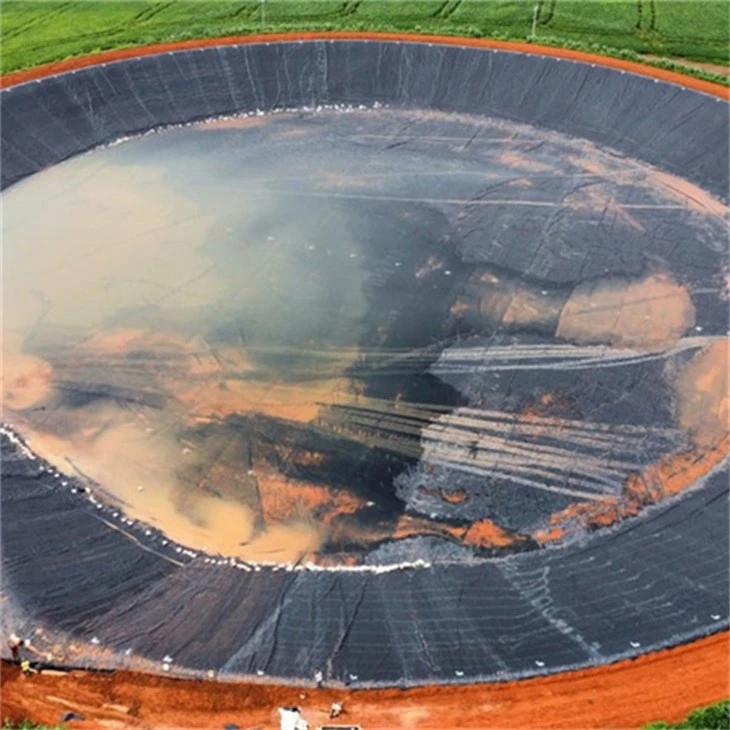
Hydraulic Works: Used in dams, canals, ponds and reservoirs to prevent water percolation.
The Geomembrane is used as a waterproofing barrier in systems for controlling and diverting the flow of liquids or gases internally or externally, in a given system in geotechnical or environmental protection works. In general, HDPE and LLDPE geomembranes have additives in their composition when manufacturing the product, which resist ultraviolet rays well, being a solution for works in which the material is exposed to the elements for a certain period. It is worth mentioning that technical analysis is essential for this type of work, in order to detail the best option for the material to be applied.
To choose the type and thickness of the geomembrane, it will be necessary to analyze some constructive and environmental aspects such as the useful life of the project, whether temporary or permanent, the type of waste to be stored and its danger and aggressiveness to the material.
Our Advantage
The use of HDPE Geomembranes (HDPE) as a waterproofing solution presents several advantages compared to traditional approaches based on reinforced concrete and masonry:
Cost and Efficiency:
Geomembranes: The installation process is faster and requires less labor, resulting in lower total costs.
Reinforced Concrete: The construction of concrete structures requires more time and resources, increasing costs.
01
Flexibility and Adaptability:
Geomembranes: Adapt to different topography and substrates, offering greater flexibility in projects with variations in the terrain.
Reinforced Concrete: Concrete construction is more rigid, making it challenging on uneven terrain or in places with specific characteristics.
02
Weight and Environmental Impact:
Geomembranes: They are light, minimizing the load on the existing structure and reducing the environmental impact.
Reinforced Concrete: Concrete structures tend to be heavier, requiring a more robust base and generating greater environmental impact during production.
03
Maintenance and Durability:
Geomembranes: Require less maintenance over time as they are less prone to cracking and deterioration.
Reinforced Concrete: May require regular maintenance due to cracks, corrosion and other common problems in concrete structures.
04
Installation time:
Geomembranes: Quick installation allows you to complete projects faster.
Reinforced Concrete: Concrete curing time can prolong project completion, impacting deadlines.
05
Conclusion: The choice between HDPE Geomembranes (HDPE) and traditional solutions must consider the specific characteristics of the project. In many cases, the versatility, efficiency and lower environmental impact of geomembranes make them the preferred choice for waterproofing applications.

Packing & Delivery
HDPE Geomembrane Packing and Delivery
1. The products are usually tied with packing tape.The packaging size and container capacity of the product are different from the product specifications
2. Container transportation, according to your project request.
3. Port: Qingdao, China.

FAQ
Q: 1. What is HDPE geomembrane, and what role does it play in geotechnical engineering?
Q: 2. What are some of the key benefits of using HDPE geomembrane?
Q: 3. What are some common applications for HDPE geomembrane?
Q: 4. What factors should be considered when selecting and designing an HDPE geomembrane system?
Q: 5. How is HDPE geomembrane installed and maintained?
Q: 6. What are some potential environmental concerns associated with HDPE geomembrane systems?
Taian City Ruiheng Building Materials Co., Ltd
● Address: NO.3566 Longquan Road, Tai'an Hi-tech Zone, Shandong Province, China
● Website: www.rhgeomembrane.com
● Email: lorna@rhgeos.com
● Phone / Whatsapp / Wechat: 0086 187 6669 7769
Hot Tags: 1.5mm pe geomembrane lining, China 1.5mm pe geomembrane lining manufacturers, suppliers, factory


