

With more than 18 years of industry experience, we take professionalism, innovation and excellent quality as our creed, and are committed to providing customers with excellent geomembranes, geotextiles and other geosynthetic materials products. Through advanced production technology, rich experience and unremitting innovation, we provide the best geotechnical material solutions for engineering and construction projects in various industries around the world.
Advanced Materials
We manufacture custom geomembrane liners made from reinforced polyethylene (RPE), reinforced polypropylene (RPP) and low density polyethylene (LDPE). Our RPE and RPP liners are stronger, provide better puncture and tear resistance, are lighter weight and have excellent UV resistance when exposed to sunlight.
Reliable Quality Control
The company has established a national-standard laboratory for in-house quality control. We built a strict quality control system in all aspects from raw materials testing,production processes to final product quality testing.
Professional Experience
We has more than 18 years experience of geotextiles production in geosynthetic products, including geomembrane, geotextile, HDPE geomembrane, geocell, 3D geomat and etc. We provide complete geosynthetic solutions for ground stabilization, reinforcement and drainage, erosion control, bank and slope protection.
Complete Qualifications
Our factory is certificated by ISO9001, ISO14001, and OHSAS18001. All geomembranes have passed the certificates of the TUV, Soncap, SASO, BV and the test of SGS and Intertek etc.

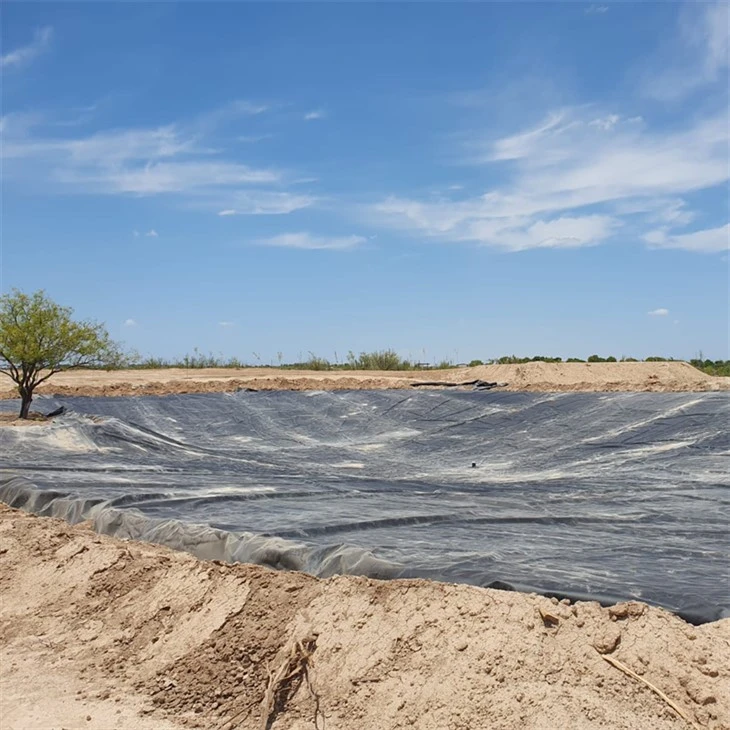
Dam liners are impermeable sheets made of HDPE and LDPE materials. This geomembrane sheet provides a lining that prevents liquid penetration. Dam liners/geomembranes are the best water harvesting solutions and reservoirs.

Our specially extruded liners combine high tensile strength and chemical resistance with excellent stress cracking resistance and low temperature properties for reliable containment.

Geomembranes provide an important line of defense against chemicals, toxins, and other harmful substances that enter Earth's soils and waters.

HDPE dam liners are made from high grade polyethylene raw materials, adding carbon black and antioxidant, anti-aging, UV-resistance components.

HDPE liners (Geomembranes) are produced from High-Density Polyethylene resin. The manufacturing process involves film-blowing, adding carbon black, antioxidant, anti-aging, and UV-resistance components to form a sheet.

A geomembrane water reservoir refers to a water containment structure constructed using geomembrane materials. Our HDPE liners are made from 100% virgin raw materials and no recycled materials.
A geomembrane water reservoir refers to a water containment structure constructed using geomembrane materials. Our HDPE liners are made from 100% virgin raw materials and no recycled materials.

Polyethylene is the most common type of consumer plastic and appears in everyday materials, from food packaging to bulletproof vests.

The LDPE geomembrane is manufactured from virgin polyethylene resins, offering great flexibility and excellent resistance to low temperatures and ultraviolet exposure.

High-Density Polyethylene is one of the materials used to make heavy-duty liners and geomembranes. HDPEs are the thickest of liners with mil thicknesses from 20 mils up to 120 mils. HDPE liners are often used to line aquaponics, ponds, troughs, bioswales, canals, drainage, mud runners, slip-n-slides, and other water retention and containment applications. Other uses include root barrier, piping, and slip sheets.
Thickness: 0.5mm-2.0mm
Width: 4.2mtr-8mtr
* We can supply other widths but they are Special Order (MOQs apply) and have a longer lead time.
Length: 50m-200mtr/ roll or as requested.
Material: HDPE
Colour: Black
Minimum order quantity: 290sqm

Key Properties of HDPE Lining
High Tensile Strength
HDPE geomembranes can be formulated to have tensile strengths exceeding 3000 psi. This gives them tear and puncture resistance compared to other geomembrane materials. The material retains flexibility without compromising on strength.
Low Permeability
Properly manufactured HDPE geomembranes have a permeability coefficient of 10^-14 m/s or lower. This means they are virtually impermeable to water, gases, and other liquids.
Resistance to Environmental Stress Cracking
HDPE is designed to resist cracking or crazing that can occur over time with exposure to organic contaminants. Stress cracking would compromise the liner's containment performance.
Resistance to UV Degradation
HDPE contains carbon black and other UV inhibitors that prevent damage from long-term sunlight exposure. The liners retain their flexibility and strength over years of exposure during installation or use.
Chemical Resistance
HDPE offers broad chemical resistance to acids, bases, oxidizers, organic chemicals, saline solutions, and more. It provides performance and durability where contamination is aggressive.
Thermal Stability
The material retains flexibility and impact resistance in temperatures ranging from -70°F to 180°F. This allows it to withstand temperature extremes in different climates.
Shear Resistance
Properly textured HDPE geomembranes provide sufficient interface friction with soils and geotextiles to resist shear forces. This provides slope stability for lined embankments.
Fastener Retention
The material allows strong heat or ultrasonic welding to attach seam tapes and fasteners without compromising the liner. Robust seams can be constructed.
Applications of HDPE Lining
Pond Liners
HDPE pond liners are commonly used in the construction of artificial ponds for aquaculture, landscaping, or stormwater management.
Reservoirs
They are employed to line reservoirs and impoundments, preventing water from leaking into the surrounding soil.
Waste Containment
HDPE liners are used in landfill applications to contain and isolate hazardous or non-hazardous waste, preventing contamination of the soil and groundwater.
Mining
In mining operations, HDPE pond liners are used for containment of process water, leachate, and other liquids associated with mining activities.
Industrial Applications
Various industrial facilities may use HDPE pond liners for containment of chemicals, wastewater, or other liquids.
Easy to install - These are very light in weight and flexible, making them very comfortable to install. They can be trundled out and sliced to length, and they can be closed together using heat.
Excellent UV stabilization - These are eased against ultraviolet rays, so they can counterattack in long exposure to sunlight. This makes them a decent option for outside applications.
Resistant to Scrape - They are strong to scratch, so they can struggle with the wear and tear of stalwarts and other substances.
High Tensile Strength - HDPE liner pond has augmented tensile power, which suggests that they can survive against a lot of strain. This feature makes them a decent option for ponds that are subject to high winds or earthquakes.
UV Resistant - HDPE pond liners are known to be very resilient to ultraviolet rays, so they can endure long exposure to sun rays.
Long Life - They are very tough and can easily endure for several years.
Recyclable - These are recyclable, so these are considered environmentally friendly.
Waterproof - HDPE pond liners are water-resistant, so they can keep water in the pond without damaging the outer or inner layer.
Easy to Lay and Seal - HDPE pond liners are very easy to lay and seal, so they can be form fitting quickly and easily.
Anti-root Penetration - All of them are very strong for root infiltration, so they can be easily used in ponds with plants.
Scratch Resistance - HDPE pond liners are strong to tears, so they are less likely to be damaged during installation or usage.
Corrosion Resistant - HDPE pond liners are hard to corrosion, so they can be used in ponds with chemicals or other corrosive fabrics.
Fish and Plant Safe - HDPE liner pond is harmless for fish and plants, so they can be used in ponds with water life.
Puncture Resistance - They are known to be very strong and puncture-resistant, so they can repel the weight of water and the effects of rocks and other products.
High Hydrostatic Confrontation - These liners can resist high water pressure, making them an exceptional option for ponds and reservoirs.
Water and Chemical Confrontation - HDPE pond liners are unaffected by water and chemicals, so they are a practical choice for ponds that retain fish or other aquatic life.
What are the Steps Involved in Installing HDPE lining?
Because pond site conditions can vary significantly, site preparation is the first step that should be taken when installing pond liners. Site preparation includes ensuring, when possible, that the site does not experience flooding or high ground water pressure. The bottom of the pond should also be above the water table. Additionally, soil conditions should be inspected to anticipate gas buildup and whether a venting system should be installed. Once the site is verified to be suitable for constructing a pond, the area should be cleared and leveled. An essential step is the removal of sharp rocks and other objects such as vegetation and stubble from the subgrade. The goal is to ensure intimate contact between the HDPE pond liner and the subgrade, which helps improve the long-term performance of the pond liner.
After the site has been chosen, inspected, and prepared, the next step is to begin selecting the right material for the pond liner. HDPE pond liners carry many benefits. They are both tough and flexible, while also demonstrating high resistance to chemicals and corrosion. Furthermore, HDPE liners are among the most durable and long-lasting polyethylene liners on the market. Another benefit, which can streamline installation, is that HDPE liners can be fusion welded together. Being able to weld HDPE pond liners allows installers to form seals in the field, simplifying transportation logistics and overall installation complexity. To further reduce overhead, the pond liner can be fabricated into large sheets to reduce the number of field welds required. Another important consideration in regard to fusion welding is that additional equipment and experienced welders are required to ensure a quality installation.
The next step in installing an HDPE pond liner is preparing anchor trenches and other site-specific structures like piping and drains. Once these structures are in place, installers can move onto liner placement. The HDPE pond liner should be unloaded and unrolled carefully to avoid damaging the liner. Often, sandbags are used to keep the panels in place during installation. Once the liner has been pulled across the site, welding preparations can begin. After selecting a welding method, the properties of the chosen geomembrane such as its type (e.g., high-density polyethylene), melt index, and thickness should be considered. These properties will affect the weld settings. For example, a higher melt index allows the seaming process to take place at lower temperatures and at higher speeds. Prior to any welding, the specific seam area should be cleared from all soil particles and other foreign matter. Finally, before creating production seams, trial seams should be conducted according to the construction quality assurance (CQA) plan (e.g., two trial seams a day, 3).
The last step when installing HDPE pond liners is construction quality control. This step involves bringing in site test equipment, conducting non-destructive and destructive testing of the field seams, and inspections. Certain non-destructive tests, like spark testing, requires the use of a conductive geomembrane liner. During the final inspection, the entire HDPE pond liner surface should be examined by the inspector to confirm that the liner does not have any defects, holes, blisters, or contamination. If necessary, the surface should be cleaned to facilitate the inspection process. Any areas that do not pass the inspector's criteria will be marked for additional testing. If the pond liner passes the inspection process, then the installation is considered complete upon site cleanup and the submission of required certifications.
Ultimate FAQ Guide to HDPE lining
Q: What's an HDPE liner?
Q: How long does the HDPE liner last?
The lifetime of HDPE liner is affected by the Ultraviolet, Oxidation, ozone, chemical, Biological, temperature, and so on. In the GRI docs, there is a test about the lifetime of geomembrane liner, with two different parts, covered lifetime of HDPE liner, and exposed lifetime of the liner. for the covered geomembrane of being as a liner in waste containment applications, the life is predicted from 446years at 20℃, to 69years at 40℃. The exposed geomembrane lifetime is not clear, as the condition is not the same all the time, in the lab test, the lifetime is predicted to have a 36years lifetime, and the test is ongoing.
If your project environment is harsh, for example, landfill liner, wastewater treatment, mining tailing projects, it is better to have a longer life with the ASTM standard liner.
Q: What thickness of HDPE Pond Liner is good to use?
Q: What are geomembranes?
Q: What are the uses of Geomembranes?
They are used as liners in the agriculture industry.
They are used as waterproofing liners in the tunnels and pipelines.
Used beneath the highways to prevent pollution from the deicing salts.
They are also used in containing and transporting potable water and other liquids in the ocean.
Q: What are the types of Geomembranes?
Polyvinyl Chloride Or PVC Geomembrane
String Reinforced Polyethylene or TSRP Geomembrane
Linear Low-Density Polyethylene or LLDPE Geomembrane
Reinforced Polypropylene or RRP Geomembrane
Ethylene Propylene Diene Monomer or EPDM Geomembrane
Q: Why are HDPE geomembranes a popular choice?
There are many manufacturers of pond liners in India and that is why pond liners are available on a commercial scale. But customers prefer manufacturers who give quality and reliability. The geomembrane liners are extremely useful for vast projects and for the control of unsafe liquids that could pollute the surrounding if not enclosed correctly. The geomembranes are extensively used because of the numerous benefits and their chemical resistant properties. HDPE is one of the most comprehensively and commonly used geomembranes in the world due to its easy availability and reasonability. HDPE geomembrane is certainly an excellent product for large applications that require UV and Ozone resistance, chemical resistance or high-quality installations.
Q: Does HDPE get brittle over time?
Q: What is the difference between HDPE liner and PVC liner?
Q: What is the design life of HDPE liner?
Q: What is the purpose of HDPE geomembrane?
Q: What is HDPE most commonly used for?
Q: What is the longest lasting pond liner?
Q: What is PVC geomembrane?
Q: What is a geomembrane liner used for?
Q: What liner is built under a landfill to catch leachate?
Q: What geomembranes are used in landfills?
Q: What is EPDM geomembrane?
Q: Which is better LLDPE or HDPE?
Q: What is the purpose of HDPE lining?
Hot Tags: hdpe lining, China hdpe lining manufacturers, suppliers, factory


