Products Description
|
different thicknesses of Geomembranes Test |
Unit |
Standard |
Test |
RH75 |
RH10 |
RH15 |
RH20 |
RH30 |
|
|
Mechanical Properties
|
Thickness |
mm |
D5199 |
per roll |
0.75 |
1.00 |
1.50 |
2.00 |
3.00 |
|
Density |
g/cc |
D1505/D792 |
90,000 kg |
0.94 |
|||||
|
Tensile Properties |
D 6693 |
||||||||
|
· yield strength |
kN/m |
Type IV |
9,000 kg |
11 |
15 |
22 |
29 |
44 |
|
|
· break strength |
kN/m |
20 |
27 |
40 |
53 |
80 |
|||
|
· yield elongation |
% |
12 |
12 |
12 |
12 |
12 |
|||
|
· break elongation |
% |
700 |
700 |
700 |
700 |
700 |
|||
|
Tear Resistance |
N |
D 1004 |
20,000 kg |
93 |
125 |
187 |
249 |
374 |
|
|
Puncture Resistance |
N |
D 4833 |
20,000 kg |
240 |
320 |
480 |
640 |
960 |
|
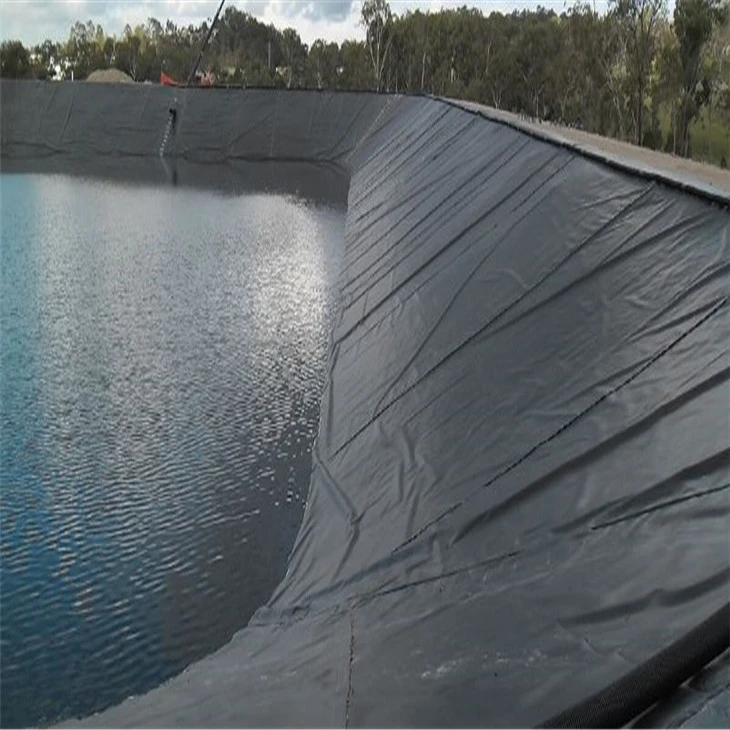
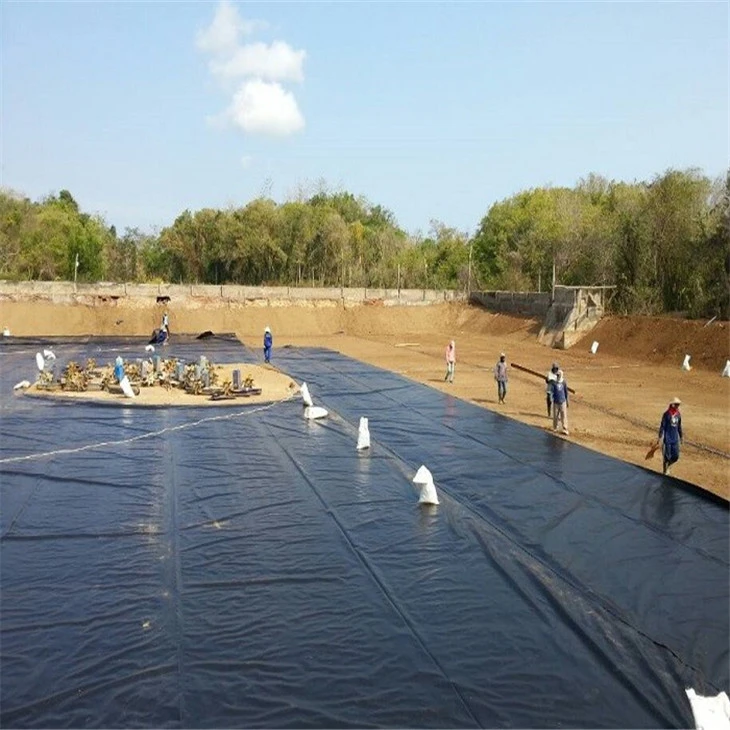
Applications
three core mechanisms
The impact of chemical erosion on HDPE geomembranes is mainly reflected in three core mechanisms: oxidative degradation, environmental stress cracking, and increased permeability caused by swelling. During the oxidative degradation process, high temperature or ultraviolet rays will trigger a free radical chain reaction, resulting in polymer main chain breakage (thermal oxidative aging) or surface powdering (photooxidative aging). Carbon black additives can significantly improve the UV resistance. Environmental stress cracking is the most vulnerable link of HDPE - surfactants, alcohols and other media penetrate into the microcracks of the material, accelerating crack expansion under stress. High-quality HDPE needs to pass a standard test of ≥1500 hours to prove its anti-ESC performance. Third, non-polar solvents (such as benzene and toluene) and halogenated hydrocarbons (such as chloroform) will cause surface swelling, increase the molecular gap, and cause the permeability coefficient to increase by 10-100 times, seriously weakening the anti-seepage function.
Chemical resistance shows significant differences: HDPE has excellent stability to strong acids (concentrated sulfuric acid, hydrochloric acid) and strong alkalis (sodium hydroxide), but aromatic hydrocarbon solvents (benzene, toluene) can cause more than 30% loss of tensile strength, and halogenated solvents (chloroform) will cause rapid brittle failure. Oxidants (ozone, hydrogen peroxide) reduce the life of the material by consuming antioxidants, and the oxidation induction time (OIT) must be maintained at >100 minutes to delay aging.
triple strategy
Engineering protection requires a triple strategy: At the material level, adding composite antioxidants (hindered phenol + phosphite) and using MDPE/LLDPE blending modification can improve the anti-ESC ability; in terms of design, the thickness should be ≥2.0mm (80 mil) when exposed to high-risk chemicals, and a composite barrier system (such as HDPE + GCL bentonite pad) should be constructed to block the migration of pollutants; the life prediction model shows that exposure to 10% benzene solution at 40°C will shorten the service life to 1/5 of the original design, so high temperature and high concentration environments require additional safety redundancy. The ultimate guarantee relies on strict monitoring: Regularly test the OIT value and the tensile properties of the cut, perform extrusion welding repairs on the swelling area, and form a full-cycle protection system of "material-design-monitoring".
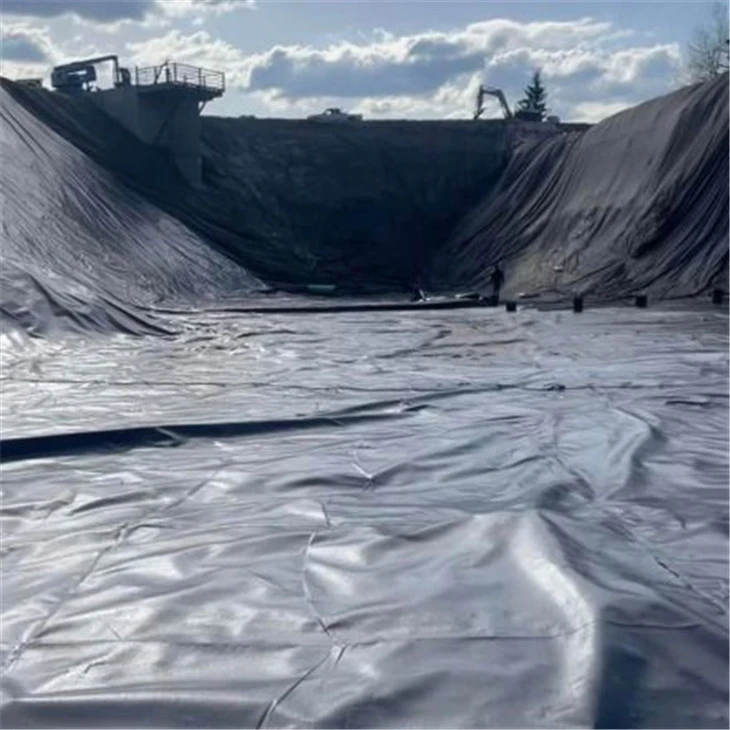
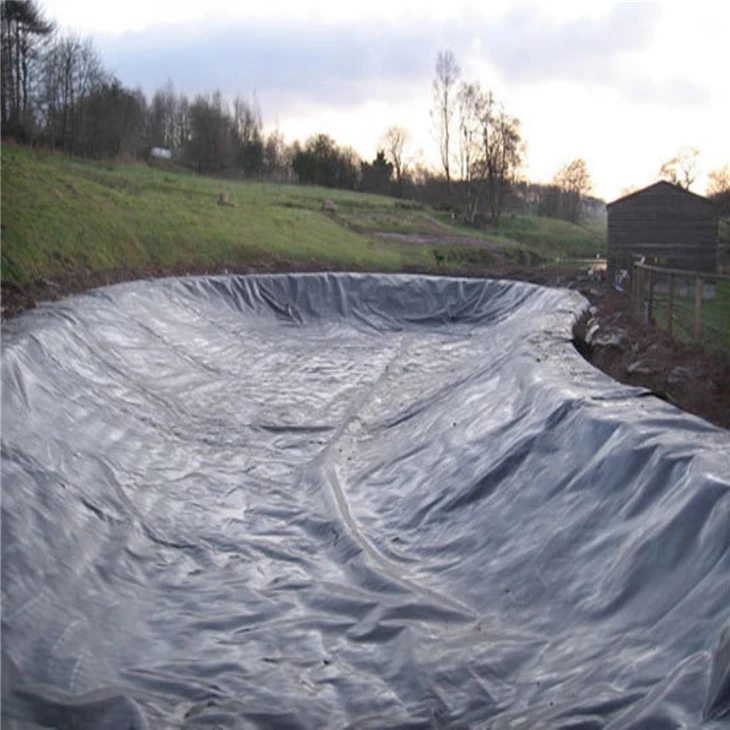
Contact
Tai'an City Ruiheng Building Materials Co., Ltd
● Address: NO.3566 Longquan Road, Tai'an Hi-tech Zone, Shandong Province, China
● Website: www.rhgeomembrane.com
● Email: bonnie@rhgeos.com
● Phone / Whatsapp / Wechat: 0086 188 5482 2179
Hot Tags: chemical erosion on geomembrane, China chemical erosion on geomembrane manufacturers, suppliers, factory